Ancient Man and His First Civilizations
Indus Valley civilization
Mohenjo-daro, Harappa and other cities. (Modern Pakistan, Which was a part of India until 1947)
Throughout the pages of Realhistoryww we rail against the lies of Albinos as relates to history and Race. We offer proof of our claims and hope to shame Albinos into better behavior. But alas, it has all been for naught, Albinos haven’t gotten better, they have gotten even worst! Note these latest examples.
 |
|
 |
| |
|
|
| This is the authentic face mask of King Tut found in his tomb |
|
This is the forensic mockup of King Tut created by a French artist named Élisabeth Daynès. This mockup is displayed in National Geographic and many academic venues. |
Élisabeth Daynès
Élisabeth Daynès is a French sculptor (self-taught, without formal education). In 1981 she worked with the Théâtre de la Salamandre in Lille creating masks for the theatre. In 1984, she founded her own studio, Atelier Daynès, in Paris. A few years later the Thot Museum in Montignac, close to the Lascaux caves, asked her to sculpt a life size woolly mammoth with a group of hominids. She has since specialized in reconstructing hominids from remaining bones. Her work is present at museums all over the world, like Musée des Merveilles in Tende, Field Museum of Natural History in Chicago, Transvaal Museum in Pretoria, Sangiran Museum in Indonesia, Naturhistoriska riksmuseet in Stockholm and Museum of Human Evolution in Burgos (Spain). One of her most notable sculptures is at the Krapina Neanderthal Museum in northern Croatia where she made a reconstruction of an entire seventeen member Neanderthal family. In 2005 she created a life like model of Pharaoh Tutankhamun in a project with National Geographic. In 2010 Daynes won the John J. Lazendorf Paleoart prize, widely regarded as the most prestigious reward given to artists in science art related to paleontology, in the 3-Dimensional Art category.
 |
|
Just look at that, the Albinos are so desperate to get their lies out, with at least some support, that they are now taking UNEDUCATED hacks and commissioning them to make forensic mockups of ancient Blacks.
And then Albinos had the nerve to give them prizes, as if they had done something worthwhile: when in fact all they had done was to do great injury to truth, and hopes for Brotherhood and understanding.
Here is what it takes to actually do "REAL" forensic mockups
Google search: Requirements to Become a Forensics Anthropologist
This is a career requiring extensive education. You will need a bachelor’s degree in anatomy, biology, chemistry, physiology or anthropology as well as a graduate degree in human biology or anthropology. Though a degree at the Master’s level may qualify you to begin your investigative career, most forensic anthropologists have a Ph.D. degree.
|
Here is more of Élisabeth Daynès lying handiwork.
 |
|
 |
|
 |
Magdalenian Girl is the common name for a skeleton dated ca. 15,000 to 13,000 years ago, in the Magdalenian period. The remains were discovered in 1911 in the Dordogne region of southwestern France in a limestone cave known as the Cap Blanc rock shelter.
Below is how the racist, lying, Élisabeth Daynès made that Black woman look! |
|
The "Pataud woman" is the name given to the remains of a young woman, about 20 years old, deposited with the body of a newborn child in the Abri Pataud shelter in southwestern France. The remains are about 21,000 years old.
Below is how the racist, lying, Élisabeth Daynès made that Black woman look! |
|
The Chancelade man was discovered in 1888 in the cave of Raymonden Chancelade in Dordogne France. The skeleton was that of an adult man, estimated to have been between 55 and 65 at death. The man had been intentionally buried and liberally coated with ochre. The grave also contained Magdalenian tools, dating from 17,000 to 12,000 years before present.
Below is how the racist, lying, Élisabeth Daynès made that Black Man look! |
 |
|
 |
|
 |
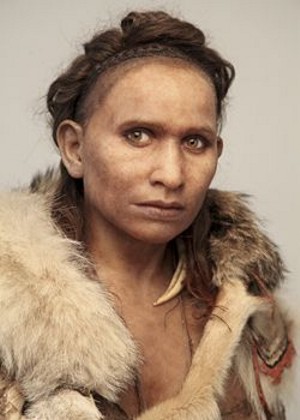
These "REAL" people, not the silly Albino mockups of Albino imagination above: were of course Africans settling Europe at the end of the last "Ice Age". In all pages in Realhistoryww relating to Europe, you will find the scientific proof of that. We are particularly fond of the scientific Study "Cranial Discrete Traits in a Byzantine Population and Eastern Mediterranean Population Movements": but for those wanting more, there are many other scientific studies cited and displayed on our pages. |
So why are we making so much fuss about a simple Albino lie, one of so many? Because it feeds into the overall Albino lie methodology used to keep Blacks ignorant and powerless. We have said that Albino media, Academia, and Institutions, are all a part of the Albino lie infrastructure. Here is a nice example of Albino Newspapers promoting the lies.
SEE NOW HOW THE PHONY PICTURES OF ALBINO EUROPEANS ABOVE, COME INTO PLAY?
Now here is the "REAL" story
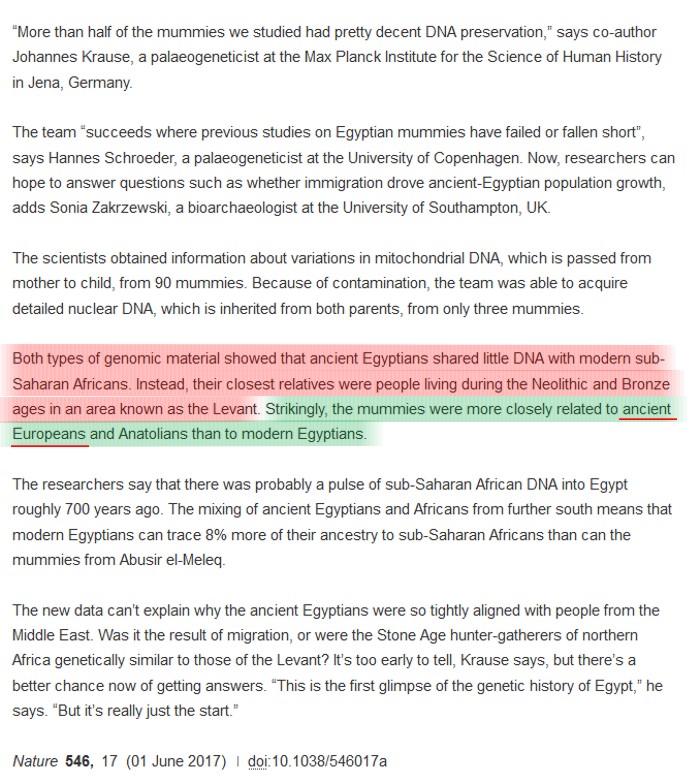
Quote above: Strikingly, the mummies were more closely related to
ancient Europeans and Anatolians than to modern Egyptians.
Well here are the ancient Europeans!
And here are the ancient Egyptians!
There are TWO kinds of MODERN Egyptians,
Anatolians (Turkey), Arabians, and Middle Easterners generally:
The White and Mulatto ones are Turks!
The others are the Black ones
that Albino media never show you!
Modern Egyptians
Modern Persians aka Iranians
Modern Arabs
Now do you see how the Albino Lie Machine Works? |
The Nonsense that White People are Cold Adapted Humans
One of the Albinos most outrageous lies is that they are “WHITE SKINNED” because they are a “COLD ADAPTED” People who EVOLVED light Skin to better absorb Sunlight for vitamin “D” synthesis. That is a ridiculous lie, and it is thoroughly and scientifically debunked Here: << Click here >> |
On to the subject at hand...
Indians have started to research their own history:
Dravidian costumes and household articles
Dr. A. Sagayadoss,
Director Council of Agri Geo Environmental Research Bengaluru
Introduction:
The Indus Valley writing was in Tamil a Dravidian language. The Dravidians originated in Africa, and were associated with the C-Group culture of Nubia. The Dravidians were Proto Saharan People. The ProtoSaharans were the ancestors of the Dravidian, Elamite and Sumerian people. The Dravidians had their own tradition of writing. It would appear that they introduced writing to the Indus Valley and later punch-marked coins. This is supported by the discovery of writing in South India dating back to before 600 B.C.
This paper focuses on the Ancient Dravidian costumes, arts, crafts, language and culture. Srinivasan et al, argue that the Indus Valley writing was a syllabic multilingual writing system. Although this is their opinion, it appears that the writing system used in the Indus Valley was also employed in South India and that the language of the Indus Valley script was Tamil.
______________________________________________________________________________________________
Comparative Visual Analysis of Symbolic and Illegible Indus Valley Script with Other Languages
Mrs. Maria Ansari, Mr. Farjad Faiz, Ms. Amna Ansari. University College of Art and Design, The Islamia University Bahawalpur, Pakistan. College of Art and Design, Punjab University Lahore, Pakistan
http://iosrjournals.org/iosr-jhss/papers/Vol20-issue2/Version-5/K020256672.pdf
Analysis and comparison for decipherment of Indus Valley writing:
In 1983 announced decipherment of Indus Valley writing. Many researchers have attempted to decipher the Harappan writing. These researchers have attempted to decipher Harappan writing using several methods. Kak and several other researchers attempt to link the Harappans to people of Mahargarh, but by archaeological data that link separated by 4000 years as Mahargarh Civilization existed around 6500 BC, and the Indus Valley civilization existed between 2600-1900 BC. The Iconography and figures of these two cultures are totally different as the Mehargarh figures have eyes which are holes; the Indus Valley figures have broad lips and compound. These researchers fail to decipher the Indus Valley writing because they refused to respect the view of many Dravidian Scholars that they originated in Africa. This was supported by archaeological and linguistic evidence. The decipherment on three facts:
1. The fact that in west Indus, Brahue, a Dravidian language is spoken in Balochistan and Afghanistan.
2. The Rig Veda is written in a form of Dravidian called Sumero Tamil.
3. The presence of Dravidian loan word in Sansikrit indicated that Dravidian speakers probably occupied that Northern India and Pakistan before the Aryans invasion of the area after 1000 B.C. with their grey ware.
Over 4000 years ago a civilization existed in Indus Valley. This revering civilization is referred to by archaeology as the Harappa or Indus Valley civilization. The founder of this civilization was Proto-Dravidians speaking people from middle Africa. Now mainly situated in South India, these people earlier lived in central Asia, and even China.
|
BEFORE GOING TO THE HISTORIES OF INDUS VALLEY PEOPLES,
LET US FIRST GET UP TO SPEED ON NEW SCIENTIFIC DATA.
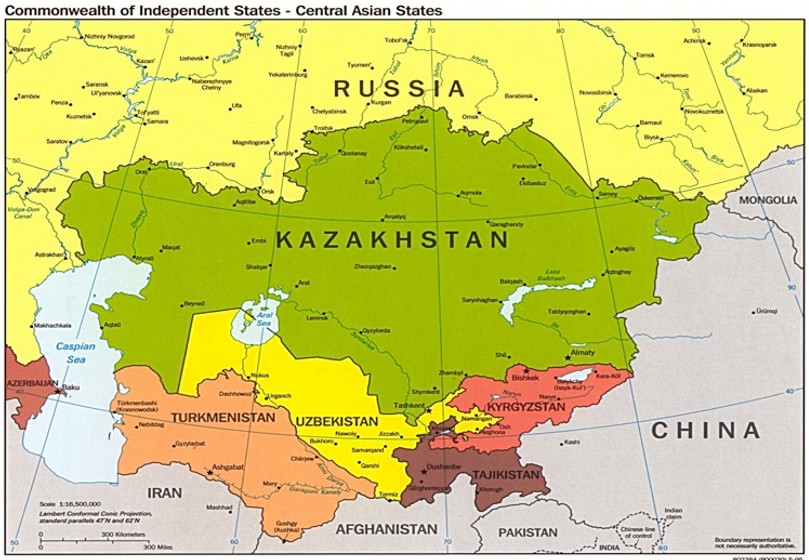
Central Asia
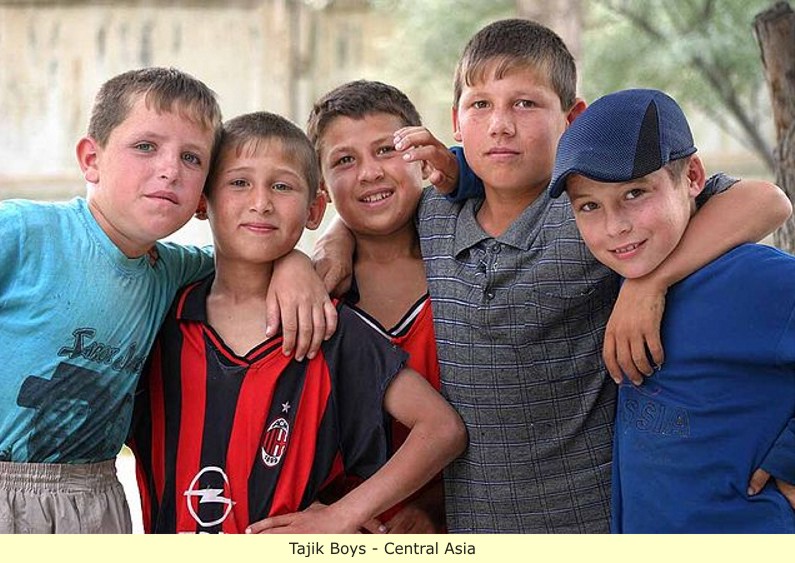
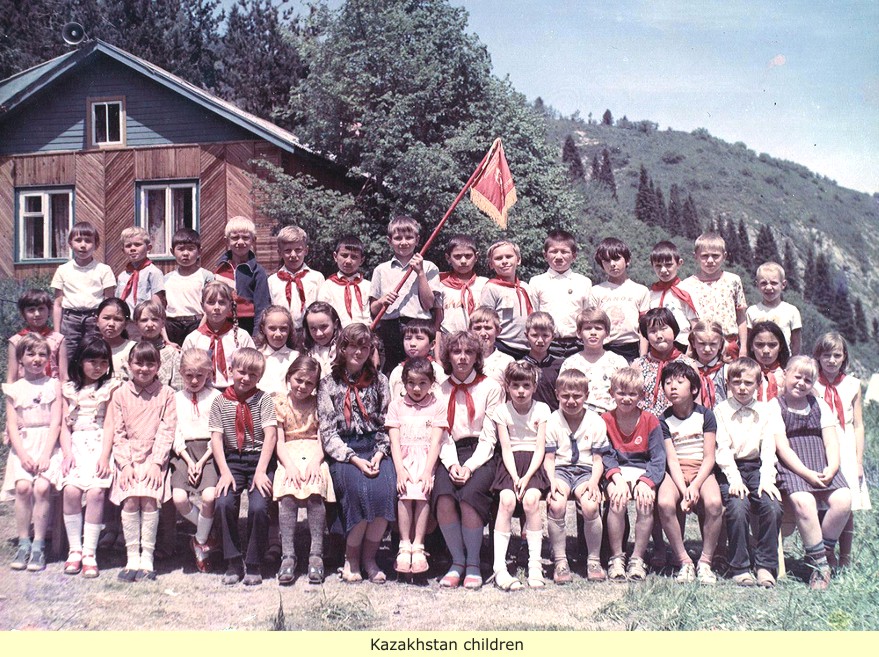
Though most Dravidian Albinos left Central Asia for Europe from ancient times: due to Mongol pressure and/or a desire for better lands. Some Dravidian Albinos remained in Central Asia, their descendants are clearly visible there today.
Note: we do understand that the average person - after a lifetime of the Albino lie that they (Albinos) are native to the Black Mans Ancient Home of Europe - finds this material hard to believe. So, under the heading of: "Strange Bedfellows" We have this quote from the "Race Experts" at "STORMFRONT:"
Quote: Today's Central Asians are extensively mixed-race with both White and East Asian blood and the White element is older since the Whites were there first and are the indigenous people of Central Asia. |
 |
|
 |
 |
 |
Update 2014:
Eureka! The Albinos have finally admitted where they come from!

As you ponder what this admission means, you might also consider what nonsense like this means:
If you Google "Where do White people come From" the second result that you will get is this Livescience article; (the first result is Stormfront - go ahead and read it for a laugh).
Why Did People Become White?
Heather Whipps, September 01, 2009
QUOTE: Vitamin D plays an important role in bone growth and the body's natural protection against certain diseases, and the inability to absorb enough in areas of less-powerful sunlight would have decreased life expectancies in our African ancestors. The further north they trekked, the more vitamin D they needed and the lighter they got over the generations, due to natural selection.
Also: While people of all skin types have the ability to produce the same amount of vitamin D in their systems, “highly pigmented (Black) people will need to stay in the sun around 6 times longer than light people in order to synthesize the same amount of vitamin D,” Juzeniene said, and a lack of the vitamin — something occurring among many American children right now, partly because they don't get out much — can make humans more susceptible to everything from heart disease to internal cancers.
That is of course "Pure" lie:
In the last century, cases of Rickets (often caused by lack of Vitamin D) was epidemic in Europe and North America. So much so, that they had to start adding Vitamin D in the manufacture of their Milk, Cereals, Cheeses, and such. This was NOT done for Blacks - who don't need it, it was done for Albino people, who desperately needed it.
THE REASON FOR SUCH RIDICULOUS STATEMENTS AND LIES IS THIS:
If Africans went into Europe circa 45,000 B.C. and STAYED Black.
Then modern Europeans MUST have ALWAYS been WHITE!
i.e. ALBINOS!
See: the section "Indus Valley-2" and other pages for the history of Europeans.
|
 |
As we all know, Y-dna haplogroup "R" is the most common
haplogroup of Europe's Albinos, let us now find it's origins.
 |
 |
 |
 |
Dravidian Man |
Dravidian Woman |
Central Asian Albino Invader aka Indo-Europeans |
Mulatto Indian |
 |
|
Testimonials
“Treated like royalty”: What it’s like to be a white expat in India
By Ben A. Wise October 8, 2018
The guilty privilege of being a white woman in India
By Annalisa MerelliMay 29, 2017
“Why so tan!” my Chittaranjan Park downstairs neighbor, Patty, who ran a small beauty parlor, asked me the first time she saw me after my skin had been in the sun long enough that it wouldn’t glow in the dark. She was not impressed. “Looks dirty,” she said, with the hint of a disgusted smirk. Patty liked my being “fair.” I soon learned she was not alone: My white skin was, for many, my biggest asset—and indeed through the years I spent in India, my white privilege cloak worked as an armor to keep me safe, and as a passcode to grant me admission to circles of society much higher than what I belonged to.
A white-skinned woman's experience of racism in India by Karola Körber
(It's) a twisted version of racism (which) makes India racist against its own people. Normally, racism works this way: You think your own race is superior to another. In India, however, when it comes to skin colour, it’s the other way around. White: good, dark: bad. It’s a twisted version of racism that makes India racist against its own people.
To me, please excuse the cliched pun here, this seems immensely unfair. And like all racism, it goes beyond the idea of beauty. If you want to find a good job, get an education, or even find a husband in India, fair skin is crucial. It’s connected with success, power and beauty, while dark skin is the indicator of a less-privileged background.
And it has been so for ages. Now, you could blame this mindset on a colonial hangover or dig deeper into history and blame it on the Aryan (fair) versus Dravidian (dark) division. The fact remains that India is obsessed with pigmentation. It’s the most-racist country I have ever been to.
|
Source - CIA World Factbook
Notice how the Albinos have used their control over media to perpetuate the false myth that "THEY" are the dominate population in India? Today, the best selling cosmetic product in India is "SKIN BLEACH". This is the Albinos modus all over the World. That is to say, indoctrinate ignorant Natives to want to be like their pigmentless Rulers or former Rulers. Irrespective of the dangers and limitations of being Allergic to the Sun, in a strong Sunlight environment. (The original reason for Dravidian Albinos to leave India and go into Central Asia in the first place).
In the past the Indian Census asked for RACE, CLASS, or CASTE. Now everyone is allowed to be "Classed" as WHITE (Indo-Aryan). Proud people wanting no part of that are allowed to be described by the categories "Scheduled caste (SC)/Scheduled Tribe(ST)".
 |
The area of the Yamna culture (in Yellow) corresponds to modern Russia and Kazakhstan. These are areas the Albinos settled on their way to Europe. |
|
 |
 |
 |
One of the reasons why truthful historical material is so hard to digest for many, is because Albino education and media has created a false impression of the racial realities of our world - the better to make it seem like they are important and at the center of things. Central to their lies is that the world is separated by races. Mongols in Asia, Blacks in Africa, and of course, most importantly, Whites in Europe. As we now know, Blacks colonized the entire world, so of course they were the first settlers everywhere. But India was the main point for Humans going east, and north into Central Asia, so of course India should still have great diversity in it's human population - including those with the Mongol phenotype.
Click here for some surprising Indian phenotypes
Click here for some MORE surprising Indian phenotypes
Concerning Literature
Egyptians, Sumerians, Mohenjo-daroans, Harappans, and Cretans, Elamites, and Nubians, were literate 3,000 years, 4,000 years, who knows how many thousands of years, before the world ever heard of Greeks or Romans. And there is ample evidence of their literacy.
Yet there is not one single entry: describing any of the people of their times, whether it be friends, foes, or invaders: or even more incredulously, there is not one single entry describing invading Whites in any of their literature.
Contrast that with Greek and Roman writings, in which these NEWLY literate people, describe EVERYTHING and EVERYONE!
The discrepancy is of course, not accidental, nor for lack of material.
Hopefully, the White man has simply withheld this material, and not destroyed it.
|
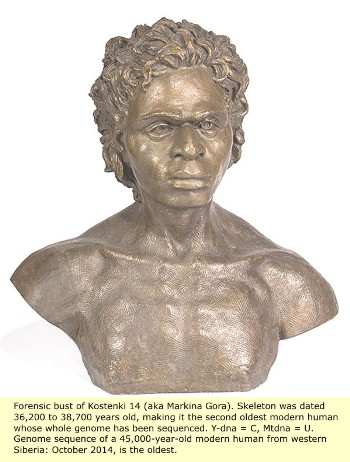
The "First" Out of Africa (OOA) migration, circa 60,000 B.C, saw Blacks with straight hair, taking a route along the coast of Asia, and then "Island hopping" across the Indian Ocean to Australia - the Australian Aborigine. And then making their way to South America - the remains called "Luzia" in Brazil.
Australian Aborigine
Modern Mans first Out of Africa (OOA) migration route to Australia
Those wishing to pursue an understanding of the Human Journey, and Specifics of the ancient East African migrations, which led to Modern Man's colonization of the entire world; please visit the National Geographic – Genographic Project – Atlas of the Human Journey. Though as one would expect, when it comes to European and Anatolian (Turkey) settlement, it is not only inaccurate, it is downright Racist. But what would you expect? https://www3.nationalgeographic.com/genographic/atlas.html
The second (OOA) migration event, circa 50,000 B.C. saw Blacks from Africa, SOME with "Mongol features" take an "Inland route" through southern Asia and on up to China, where they settled.
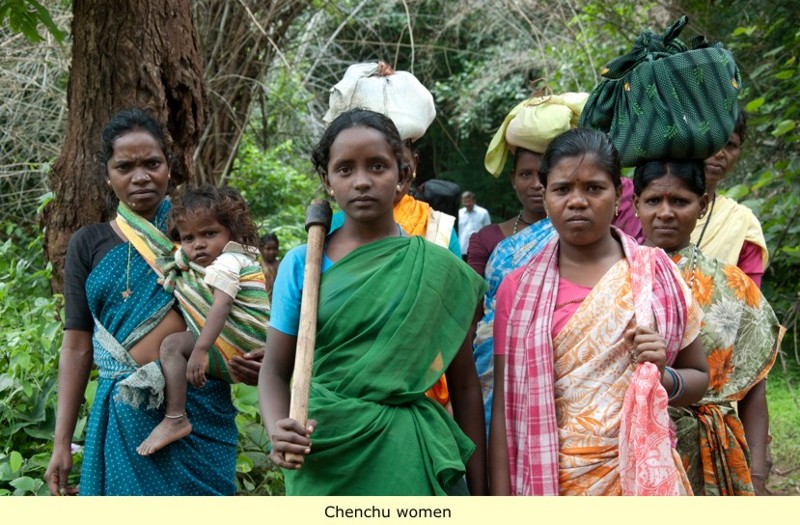
Included with this group, were SOME straight haired Blacks "Without" Mongol features - now called "Dravidians" who stayed close to Africa, and settled in India and other areas of Southern Asia.
Dravidians
Other Indians
Other Indians
Other Indians
Also included with this second (OOA) group were Albinos, who were probably motivated by a quest for relief from the heat and burning Sunshine of southern Africa - and relief from the torment heaped upon them by normal Africans. Even today, superstitious Blacks of southern Africa; maim and mutilate Albinos in the ignorant belief that their body parts process magical properties, which they use in rituals.
These are "Authentic" Albinos of the "Original" People of India - The "Dravidians".
YES! ALL OF THESE PEOPLE, IN THEIR HEALTHY STATE, ARE ALL "BLACK" SKINNED!
JUST LIKE THE BLACK DRAVIDIANS ABOVE.
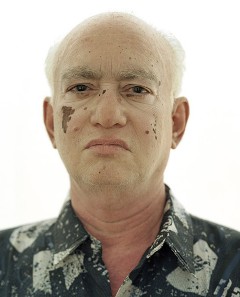
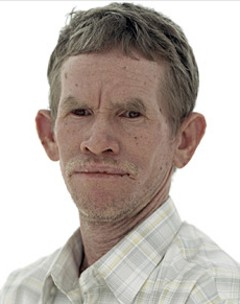
The Albino pictures above, are taken from the study by Andreas Deffner titled: White, too white A Portrait of Albinism in India.
Link to the study
Albinism
Albinism is a form of hypopigmentary congenital disorder, characterized by a partial or total lack of melanin pigment in the eyes, skin and hair. Albinism is hereditary; The principal gene which results in albinism prevents the body from making the usual amounts of the pigment melanin. Most forms of albinism are the result of the biological inheritance of genetically recessive alleles (genes) passed from both parents of an individual, though some rare forms are inherited from only one parent.
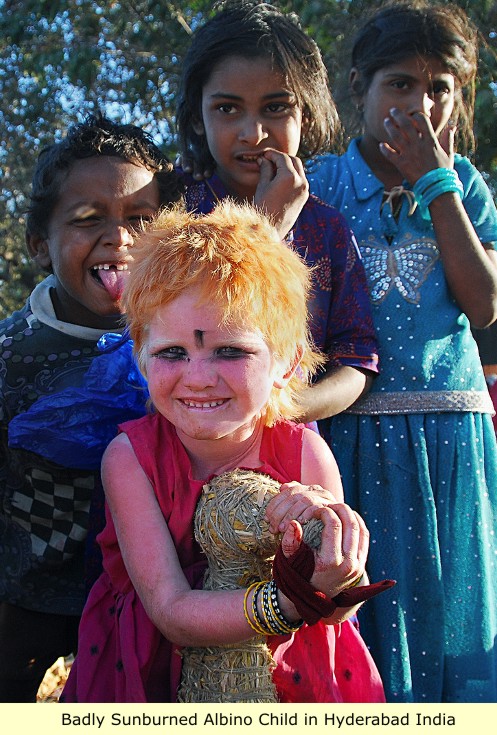 |
But the main reason the Albinos left Africa was the burning Sunshine of southern Africa. Because organisms with albinism have skin that lacks (sufficiently or entirely) the dark pigment melanin, which helps protect the skin from ultraviolet radiation coming from the sun, they can sunburn easily from overexposure. Most of the more than 2 million cases of non-melanoma skin cancer diagnosed yearly in the United States are considered to be sun-related. Melanoma is a cancer that begins in the melanocytes - the cells that produce the skin coloring or pigment known as melanin. Melanin helps protect the deeper layers of the skin from the harmful effects of the sun. These Albinos continued on to Central Asia, where they settled.
Skin Cancer
| Of course, Dravidians are not the only Black People who can produce European type offspring. |
ANY Black couple with "Straightish" type hair and defective OCA2 genes, will produce offspring that is "Identical" to - and in fact is - a European type offspring. |
 |
 |
Careful note should be made here, that "Sometimes" Albinism causes straightening of the Hair!
|
Confirmation that the White (Caucasian) Race is derived from Dravidian Albinos, is documented in the findings from genetic analysis of Y-DNA haplogroup "R".
Haplogroup R (Y-DNA)
In human genetics, Haplogroup R is a Y-chromosome DNA haplogroup, a subgroup of haplogroup P, defined by the M207 mutation.
This haplogroup is believed to have arisen around 26,800 years ago, somewhere in Central Asia or South Asia, where its ancestor Haplogroup P is most often found at polymorphic frequencies. Cambridge University geneticist Kivisild et al. (2003) suggests that southern and western Asia might be the source of this haplogroup:
Given the geographic spread and STR diversities of sister clades R1 and R2, the latter of which is restricted to India, Pakistan, Iran, and southern central Asia, it is possible that southern and western Asia were the source for R1 and R1a differentiation.
The R haplogroup is common throughout Europe and western Asia and the Indian sub-continent, and in those whose ancestry is from within these regions. It also occurs in North and Sub-Saharan Africa. The distribution is markedly different for the two major subclades R1a and R1b.
Haplogroup R1a is typical in populations of Eastern Europe, Indian Subcontinent and parts of Central Asia. R1a has a significant presence in Northern Europe, Central Europe, Altaians and Iran as well as in Siberia. R1a can be found in low frequencies in the Middle East, mostly in Indo-European speakers or their descendants.
Haplogroup R1b predominates in Western Europe. R1b can be found at high frequency in Bashkortostan (Russia). R1b can be found at low frequency in Central Asia, Middle East, South Asia as well as North Africa. There is an isolated pocket of R1b in Sub Saharan Africa. In Europe, R1b coincides with areas of Celtic influence. |
Background on Haplogroup "R"
Origins of Y-dna Haplogroup "R"
From Wikipedia:
According to the Genographic Project conducted by the National Geographic Society, Haplogroup R2a arose about 25,000 years ago in Central Asia and its members migrated southward as part of the second major wave of human migration into India.
According to Sengupta et al. (2006),
uncertainty neutralizes previous conclusions that the intrusion of HGs R1a1 and R2 [Now R-M124] from the northwest in Dravidian-speaking southern tribes is attributable to a single recent event. Rather, these HGs contain considerable demographic complexity, as implied by their high haplotype diversity. Specifically, they could have actually arrived in southern India from a southwestern Asian source region multiple times, with some episodes considerably earlier than others.
The following is Manoukian's (2006) summary of the findings of the Genographic Project conducted by the National Geographic Society and directed by Spencer Wells (2001):
Haplogroup R, the ancestral clade to R1 and R2, appeared on the Central Asian Steppes around 35,000 to 30,000 years ago.
R1, sister clade to R2, moved to the West (READ EUROPE) from the Central Asian Steppes around 35,000 to 30,000 years ago. R1 pockets were established, from where R1a and R1b emerged.
R2a [R-M124] made its first entry into the Indian sub-continent around 25,000 years ago. The routes taken are not clear, although the Indus and Ganges rivers are possible theories put forward. There could, of course, have been multiple immigrations of this haplogroup into the Indian sub-continent, both in the Paleolithic and the Neolithic |
The final proof that Europeans are Albinos derived from Dravidian Indians, is the Genetic Distance Maps created by the studies:
"Genetic Distance Map from The History and Geography of Human Genes" by Cavalli-Sforza.
And "The Genetic Structure and History of Africans and African Americans" by Sarah A. Tishkoff.
Both genetic maps show that Black and Brown Indians, and White Europeans, are alone together, separate from all other humans, like two peas in a pod. The only difference is that one group is pigmented, and the other is not! One group is Albino, the other is not!
|
 |
The Indus Valley Civilizations
Sometime around 6,000 B.C. a nomadic herding people, who some now think to be Dravidians, settled into villages in the Mountainous region just west of the Indus River. There they grew barley and wheat, harvesting it using sickles with flint blades. They lived in small houses built with adobe bricks. After about 5000 B.C. the climate in their region changed, bringing more rainfall, which apparently enabled them to grow more food, for they grew in population. They began domesticating sheep, goats and cows and then water buffalo.
 |
 |
| Molded tablet showing a man spearing a water buffalo with one foot pressing the head down and one arm holding the tip of a horn. A gharial (Crocodile) is depicted above the sacrifice scene, and a figure seated in yogic position, wearing a horned headdress is to the right. |
| |
 |
| Three sided molded tablet. This side shows a flat bottomed boat with a central hut that has leafy fronds at the top of two poles. Two birds sit on the deck and a large double rudder extends from the rear of the boat. On the second side is a snout nosed gharial with a fish in its mouth. The third side has eight symbols of the Indus script. |
Then after 4000 B.C. they began to trade with distant areas in central Asia and areas west of the Khyber Pass. They also began using bronze and other metals. In time the total area of the Indus civilization, became larger than that of the old kingdom of Egypt. Their cities were characterized by buildings of elaborate architecture, constructed of fired brick, with sewage systems and paved streets.
 |
 |
 |
| molded tablet showing a female deity battling two tigers and standing above an elephant. A single Indus script depicting a spoked wheel is above the head of the deity |
Female figure with headdress and Jewerly. Harappa - 2,600 - 1,900 B.C.
|
Female figure with headdress and Jewerly. Harappa - 2,600 - 1,900 B.C.
|
Typical of these large planned cities, is Mohenjo-daro, which along with it's great buildings, had city streets laid out in a grid. The city is thought to have housed roughly 50,000 people, and had a granary, baths, assembly halls and towers. The city was divided into two parts, west of the city there stood a citadel surround by a wall.
The Citadel area of the city was built on top of a mound of bricks almost 12 metres high. A large staircase ran up the side of this mound. Several large buildings and structures on the Citadel mound suggest that this area may have been used for public gatherings, religious activities or important administrative activities as well as defense. In the second century B.C. a stupa (a dome-shaped structure - serving as a Buddhist shrine) was built on the top of this mound.
The Citadel included an elaborate tank or bath, created with fine quality brickwork and sewer drains, this area was then surrounded by a verandah. Also located here was a giant granary, a large residential structure, and at least two aisled assembly halls. To the east of the citadel was the lower city, laid out in a grid pattern.
The streets were straight and were drained to keep the area sanitary. Mohenjo-Daro had a building with an underground furnace and dressing rooms, suggesting bathing was done in heated pools - as in modern day Hindu temples. The people of the city used very little stone in their construction. They preferred bricks, two types of bricks mainly - fired bricks, and wood bricks - which were created by using burnt wood ash.
At Mohenjo-daro archaeologists have found several large platforms and foundations made out of brick. Column bases and shallow holes still exist in the platforms, suggesting that they were meant to hold wooden columns or supports. However, the walls of these buildings do not survive. Since brick walls usually do survive, many archaeologists now believe that some large buildings at Mohenjo-daro were probably built out of wood.
 |
 |
Mohenjo-daro Priest king - 2,600 B.C. |
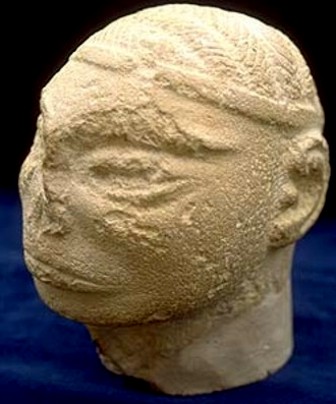
Mohenjo-daro terracotta statue head |
They used timber to create the flat roofs of their buildings, there are brick stairways leading to the roofs of many houses, suggesting that roofs were used as recreational areas - as in early Anatolia. Houses were of various sizes, some were small, and others were large with interior courtyards and indoor bathrooms. Several craftsman workshops have been found, such as metalworking, carpentry, and shell-working.
 |
 |
Harappa 2,300 B.C. |
Harappa 2,300 B.C. |
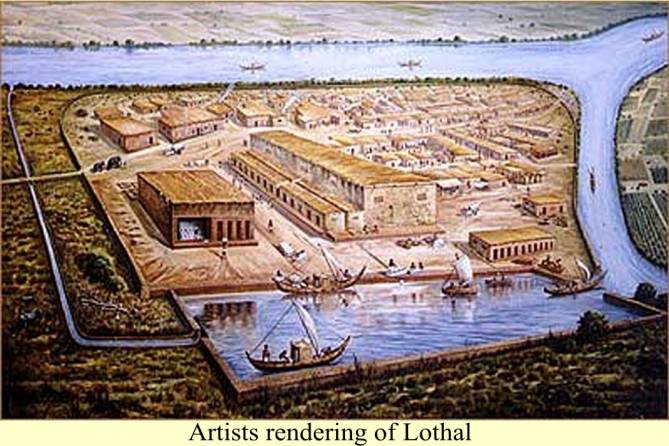
Defensively Mohenjo-daro was a well-fortified city. Though it did not have city walls, it did have towers to the west of the main settlement, and defensive fortifications to the south. These fortifications taken into consideration, as well as a comparison to the Harappa ruins to the northeast, lead to the conclusion that perhaps Mohenjo-daro was an administrative center. Both Harappa and Mohenjo-daro share relatively the same architectural layout (Harappa is less well preserved due to early site defilement), and were generally not heavily fortified like other Indus Valley sites. It is obvious from the identical city layouts of all Indus sites, that there was some kind of political or administrative centrality, however the extent and functioning (and even the placement and type) of an administrative center remains unclear. Lothal was situated at the head of the Gulf of Cambay in Gujarat. Here archaeologists have found large warehouses ready to hold goods for export.
 |
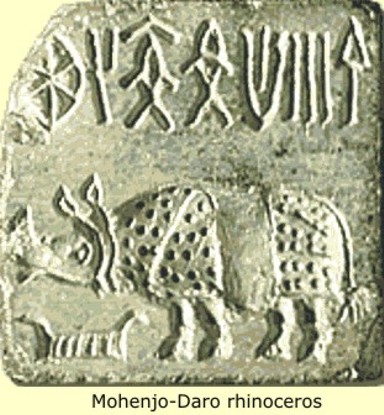
The people of Mohenjo-Daro, Harappa and the other cities, shared a sophisticated system of weights and measures, used arithmetic with decimals, and had a written language that was partly phonetic and partly ideographic. The Indus people also utilized seals for signatures and pictorial presentation, as did the people to the northwest in Elam and Sumer. The Indus valley people carried on active trade relations with the middle-east in gold, copper utensils, lapis lazuli, ivory, beads and semiprecious stones.
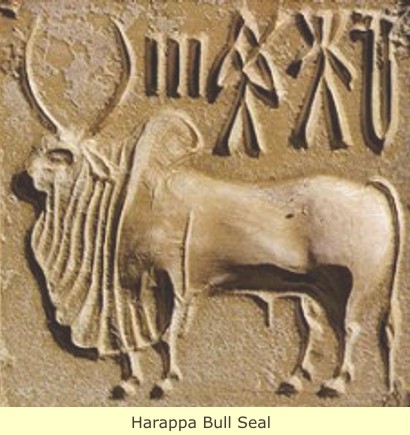
The Indus religion was animistic, they used the Unicorn, cattle, elephants and other animals to represent their gods. They are seemingly the originators of the Unicorn, {the exact meaning of a horned Horse is unknown}. The Indus seals are amulets addressed to the gods and were worn on the body.
In the Seal below, we have a depiction of the Deity (in this case Maal/Mal) as a Unicorn, and then the votive inscription was written above the Deity (in Harappan script).
The manger, under the head of Maal is made up of several Indus signs. It reads Puu-i- Paa, or " A flourishing Condition, Thou distribute it".

Sometime between 1,800 and 1,700 B.C. Civilization on the Indus Plain all but vanished. What befell these people is unknown. One suspected cause is a shift in the Indus River, another is a huge ruinous Earthquake, still another is monumental flooding of the rivers. Flooding that would explain the thick layers of silt, thirty feet above the level of the river at the site of Mohenjo-Daro. Of course these are only unsubstantiated theories, no one knows what really caused the people to leave. Later, people of a different culture inhabited some of the abandoned cities, in what archaeologists call a "squatter period."
 |
 |
Then the squatters also disappeared: Careful note should be made, that only the people and culture of the valley vanished. The Indus Valley civilization was the largest of its time and covered a vast territory. It effectively extended north to the Himalayas and east to what is now Vietnam. But because of the Arian invasion or migration, whichever, subsequent Indus history was lost.
Additionally, we should keep in mind that the Arian's were illiterate nomads, {the Rig Veda was written 600 years after they had arrived}, so whomever it was that kept civilization alive in India, during the convulsive period, it couldn't have been them. Surviving remnants of the Indus valley people in Southeast Asia, will be dealt with later.
Knowledge of the Mohenjo-Daro civilization died, until archaeologists discovered evidence of the civilization in the twentieth century. As to where these people went, no one knows for sure. Some believe that they went to southern India, some surely did.
But one guess is that many of the Indus Valley people went to the north, into Elam and Sumer to re-join their former group. This scenario would explain the somewhat “sudden” appearance of the Medes and Persians in Elam, as well as other, similar groups in eastern Anatolia.
Please visit the "Additional Material Area" for many more photographs of each civilization, and related material <Click> |