
| < Back | Home |
Preferring Fantasy over ScienceSomething to ponder as you read these pages: We know of no source which insists Native Americans were exclusively the Mongol mulatto we know so well, like Geronimo and the like, except American Television and Movies. All other sources, like period ARTIFACTS and SCIENTIFIC studies, clearly show that Blacks were THE major component of the PaleoAmerican demographic. Yet we see supposedly serious people, even some with a scholastic background, "Blow-off" these truths, to cling to the Hollywood fantasy of Tonto. That is where the term "Albino in Denial" comes in. It is not easy to see the lies which formed your reality, crumble before your eyes. Even some Negroes have the problem too, their reality has been shaped by the lies the Albinos taught them, so they too find it hard to grapple with the truth. May they all, one day find the strength to accept the truth. |
The United Nations Declaration on the Rights of Indigenous Peoples (UNDRIP), says in part:Article 7 The declaration was adopted by the General Assembly on Thursday, 13 September 2007, by a majority of 144 states in favor, with 4 votes against: those against were Australia, Canada, New Zealand and the United States: all of which had institutionally committed those very crimes against Indigenous Peoples since the arrival of the Albino people. |
|
 |
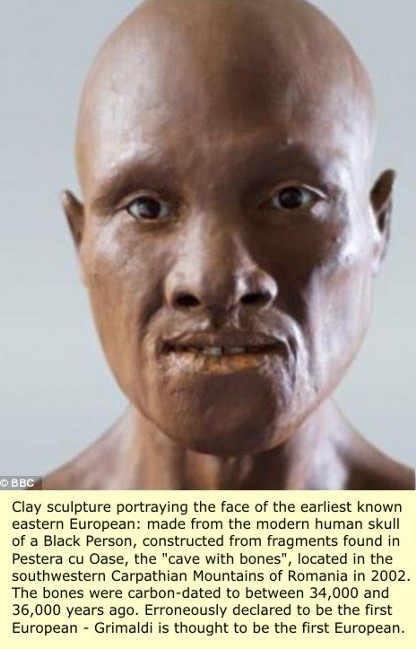 |
A subsequent DNA study by David Reich & Svante Pääbo titled: "An early modern human from Romania with a recent Neanderthal ancestor:" Terms the specimen "Oase-1" and re-dates it to 37,000–42,000-years-old. Oase-1 belongs to the Y-dna haplogroup F, which is carried by most males in Eurasia today. The Mtdna = N. Study quote: We then find that the Oase 1 individual shares equally as many alleles with early Europeans, as with present-day East Asians and Native Americans. |
Central America
|
South America |
North America |
Note: the skull found in "Warm Mineral Springs" Florida (circa 10,000 years ago), has NOT been reconstructed for obvious reasons, (Race issues in southern U.S.A.), however scientific analysis was done by a 2005 study, published by The National Academy of Sciences, Brazil: which found them consistent with other earliest American settlers. They described the remains thusly: the earliest South Americans tend to be more similar to present Australians, Melanesians, and Sub-Saharan Africans. See excerpts from the study below, as well as a link to the full study. |
 |
| Note: Polynesian is a term that the Albino people have applied to Pacificans/Austronesians who have significant "White Mongol/European" admixture. They reserve the term Melanesian for the original "Pure Black" Pacificans/Austronesians who have resisted admixture. |
 |
Quote: "No transoceanic migration is necessary to explain our findings, because Paleoamerican-like humans were also present in East Asia during the final Pleistocene and could perfectly well have entered the New World across the Bering Strait. A final solution to this dilemma will depend of course on a better understanding of what was happening in North America at the same time. Recent archaeological data can be used to support a dual occupation of the New World, either directly or indirectly. Dixon, for example, analyzed the diversity of the projectile points found in the earliest sites of North America and concluded that two different and independent cultural traditions (or cultures) entered the continent in the final Pleistocene. According to Dixon, bow-and-arrow technology was brought to the Americas only by the second tradition, because the atlatl was the primary hunting weapon of the first."
Quote: When the classical Mongoloid cranial morphology appeared in northeastern Asia, either as a local response to extreme environmental conditions, or as the product of a migration from northern Europe, a new expansion of northern Asians reached the New World, bringing with it a cranial morphology characterized by short, wide neurocrania and broad, retracted faces.
 |
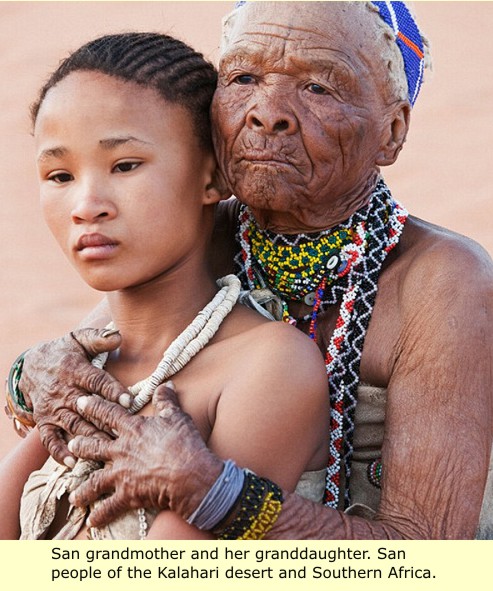 |
| Note: The Atlatl is found in ancient Africa, ancient Europe, ancient Pacific: But NOT in ancient China! that is at least circumstantial evidence that not everybody came across the Bering straits. |
 |
 |
Link to the study:
http://www.nature.com/nature/journal/vnfv/ncurrent/full/nature14895.html
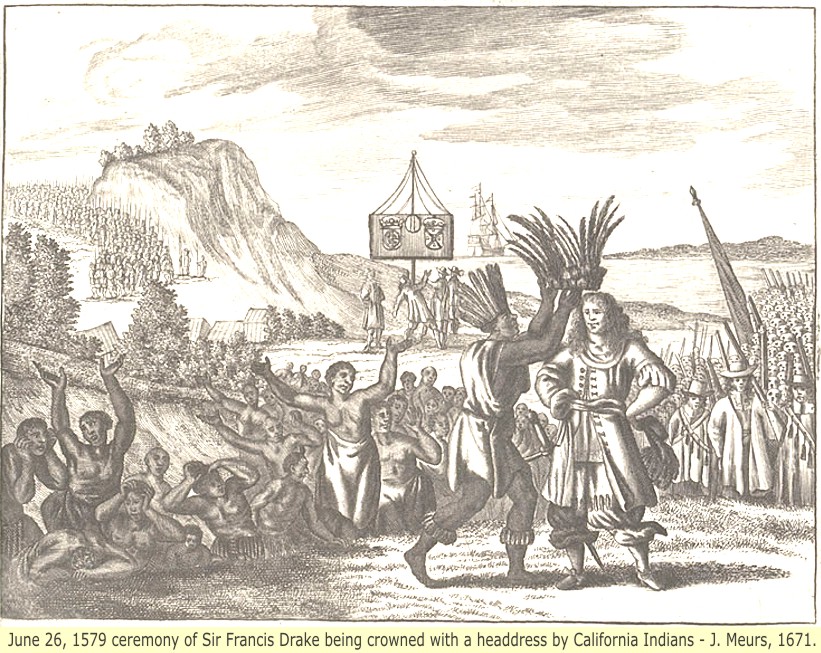
Though it is a reasonable certainty that the African Xi/Olmec of Mexico were originally a part of the Xia/Shang people of China who crossed the Bering straits and entered the Americas. There is uncertainty as to the origins of other ancient Africans in North America: among these are the Seminoles of Florida, the Tsimshia of Western Canada (not the modern people), the Jamassee of Northern Florida, Georgia, Alabama, South Carolina - the Californians, whose legendary Queen Calafia lent her Name to the state of California, the Mississippians of South-central United States. The question is: Are they Australians/Polynesians who migrated North from South/Central America, or are they remnants of the Xi/Olmec who broke-off as the main group headed south into Mexico?
(Paleoamericans is a classification term given to the first peoples who entered, and subsequently inhabited, the American continents during the final glacial episodes of the late Pleistocene period and earlier. It is different from American Indians or Amerindians, who were later migrants).
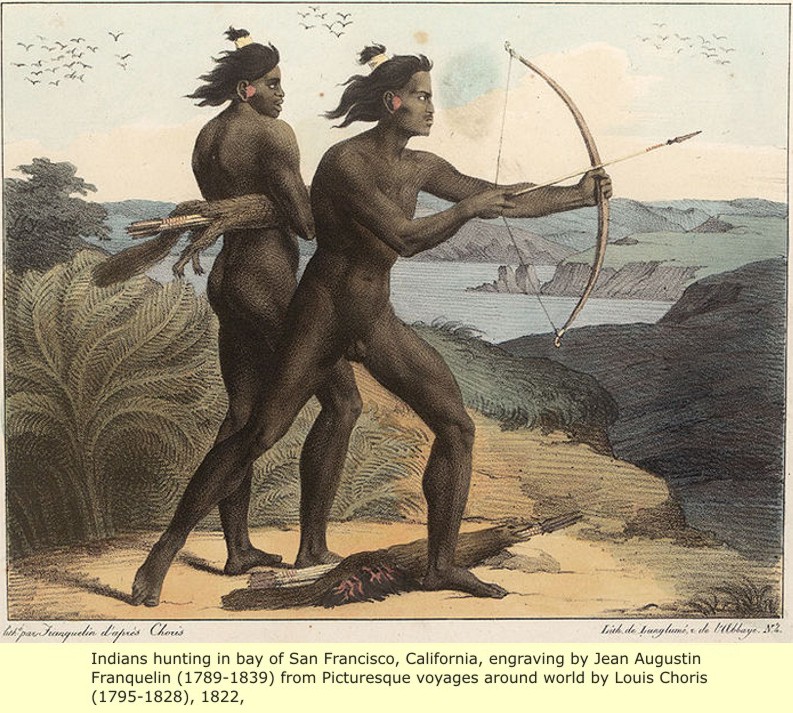
Louis Choris (1795-1828) was a famous German-Russian painter and explorer. He was one of the first sketch artists for expedition research. Louis Choris, who was a Russian of German stock, was born in Yekaterinoslav, now Dnipropetrovsk, Ukraine on March 22, 1795. He visited the Pacific and the west coast of North America in 1816 on board the Ruric, being attached in the capacity of artist to the Romanzoff expedition under the command of Lieutenant Otto von Kotzebue, sent out for the purpose of exploring a northwest passage.
Choris is said to have "painted nature as he found it. The essence of his art is truth; a fresh, vigorous view of life, and an originality in portrayal." The accompanying illustrations may therefore be looked upon as faithfully representing the subjects treated by the artist. After the voyage of the Ruric, Choris went to Paris where he issued a portfolio of his drawings in lithographic reproduction and studied in the ateliers of Gerard and Regnault. Choris worked extensively in pastels. He documented the Ohlone people in the missions of San Francisco, California in 1816.
Ohlone people, also known as the Costanoan, are a Native American people of the central and northern California coast. When Spanish explorers and missionaries arrived in the late 18th century, the Ohlone inhabited the area along the coast from San Francisco Bay through Monterey Bay to the lower Salinas Valley. At that time they spoke a variety of languages, the Ohlone languages, belonging to the Costanoan sub-family of the Utian language family, which itself belongs to the proposed Penutian language phylum. The term "Ohlone" has been used in place of "Costanoan" since the 1970s by some descendant groups and by most ethnographers, historians, and writers of popular literature. In pre-colonial times, the Ohlone lived in more than 50 distinct landholding groups, and did not view themselves as a distinct group. They lived by hunting, fishing, and gathering, in the typical ethnographic California pattern. The members of these various bands interacted freely with one another as they built friendships and marriages, traded tools and other necessities, and partook in cultural practices. The Ohlone people practiced the Kuksu religion. Before the Spanish came, the northern California region was one of the most densely populated regions north of Mexico. However in the years 1769 to 1833, the Spanish missions in California had a devastating effect on Ohlone culture. The Ohlone population declined steeply during this period.
 |
 |
 |
 |
 |
 |
Related - The Genocide of the California Indians is chronicled here: >>>Related - Black American Indians: >>> |
 |
 |
Columbia UniversityThe Written Record of the Voyage of 1524 of Giovanni da Verrazano as recorded in a letter to Francis I, King of France, July 8th, 1524
|
 |
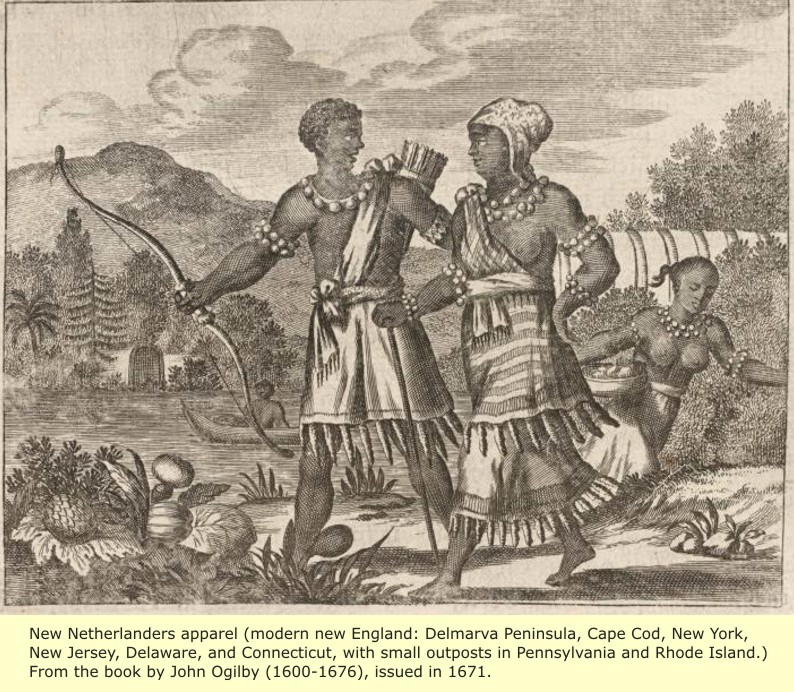 |
"New Netherland is the epitome,
and the noblest of all countries,
a blessed province,
where milk and honey flow" --
A poem by 17th-century Dutch poet Jacob Steendam
Below are several quotes culled from the pages of Narratives of New Netherland, 1609-1664, a compilation of accounts of the newly discovered land. The quotes are arranged into categories.
“The Landes … were as pleasant with Grasse and Flowers, and goodly Trees, as ever they had seene, and very sweet smells came from them.”
-- Robert Juet, a mate of Henry Hudson on his 1609 voyage
The most well known early European observer of the land that would become New Netherland and the river that bears his name is Henry Hudson. Unfortunately, the journal of Henry Hudson was lost, but excerpts are found in other writings. The three quotes below reveal Hudson's assesment of the land's abundance and the ways of the natives.
"When I came on shore, the swarthy natives all stood and sang in their fashion. Their clothing consists of the skins of foxes and other animals, which they dress and make the garments from skins of various sorts. Their food is Turkish wheat, which they cook by baking, and it is excellent eating. They soon came on board, one after another, in their canoes, which are made of a single piece of wood. Their weapons are bows and arrows, pointed with sharp stones, which they fasten with hard resin. They had no houses, but slept under the blue heavens, some on mats of bulrushes interwoven, and some on the leaves of trees. They always carry with them all their goods, as well as their food and green tobacco, which is strong and good for use. They appear to be a friendly people, but are much inclined to steal, and are adroit in carrying away whatever they take a fancy to." (48)
"The land is the finest for cultivation that I ever in my life set foot upon, and it also abounds in trees of every description. The natives are a very good people; for, when they saw that I would not remain, they supposed that I was afraid of their bows, and taking the arrows, they broke them in pieces, and threw them into the fire..." (49)
"It is as pleasant a land as one can tread upon, very abundant in all kinds of timber suitable for ship-building, and for making large casks. The people had copper tobacco pipes, from which I inferred that copper must exist there; and iron likewise according to the testimony of the natives who, however, do not understand preparing it for use." (49)
"On the top of their heads they have a streak of hair from the forehead to the neck, about the breadth of three fingers..."
-- Reverend Johannes Megapolensis in 1644
The excerpts below are from the writings of the Reverend Johannes Megapolensis in 1644. Kiliaen van Rensselaer, realizing the importance of cultural institutions in his patroonship, selected the reverend and sent him to Renssealerswyck under a contract of six years. The quotes below reflect the complicated relationship between the natives and Europeans and an attempt to understand and interpret the ways of an alien culture.
"They look at themselves constantly, and think they are very fine. They make themselves stockings and also shoes of deer skin, or they take leaves of their corn, and plait them together and use them for shoes. The women, as well as the men, go with their heads bare. The women let their hair grow very long, and tie it together a little, and let it hang down their backs. The men have a long lock of hair hanging down, some on one side of the head, and some on both sides. On the top of their heads they have a streak of hair from the forehead to the neck, about the breadth of three fingers, and this they shorten until it is about two or three fingers long, and it stands right on end like a cock's comb or hog's bristles; on both sides of this cock's comb they cut all the hair short, except the aforesaid locks, and they also leave on the bare places here and there small locks, such as are in sweeping-brushes, and then they are in fine array." (173)
"But although they are so cruel, and live without laws or any punishments for evil doers, yet there are not half so many villainies or murders committed amongst them as amongst Christians; so that I oftentimes think with astonishment upon all the murders committed in the Fatherland, notwithstanding their severe laws and heavy penalties. These Indians, though they live without laws, or fear of punishment, do not (at least, they very seldom) kill people, unless it may be in a great passion, or a hand-to-hand fight. Wherefore we go wholly unconcerned along with the Indians and meet each other an hour's walk off in the woods, without doing any harm to one another." (179)
"It is a pleasant and charming country, if only it were well peopled by our nation."
-- David de Vries in 1642
The quote below is from the Historisch Verhael, a work complied by the Dutch scholar Nicolaes van Wassenaer, which appeared in twenty-one semi-annual parts covering the years 1621-1631. The following entry is under December of 1624 and speaks to the area's economic potential.
"As regards the prosperity of New Netherland, we learn by the arrival of the ship whereof Jan May of Hoorn was skipper, that everything there is in good condition. The colony began to advance barely and to live in friendship with the natives. The fur or other trade remains in the West India Company, others being forbidden to trade there. Rich beavers, otters, martins and foxes are found there. This voyage five hundred otter skins, and fifteen hundred beavers, and a few other skins were brought hither, which were sold in four parcels for twenty-eight thousand, some hundred gilders." (77)
The quote below is from David de Vries, a voyager who, after his retirement, wrote and printed an account of his many adventures. The title, reflecting the period's affinity for long titles, may be translated: "Short Historical and Journal-Notes of various Voyages performed in the Four Quarters of the Globe, viz., Europe, Africa, Asia and America, by David Pieterszoon de Vries, Artillery-Master to the Noble and Mighty Lords the Council of West Friesland and the Northern Quarter [of the Province of Holland], wherein is set forth what Battles he delivered on the Water, Each Country, its Animals, its Birds, its Kinds of Fishes, and its Wild Men counterfeited to the Life, and its Woods and Rivers with their Products." The following account is from 1642.
"Our Netherlanders raise good wheat, rye, barley, oats, and peas, and can brew as good beer here as in our Fatherland, for good hops grow in the woods; and they who make it their business can produce enough of those things, as everything can be grown which grows in Holland, England, or France, and they are in want of nothing but men to do the work. It is a pleasant and charming country, if only it were well peopled by our nation." (219)
"In short, it is a country well adapted for our people to inhabit, on account of the similarity of the climate and the weather to our own."
-- From a first-hand account compiled by Johan de Laet
Johan de Laet, a director of the Dutch West India Company and a man of great influence, compiled a work of various writings on New Netherland. The following description of the area's climate is taken from one of those works. This passage assures the potential colonist that the land is very habitable.
"As to the climate and seasons of the year, they nearly agree with ours, for it is a good deal colder there than it ought to be according to the latitude; it freezes and snows severely in winter, so that often there is a strong drift of ice in the river. But this occurs some years more than others, as with us. There is also the same variety of winds in that country, and in summer thunder and lightning with violent showers. In short, it is a country well adapted for our people to inhabit, on account of the similarity of the climate and the weather to our own ; especially since it seems to lack nothing that is needful for the subsistence of man, except domestic cattle, which it would be easy to carry there; and besides producing many things of which our own country is destitute. Wine can be made there with industry, since vines are already found that require nothing but cultivation. We have before stated how the country there abounds in timber suitable for ship-building; it is sought by our people for that purpose, who have built there several sloops and tolerable yachts." (50)
 |
 |
 |
 |
 |
Benjamin Franklin said Native Americans were Tawny=BROWN;so where did "Redman or Redskin" come from?As is typical with all Albino history - THEY LIE!
The Albinos teach that it was Indians who did the SCALPING, but they don't tell you that it was THEM who taught it to the Indians, and the Indians were only returning the FAVOR! Scalping had been known in Europe, according to accounts, as far back as ancient Greece. More often, though, the European manner of execution involved beheading. Enemies captured in battle - or people accused of political crimes - might have their heads chopped off by victorious warriors or civil authorities. In some places and times in European history, leaders in power offered to pay "bounties" (cash payments) to put down popular uprisings. In Ireland, for instance, the occupying English once paid bounties for the heads of their enemies brought to them. Europeans brought this cruel custom of paying for killings to the American frontier. Here they were willing to pay for just the scalp, instead of the whole head. The first documented instance in the American colonies of paying bounties for native scalps is credited to Governor Kieft of New Netherlands. By 1703, the Massachusetts Bay Colony was offering $60 for each native scalp. And in 1756, Pennsylvania Governor Morris, in his Declaration of War against the Lenni Lenape (Delaware) people, offered "130 Pieces of Eight [a type of coin], for the Scalp of Every Male Indian > Enemy, above the Age of > Twelve Years, " and "50 Pieces of Eight for the Scalp of Every Indian Woman, produced as evidence of their being killed." Massachusetts by that time was offering a bounty of 40 pounds (again, a unit of currency) for a male Indian scalp, and 20 pounds for scalps of females or of children under 12 years old. Albinos tell of the "Blood Thirsty" Indians, but in fact, it was the "Blood Thirsty" Albinos!BOSCAWEN, N.H. Monument depicting Colonial heroine Hannah Dustin, In her left hand she holds a fistful of human scalps. The inscription underneath tells of her 1697 capture in an Indian raid, and how she slew her captors as they slept -12 women and children. Later she returned for their scalps, having remembered they could fetch a bounty. (There are many statues of Dustin, this is the only one showing the scalps. The others are typical Albino lie statues).
So where did the terms "Redman or Redskin" come from?Historian Professor Roxanne Dunbar-Ortiz states that the American settlers were paid bounties for killing Indians, and they gave a name to the mutilated and bloody corpses they left in the wake of their scalp hunts: REDSKINS! |
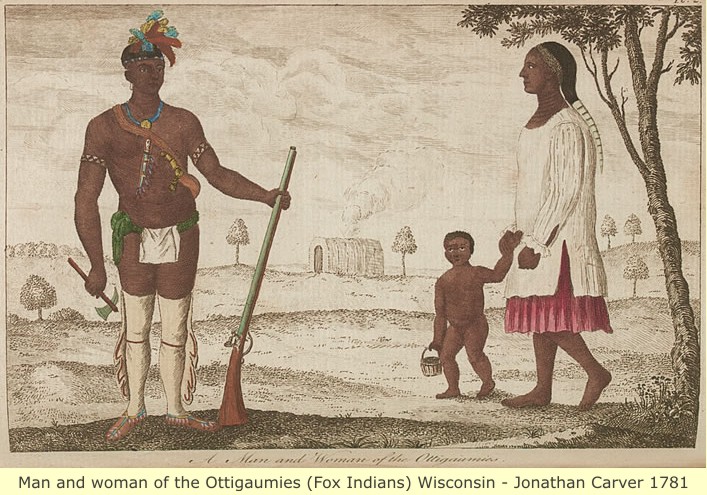
| In 1736, Philip Georg Friedrich von Reck, then only twenty five years old, sailed with other colonists from Germany to Georgia. One of his intentions, expressed in a letter before he left Europe, was to bring back from America "ocular proof" of what he called "this strange new world." Idealistic and enthusiastic, well-educated and blessed with an amazing artistic gift, von Reck kept a travel diary, wrote separate descriptions of the plants, animals and Indians he discovered in Georgia and drew some fifty watercolor and pencil sketches of what he saw. Note, these drawings are reproductions, Racism may or may not effect their modern appearance. |
 |
| The Coyaha people, sometimes known as the Yuchi, also spelled Euchee and Uchee, are people of a Native American tribe who traditionally lived in the eastern Tennessee River valley in Tennessee in the 16th century. The Yuchi were well known mound builders. During the 17th century, they moved south to Alabama, Georgia and South Carolina. After suffering many fatalities due to epidemic disease and warfare in the 18th century, several surviving Yuchi were removed to Indian Territory in the 1830s, together with their allies the Muscogee Creek. (Some who remained in the South were classified as "free persons of color"; others were enslaved.) Some remnant groups migrated to Florida, where they became part of the recently formed Seminole Tribe of Florida.
Today the Yuchi live primarily in the northeastern Oklahoma area, where many are enrolled as citizens in the federally recognized Muscogee Creek Nation. Some Yuchi are enrolled as members of other federally recognized tribes, such as the Absentee Shawnee Tribe and the Cherokee Nation. |
 |
 |
 |
 |
 |
 |
 |
 |
 |
 |
 |
 |
 |
 |
 |
 |
 |
By Henry Howe
FRONTIER LIFE NATURAL CURIOSITIES, ETC.
Page 109
A melancholy disaster, about the same time, befell a body of one hundred and seven United States troops, under Capt. Laherty, on their way down the Ohio to Fort Steuben, at the Falls of the Ohio. They were attacked by an overwhelming force of Indians, near the mouth of the Great Miami, and, although making a brave resistance, were compelled to retreat, with the loss of about fifty slain. Massacre of the Moravian or Christian Indians. As early as the year 1762, the Moravian missionaries, Post and Heckewelder, established a mission among the Indians on the Tuscarawas. Before the close of the war of the revolution, they had three flourishing stations Or villages, viz: Shoenbrun, Gnadenhutten and Salem. These were respectively about five miles apart, and stood near fifty miles west of the site of Steubenville, Ohio. In the war, their position was eminently dangerous. They were midway between the hostile towns on the Sandusky and the frontier settlements, and being on the direct route of war parties of either, were compelled occasionally to give sustenance and shelter to both. This excited the jealousy of the contending races, although they preserved a strict neutrality, and looked with horror upon the shedding of blood. In February, 1782, many murders were committed upon the upper Ohio and the Monongahela, by the hostile Indians. The settlers believing that the Moravians were either concerned in these murders, or had harbored those who were, determined to destroy their towns, the existence of which, they deemed dangerous to their safety. Accordingly, in March, about ninety volunteers assembled under the command of Col. David Williamson, in the Mingo Bottom, just below the site of Steubenville. Arriving in the vicinity of Gnadenhutten, they, on the morning of the 8th, surrounded and entered the town, where they found a large party of Indians in a field, gathering corn. They informed the Indians that they had come on an errand of peace and friendship that they were going to take them to Fort Pitt for protection. The unsuspecting Indians, pleased at the prospect of their removal, delivered up their arms which they used for hunting, and commenced preparing breakfast for themselves and guests. An Indian messenger was dispatched to Salem, to apprise the brethren there of the new arrangement, and both companies then returned to Gnadenhutten. On reaching the village, a number of mounted militia started for the Salem settlement, but ere they reached it, found that the Moravian Indians at that place had already left their corn-fields, by the advice of the messenger, and were on the road to join their brethren at Gnadenhutten. Measures had been adopted by the militia to secure the Indians whom they had at first decoyed into their power. They were bound, confined in two houses, and well guarded. On the arrival of the Indians from Salem, (their arms having been previously secured without suspicion of any hostile intention,) they were also fettered, and divided between the two prison-houses, the males in one, the females in the other. The number thus confined in both, including men, women and children, have been estimated from ninety to ninety-six. A council was then held to determine how the Moravian Indians should be disposed of. This self-constituted military court embraced both officers and privates. The late Dr. Dodridge, in his published notes on Indian wars, says:
"Colonel Williamson put the question, whether the Moravian Indians should be taken prisoners to Fort Pitt, or put to death?" requesting those who were in favor of saving their lives to step out and form a second rank. Only eighteen out of the whole number stepped forth as advocates of mercy. In these, the feelings of humanity were not extinct. In the majority, which was large, no sympathy was manifested. They resolved to murder (for no other word can express the act) the whole of the Christian Indians in their custody. Among these were several who had contributed to aid the missionaries in the work of conversion and civilization two of whom emigrated from New Jersey after the death of their spiritual pastor, the Rev. David Brainard. One woman, who could speak good English, knelt before the commander and begged his protection. Her supplication was unavailing. They were ordered to prepare for death. But the warning had been anticipated. Their firm belief in their new creed was shown forth in the sad hour of their tribulation, by religious exercises of preparation. The orisons of these devoted people were already ascending the throne of the Most High! the sound of the Christian's hymn and the Christian's prayer found an echo in the surrounding woods, but no responsive feeling in the bosoms of their executioners. With gun, and spear, and tomahawk, and scalping-knife, the work of death progressed in these slaughter-houses, until not a sigh or moan was heard to proclaim the existence of human life within all, save two two Indian boys escaped, as if by a miracle, to be witnesses in after times of the savage cruelty of the white man toward their unfortunate race. Of the number thus cruelly murdered by the backwoodsmen of the upper Ohio, between fifty and sixty were women and children some of them innocent babes. No resistance was made; one only attempted to escape. The whites finished the tragedy by setting fire to the town, including the slaughter-houses with the bodies in them, all of which were consumed. A detachment was sent to the upper town, Shoenbrun, but the people having received information of what was transpiring below, had deserted it. Those engaged in the campaign, were generally men of standing, at home. When the expedition was formed, it was given out to the public that its sole object was to remove the Moravians to Pittsburgh, and by destroying the villages, deprive the hostile savages of a shelter. In their towns, various articles plundered from the whites, were discovered. One man is said to have found the bloody clothes of his wife and children, who had recently been murdered. These articles, doubtless, had been purchased of the hostile Indians. The sight of these, it is said, bringing to mind the forms of murdered relations, wrought them up to an uncontrollable pitch of frenzy which nothing but blood could satisfy. In the year 1799, when the remnant of the Moravian Indians were recalled by the United States to reside on the same spot, an old Indian, in company with a young man by the name of Carr, walked over the desolate scene, and showed to the white man an excavation, which had formerly been a cellar, and in which were still some moldering bones of the victims, though seventeen years had passed since their tragic death the tears, in the meantime, falling down the wrinkled face of this aged child of the Tuscarawas. Crawford's Defeat. At the time of the massacre, less than half of the Moravian Indians were at their towns, on the Tuscarawas, the remainder having been carried off, by the hostile Indians, to Sandusky, had settled these in their vicinity. Immediately after the return of Williamson's men, what may be called a second Moravian campaign, was projected; the object being first to finish the destruction of the christian Indians, at their new establishment, on the Sandusky, and then destroy the Wyandot towns on the same river.
The long continuance of the Indian war, the many murders and barbarities committed upon the frontiers, had so wrought upon the inhabitants, as to create an indiscriminate thirst for revenge. Having had a taste of blood and plunder, in their recent expedition, without loss or danger on their part, it was now determined not to spare the lives of any Indians who might fall into their hands, whether friends or foes. On the 25th of May, 1782, four hundred and eighty men, principally from the upper Ohio, assembled at the Old Mingo towns, near the site of Steubenville. At this place, they chose Col. Wm. Crawford commander, his competitor being Col. Williamson. Crawford* accepted the office with great reluctance. Soon after, his men exhibited such an utter disregard to military order, that he was depressed with a presentiment of evil. Notwithstanding the secrecy and dispatch of the enterprise, the Indian spies discovered their rendezvous, on the Mingo Bottom, knew their number and destination. They visited every encampment on their leaving it, and saw written on the barks of trees and scraps of paper, that " no quarter was to be given to any Indian, whether man, woman or child." Their route was by the "Williamson trail," through the burnt Moravian towns. On the 6th of June, they arrived at the site of the Moravian villages, on a branch of the Sandusky. Here, instead of meeting with Indians and Elunder, they found nothing but vestiges of desolation. A few huts, surrounded by high grass, alone remained; their intended victims having, some time before, moved to the Scioto, some eighteen miles south. A council then decided to march on north one day longer, and if then, no Indian towns were reached, to retreat. About 2 o'clock, the next day, while on their march through the Sandusky plains, the advanced guard were driven in by Indians concealed in great numbers in the high grass. The action then became general, and the firing was incessant and heavy until dark, for In this battle, the whites had the advantage, and lost but a few men. The Indians were driven from the woods and prevented from gaining a strong position on the right flank, by the vigilance and bravery of Major Leet. During the night, both armies lay upon their arms behind a line of fires, to prevent surprise. The next day, the Indians were seen in large bodies traversing the plains, while others were busy carrying off their dead and wounded. At a council of officers, Col. Williamson proposed marching, with one hundred and fifty volunteers, to upper Sandusky; but the commander opposed it, stating that the Indians, whose numbers were hourly increasing, would attack and conquer their divided forces in detail. The dead were buried, and preparations made for a retreat after dark. The Indians perceiving their intention, about sunset, attacked them with great fury in all directions, except that of Sandusky. In the course of the night, the army commenced their retreat, regained their old trail by a circuitous route, and continued on with but slight annoyance from the enemy. Unfortunately, when the retreat commenced, a large number erroneously judging that the Indians would follow the main body, broke off into small parties and made their way toward their homes, in different directions. These the Indians, for days, pursued in detachments, with such activity that but very few escaped, some being killed almost within sight of the Ohio River.
{* Col. Win. Crawford was a native of Virginia, but at this time was residing near Brownsville, Pa. He was a captain in the old French war, and in the revolution, raised a regiment of continentals by his own exertions. He was an intimate friend of Washington a man of character, and of noted bravery. At this time, he was about fifty years of age. The battle was fought three miles north of upper Sandusky. The large tree on the right of the engraving (Eng. p. 110) and others in the vicinity, even to the present day, show marks of the bullets.}
Soon after the retreat began, Col. Crawford having missed his son and several of his connections, halted and unsuccessfully searched the line for them as it passed on, and then, owing to the weariness of his horse, was unable to overtake the retreating army. Falling in company with Dr. Knight and others, they kept on until the third day, when they were attacked, and Crawford and Knight captured. They were taken to an Indian encampment in the vicinity, where they found nine other prisoners, and all, the next morning, were conducted toward the Tyemochte, by Pipe and Wingenund, Delaware chiefs, except four of them, who were killed and scalped on the way. At a Delaware town on the Tyemochte, a few miles northwesterly from the site of upper Sandusky, preparations were made for the burning of Col. Crawford. In the vicinity, the remaining five of the nine prisoners were tomahawked and scalped by squaws and boys. Crawford's son and son-in-law were executed at a Shawanese town. The account of the burning of Crawford is thus given by Dr. Knight, his companion, who subsequently escaped. When we went to the fire, the colonel was stripped naked, ordered to sit down by the fire, and then they beat him with sticks and their fists. Presently after, I was treated in the same manner. They then tied a rope to the foot of a post about fifteen feet high, bound the colonel's hands behind his back and fastened the rope to the ligature between his wrists. The rope was long enough for him to sit down or walk round the post once or twice, and return the same way. The colonel then called to Girty, and asked if they intended to burn him? Girty answered, yes. The colonel said he would take it all patiently. Upon this, Captain Pipe, a Delaware chief, made a speech to the Indians, viz: about thirty or forty men, and sixty or seventy squaws and boys. When the speech was finished, they all yelled a hideous and hearty assent to what had been said. The Indian men then took up their guns and shot powder into the colonel's body, from his feet as far up as his neck. I think that not less than seventy loads were discharged upon his naked body. They then crowded about him, and to the best of my observation, cut off his ears; when the throng had dispersed a little, I saw the blood running from both sides of his head in consequence thereof. The fire was about six or seven yards from the post to which the colonel was tied; it was made of small hickory poles, burnt quite through in the middle, each end of the poles remaining about six feet in length. Three or four Indians, by turns, would take up, individually, one of these burning pieces of wood, and apply it to his naked body, already burnt black with the powder. These tormentors presented themselves on every side of him with the burning fagots and poles. Some of the squaws took broad boards, upon which they would carry a quantity of burning coals and hot embers, and throw on him, so that in a short time, he had nothing but coals of fire and hot ashes to walk upon. In the midst of these extreme tortures, he called to Simon Girty, and begged of him to shoot him; but Girty making no answer, he called to him again. Girty then, by way of derision, told the colonel he had no gun, at the same time turning about to an Indian who was behind him, laughed heartily, and by all his gestures, seemed delighted at the horrid scene. Girty then came up to me and bade me prepare for death. He said, however, I was not to die at that place, but to be burnt at the Shawanese towns. He swore by G d I need not expect to escape death, but should suffer it in all its extremities. Col. Crawford, at this period of his sufferings, besought the Almighty to have mercy on his soul, spoke very low, and bore his torments with the most manly fortitude.
He continued in all the extremities of pain for an hour and hour and three quarters or two hours longer, as near as I can judge, when at last, being almost exhausted, he lay down on his belly; they then scalped him, and repeatedly threw the scalp in my face, telling me, " that was my great captain." An old squaw (whose appearance every way answered the ideas people entertain of the devil) got a board, took a parcel of coals and ashes and laid them on his back and head, after he had been scalped; he then raised himself upon his feet and began to walk round the post; they next put a burning stick to him, as usual, but he seemed more insensible of pain than before. The Indian fellow who had me in charge, now took me away to Captain Pipes house, about three-quarters of a mile from the place of the colonel's execution. I was bound all night, and thus prevented from seeing the last of the horrid spectacle. Next morning, being June 12th, the Indian untied me, painted me Black, and we set off for the Snawanese town, which he told me was somewhat less than forty miles distant from that place. We soon came to the spot where the colonel had been burnt, as it was partly in our way; I saw his bones lying among the remains of the fire, almost burnt to ashes; I suppose, after he was dead, they laid his body on the fire. The Indian told me that was my big captain, and gave the scalp halloo. Most of the prisoners taken in this campaign, were burned to death, with cruel tortures, in retaliation for the massacre of the Moravian Indians, who were principally Delaware's. This invasion was the last made from the region of the upper Ohio during the war. But the Indians, encouraged by their successes, overran these settlements with scalping parties. In September, three hundred Indians, for three days, unsuccessfully invested the fort at Wheeling. A detachment of one hundred of these, made an attack upon Rice's Fort, twelve miles north. Although defended by only six men, they were obliged to retire with loss.
https://archive.org/stream/historicalcollec01howe#page/n11/mode/2up
Wiki:
The Delaware Tribe of Indians, sometimes called the Eastern Delaware, based in Bartlesville, Oklahoma, is one of three federally recognized tribes of Delaware Indians in the United States, along with the Delaware Nation based in Anadarko, Oklahoma and the Stockbridge-Munsee Community of Wisconsin. More Lenape or Delaware people live in Canada. The historically Algonquian-speaking Delaware refer to themselves as Lenni Lenape. At contact, in the early 17th century, the tribe lived along the Delaware River, named for Lord de la Warr, territory in lower present-day New York state and eastern New Jersey, and western Long Island.
The Delaware nation was the first to sign a treaty with the new United States. They signed the treaty on the 17th September 1778. Despite the treaty, the Delaware were forced to cede their Eastern lands and moved first to Ohio, later Indiana (Plainfield), Missouri, Kansas, and Indian Territory. The ancestors of the Delaware Nation, following a different migration route, settled in Anadarko. Other Delaware bands moved north with the Iroquois after the American Revolutionary War to form two reserves in Ontario, Canada.
Traditionally the Delaware were divided into the Munsee, Unami, and Unalachtigo, three social divisions determined by language and location. After dealing with the United States on a government-to-government basis, the ancestors of the Delaware Tribe of Indians agreed in 1867 to relocation to Oklahoma, to live within the Cherokee Nation. The Delaware Tribe of Indians operated autonomously within the lands of the Cherokee Nation.
 |
 |
 |
 |
 |
| From the study.
Geographical location of other early human skeletal remains in the Americas showing Paleoamerican morphology and their respective chronological range. |
 |
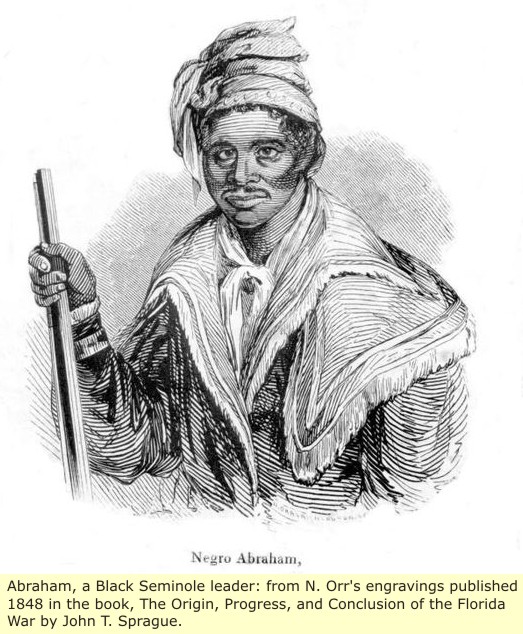
As is typical with nonsense White man history, there is a seeming need by Whites to denigrate Blacks, whereby any Blacks not in continental Africa, are declared to have been brought there as Slaves. This is not an innocent declaration brought about by ignorance. Quite the contrary, post Colombian Europeans encountered an Americas teeming with Blacks, they wrote about them, painted pictures of them, collected their artifacts, and also counted them in their census. Yet there are any number of Seminole histories, which declare that the so-called "Black Seminoles" are a tribe of run-away Slaves who latched onto the "Real" seminole tribe. Sadly, it may be that the seminoles themselves, like so many indigenous Black people, have lost their own history, and may not even know any better, thereby believing it.
But that bit of White man nonsense, is about as far away from the truth as you can get. According to scientific evidence, the Black Seminoles were the first people to settle in North America (Florida), at a time when the rest of the North was still under glaciers, more than 10,000 years ago. We cannot provide a history or culture for the Seminoles, because all available material is corrupted with nonsense like: they were run-away Slaves, they moved to Florida, the almost total confusion with neighboring Amerindian tribes etc.
 |
 |
 |
 |
 |
 |
 |
 |
 |
 |
 |
 |
 |
 |
 |
 |
 |
 |
 |
 |
Link to this census document.
https://www.census.gov/history/www/through_the_decades/overview/1860.html
The large indigenous Black population of the Americas was destroyed by murder and disease due to overwork and malnutrition (Not European disease) just like the Amerindian population. However, whereas Blacks were originally the most numerous people in the Americas, today their population is inferior to that of the Mongol extract native Americans. Some thoughts on why that is, are explored here:
An interesting comparison of White accounts of the Aztec and Inca wars. Click Here >>> |
Casta PaintingsCasta is an Iberian word (existing in Spanish, Portuguese and other Iberian languages since the Middle Ages), meaning lineage, breed, or race, to describe as a whole, the mixed-race people which appeared in the post-Conquest period. The social composition of Mexico during the eighteenth century was based on the existence of various castas or castes. Click here for examples of Casta Paintings >>> |
The American GenocideHere are some interesting numbers.At the time of Columbus’s landing in the America’s in 1492, the population of the Hemisphere was approximately 100 million people. Six million (6) in the Caribbean, ten million (10) in the United States and Canada, forty million (40) in Mexico and Central America, forty four (44) million in South America. By 1650 the Indian population of the Caribbean, Mexico-Central America and South America, was approximately fifteen (15) million people total. Today the Amerindian population of the Caribbean is all but extinct. By 1906 the Indian population of the United States and Canada was only one (1) million people. Systematic killings for their land and goods, being killed through the overwork and malnutrition of Slavery, and the use of disease as a biological weapon, where indigenous Americans were purposefully infected with Smallpox and other such diseases, (the Albinos would give the Blankets and clothing of Europeans killed by diseases like Smallpox and Measles to impoverished indigenous Americans, whose immune systems were already weak because of overwork and malnutrition): these methods killed almost nine (9) of every ten (10) people. However, the story later generations of American Albinos tell to cover up the atrocities committed in the Americas, is just plain stupid. That is the ridiculous assertion that indigenous Americans were wiped-out by "European Diseases" that they had no immunity for. And it is a testament to Albino collusion that never has any Albino medical professional come forward and said the truth: initially NO ONE has immunity from a disease. Immunity is developed only AFTER you have gotten, and SURVIVED, a particular disease. Thus, ANYONE from ANYWHERE, if they have not had Measles or a Measles vaccine, they WILL get sick if exposed to the Measles virus - Ditto Smallpox and all other diseases. And just as these diseases killed SOME EUROPEANS, they would of course also kill SOME indigenous Americans, OR Africans, OR Australians, OR Asians, OR Pacificans, OR MARTIANS! But since those diseases did not kill off 80-90% of the European population, or 80-90% of the African population, or 80-90% of the Australian population, or 80-90% of the the Asian population, or 80-90% of the Pacifican population: We can confidently conclude that the claim that those diseases killed off 80-90% of the indigenous American population is a vile Albino lie, contrived to cover up the brutal murder of millions of people.
|
'Shocking' Holocaust Study Claims Nazis Killed Up To 20 Million People
|
 |
We are trained/programmed by American Albinos to think of Adolf Hitler as one of the biggest butchers of Human beings in mans history. But the fact is that Adolf Hitler was a simple "Babe in the Woods" compared to the Albino Murderers and Degenerates in The United States and other parts of the Americas. Those Albinos were his heroes, whom he could only hope to emulate: Excerpts from James Q. Whitman's 'Hitler's American Model' Hitler had an “admiring engagement” with America’s handling of Native Americans. In a 1928 speech, the future dictator said the US had “gunned down the millions of Redskins to a few hundred thousand, and now keeps the modest remnant under observation in a cage.”
|
 |
Genocide of indigenous peoples - From Wikipedia, the free encyclopediaIn 1492, when Christopher Columbus reached the Americas, about 145 million people lived in the Western hemisphere. By 1691 (less than 200 years later), the population of indigenous Americans had declined by 90-95 percent, or by around 130 million people.Clearly - by American Standards, when it came to killing: Adolf Hitler was a rank Amateur compared to Albino Americans! |
 |
 |
 |
Stone MasksSoapstone, painted with red and green pigments; 24 x 22.5 x 18.2 cm. William Duncan, the missionary who established Metlakatla, British Columbia: by unknown means, came into possession of the sighted mask. He offered the stone mask for sale in 1878, it was collected from the missionary by the explorer Alphonse Pinart and donated to the Musée de l'Homme, Paris in 1881. The Ottawa mask was collected in 1879 by Israel Wood Powell, deputy commissioner of Indian Affairs for British Columbia. Although he recorded acquiring the mask at Kitkatla, Powell did not visit the village that year. In view of the confusion in his records, it is probable that he acquired it in another community. One possibility is that both masks originated in Port Simpson. Separated for over one hundred years, the two masks were not reunited until 1975, when the Paris mask travelled to Canada to appear in an exhibition. It was then that the relationship between the two masks, expressions of the same face, was discovered. The Canadian mask, without apertures for eyes, fits snugly over the Paris mask, with its round eyeholes. It is thought that the pair was worn in a naxnox performance, where an individual's personal power was displayed in dance. To present the illusion of the eyes actually opening and closing, the dancer must have turned quickly while removing the "blind" mask to reveal the one with eyeholes. The dancer would have needed considerable strength to hold the four-kilogram (almost 9 lbs.) inner "sighted" mask in place with the wooden mouthpiece, although a harness attached through holes in the mask's rim might have helped support it. The "unsighted" mask may have been held in the hand, concealed by the dancer's costume. The exact age of the masks is unknown, although the Paris museum exhibits theirs in the B.C. collection, indicating that it is over 2,000 years old. The Canadian Conservation Institute, Department of Canadian Heritage, has undertaken an analysis of their mask, but their results are as yet unpublished. |
 |
 |
 |
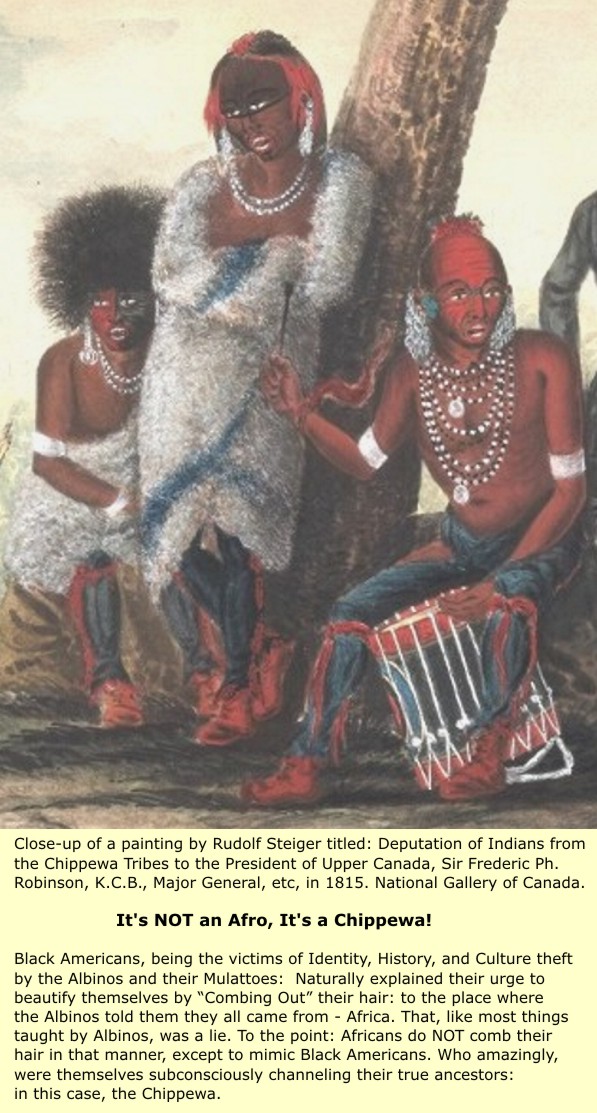 |
Wiki:
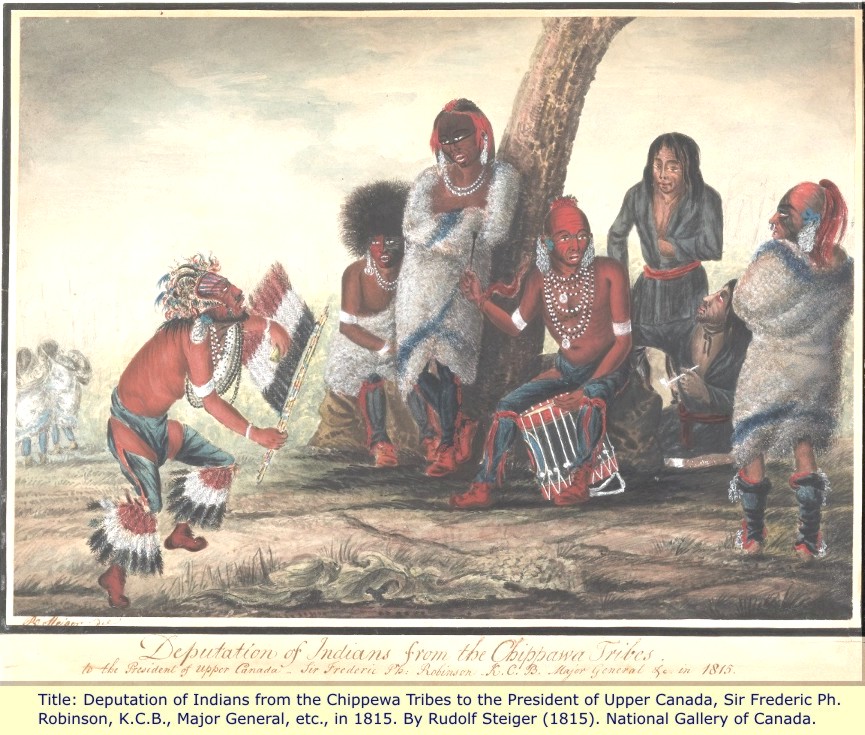
The Ojibwe, Ojibwa, or Chippewa are an "Anishinaabeg" (see below) group of indigenous peoples in North America. They live in Canada and the United States and are one of the largest Indigenous ethnic groups north of the Rio Grande. In Canada, they are the second-largest First Nations population, surpassed only by the Cree. In the United States, they have the fourth-largest population among Native American tribes, surpassed only by the Navajo, Cherokee, and Lakota-Dakota-Nakota peoples.
The Ojibwe people traditionally have spoken the Ojibwe language, a branch of the Algonquian language family. They are part of the Council of Three Fires and the Anishinaabeg, which include the Algonquin, Nipissing, Oji-Cree, Odawa and the Potawatomi.
The majority of the Ojibwe people live in Canada. There are 77,940 mainline Ojibwe; 76,760 Saulteaux and 8,770 Mississaugas, organized in 125 bands, and living from western Quebec to eastern British Columbia. As of 2010, Ojibwe in the US census population is 170,742.
Wiki:
Anishinaabe (or Anishinabe, plural: Anishinaabeg) is the autonym for a group of culturally-related indigenous peoples of Canada and the United States that include the Odawa, Ojibwe, Potawatomi, Oji-Cree, Mississaugas, and Algonquin peoples. The Anishinaabeg speak Anishinaabemowin, or Anishinaabe languages that belong to the Algonquian language family. They traditionally have lived in the Northeast Woodlands and Subarctic.
The word Anishinaabeg translates to "people from whence lowered." Another definition refers to "the good humans," meaning those who are on the right road or path given to them by the Creator Gichi-Manidoo, or Great Spirit. The Ojibwe historian, linguist, and author Basil Johnston wrote that its literal translation is "Beings Made Out of Nothing" or "Spontaneous Beings," since the Anishinaabeg were created by divine breath.
Basil Johnston
 |
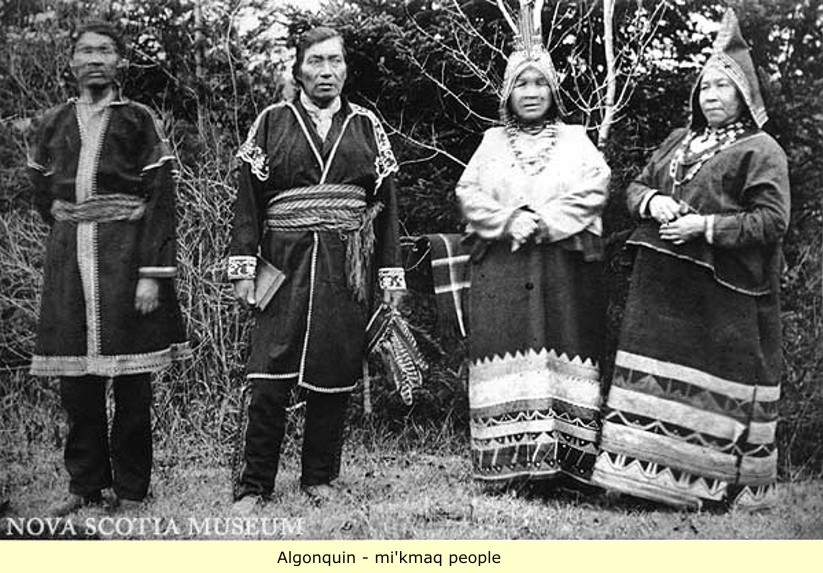 |
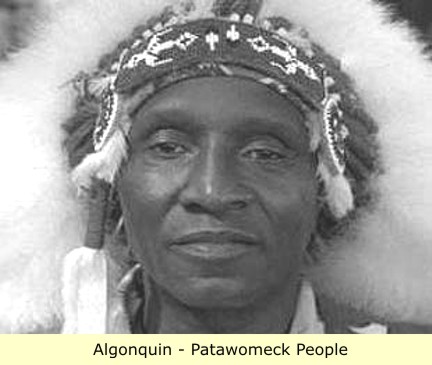 |
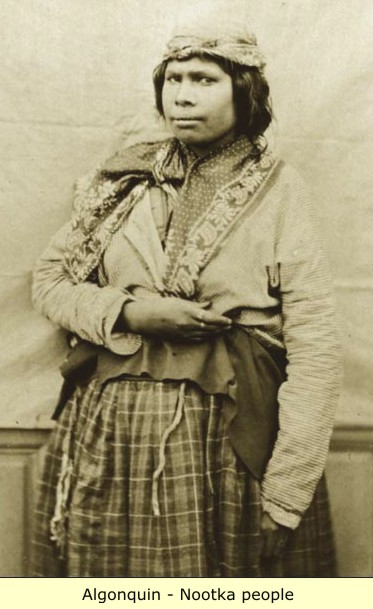 |
 |
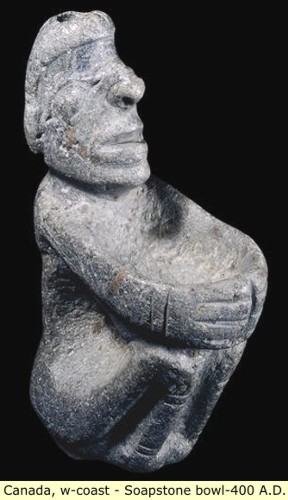 |

Cultures with Mississippian characteristics began to flourish in the Mid-South around 800 or 900 A.D, and peaked around 1200 to 1500 A.D. The widespread adoption of maize provided a new food source which encouraged permanent (year-round) settlements and growth of populations. Intensive corn agriculture, supplemented with squash, and beans (after 1200 A.D.) provided a surplus of food that could be easily stored and traded. Use of the bow and arrow, tipped with small triangular points, greatly increased hunting efficiency. Advances were also made in pottery technology. Shell-tempering provided stronger vessels and increased cooking efficiency. A variety of vessel forms began to be used and included jars, bowls, bottles, pans, and plates. Also, vessels were made that depicted animals or people (known as effigy vessels), as well as intricately engraved, incised, or painted vessels. Some Mississippians also practiced artificial cranial deformation or head shaping. The spread of these Mississippian culture traits was facilitated by a vast and widespread trade network.
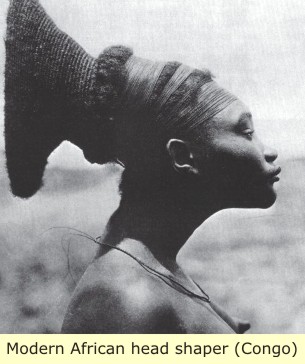 |
 |
 |
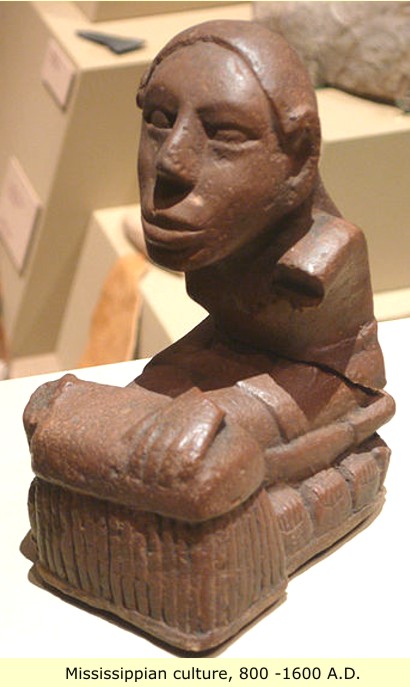 |

Mississippian period settlements were located predominantly in the floodplains of large rivers. These flooplains offered rich, well-drained, easily tilled soils conducive to the cultivation of maize, squash, and beans. Nearby fish and waterfowl were readily available in these locations and provided an additional source of protein. Also, the harvesting of wild foods, such as nuts and fruits, provided a further source of protein and fat. Animals such as deer, raccoon, and turkey also remained important sources of food.
 |
 |
 |
During the Mississippian period, people began settling in large towns that were the centers of government and religious life. Most Mississippian period towns were built around a central plaza and included one or more large, flat-topped mounds. These mounds were used as a base, or substructure, for temples and houses for the elite members of the community. Plazas provided a large, central, open space for ceremonial and social events. The commoners' lives were led by powerful chiefs and priests who controlled trade, made alliances with neighboring towns, or waged war. Many of the large Mississippian mound centers were fortified by earthen embankments and ditches. These features are barely visible in many places today, due to plowing and development. The Mississippian Period is commonly divided into three subunits: Early, Middle, and Late.
 |
 |
 |
Shell-temper was the new ingredient in pottery. Shell tempered pottery was a true technological innovation that liberalized shape and increased strength. Another benefit of shell tempered pottery was an increased efficiency in cooking.
Arrow points first occur at this time in the Mid-South. The technological advantage of the bow and arrow was to greatly increase hunting efficiency. The discoidal or chunky stone appears also with the inception of the Mississippian period and was used in the chunky game.
Early Mississippian period sites were comprised mainly of farmsteads, hamlets, small villages, and larger villages. The Mississippian population usually was dispersed in farmsteads and villages in order to take the best possible advantage of the environment.
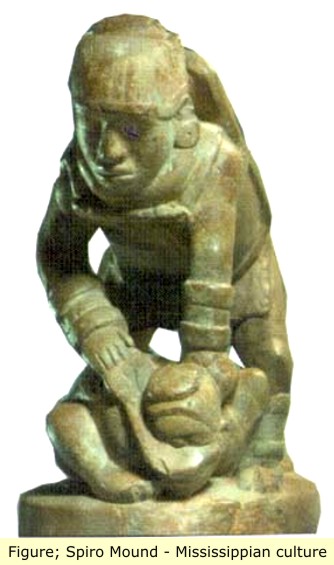

Farmsteads and hamlets were related to central villages, which in turn were related to a larger (paramount) village. Redistribution and storage of surplus took place at the large villages, or administrative centers. The main advantage this type of organization was greater productivity and the ability to support and control larger populations. Surplus food was used in many ways. Storage provided insurance against future crop loss. Another use was to support craft specialization in which work was done in shell, stone, pottery and wood. Surplus was also used for feasts when administrative centers were embellished and repaired. Ceremonies must have taken place often, accompanying planting, harvesting, and with burials of people who held high rank within the community.
 |
Middle period Mississippian began around 1000-1050 A.D. The population was dispersed in farmsteads, hamlets, and small villages in most of the region. At about 1150 A.D. villages became increasingly associated with the ceremonial center, which became a "civic-ceremonial center." Villages also became stockaded with rows of houses with the ceremonial component enclosed inside. Protection of the ceremonial center and the population obviously became increasingly important although archaeological indications of warfare were scarce during this time.
 |
 |
By 1250 A.D, a political system had come into being and was composed of sites which included the previously mentioned civic-ceremonial center with mounds, associated with palisaded villages, surrounded by dispersed farmsteads. Wattle and daub wall trench houses developed but were not widespread.
Above-ground storage probably developed during this period in order to protect surplus foods from small animals. Pottery became fairly standardized and well made. A variety of effigy and painted vessel forms were being produced but were still largely restricted to ceremonial-burial use.


At major sites during the Late Mississippian period, highly distinctive artifacts were deposited in burial mounds. These artifacts were the symbolic of a religious cult in which the chiefly elite were apparently the leading participants. Among these "Southern Ceremonial Complex" objects were axes with the head and shaft carved from a single piece of stone; polished or chipped stone batons or maces; copper pendants decorated with circles or weeping eyes; shell gorgets depicting woodpeckers, rattlesnakes or spiders; pottery vessels decorated with circles, crosses, hands, skulls, rattlesnakes, flying horned serpents, and feathered serpents; copper plates and engraved shell cups portraying male figures (perhaps warriors, or shamans, or deities) wearing eagle or falcon costumes and sometimes carrying a baton in one hand and a trophy head in the other.


Warfare increased between Mississippian societies during this time. This was most likely due to an increase in competition for scarce agricultural land among growing populations. Archaeologically an increase in warfare is evident in several ways. For example, many Mississippian sites were fortified with palisades, skeletons with imbedded arrowheads have been uncovered, scalping or beheading is depicted in artwork; and there are numerous portrayals in Mississippian artwork of scalping or beheading as well as severed trophy heads.
 |
Decoration of the hair may have been more important in this period. Tubular beads made of bone, copper, and conch-shell are found more frequently at sites. Bone fishhooks were in existence long before this Late period but at this time became fairly common.
When the Spanish conquistadors arrived in the Southeast in the mid 1500's, the Mid-South region had largely been abandoned. It was formerly believed that the desertion of the Mississippian centers had been the result of a population loss due to the introduction of European diseases. However, as radiocarbon dates have since made clear, the decline in population began more than a century before Europeans set foot in the region. To date, the Mississippian decline has not yet been satisfactorily explained.
 |
|
(self-proclaimed: one of the United States' leading agencies for history and culture).
Many of these early slaves were American Indians, mostly Algonquian-speakers of coastal Virginia and North Carolina. By the 1680s, English settlers routinely kidnapped Native American women and children in the coastal plains of North Carolina and Virginia. This Native American slave trade involved a number of colonies, including Virginia, Carolina, Pennsylvania, Massachusetts, Jamaica, Barbados, St. Kitts, and Nevis. So many Indian slaves were traded to Pennsylvania that a law was passed in 1705 forbidding the importation of Carolina Indian slaves. This was done in part because many of the slaves were Tuscarora who were aligned militarily with the Iroquois Confederacy, which threatened to intervene to stop the trade.
From 1680 to 1715, the English sold thousands of Indians into slavery, some as far away as the Caribbean. Indian slavery, however, had many problems, not the least of which were Indian attacks, and by 1720, most colonies in North America had abandoned it for African slavery. In 1670, Virginia passed a law defining slavery as a lifelong inheritable “racial” status. After the passage of this law many “black Indians” found themselves classified as black and forced into slavery.
In the fields and homes of colonial plantations, mutually enslaved African Americans and American Indians forged their first intimate relations. In spite of a later tendency in the Southern colonies to differentiate the African slave from the Indian, chattel slavery was built on a preexisting system of Indian slavery. Even though the arrival of Africans in 1619 began to change the face of slavery in North America from “tawny” Indian to “blackamoor” African, Indian slaves were exported throughout the Caribbean often in trade for Africans. As the 18th century dawned the slave trade in American Indians was so serious that it eclipsed the trade for furs and skins and had become the primary source of commerce between the English and the South Carolina colonials (Minges 2002:454).
During this transitional period, Africans and Americans Indians shared the common experience of enslavement. They worked together, lived together in communal quarters, produced collective recipes for food, shared herbal remedies, myths and legends and in the end they intermarried. Africans had a disproportionate numbers of males in their population while Native American women and children were disproportionately enslaved. American Indians males were shipped to the Caribbean, died in wars or of European diseases. As traditional societies in the Southeast were primarily matrilineal, African males who married American Indians women often became members of the wife’s clan and of her nation
The 1740 slave codes of South Carolina served to blur the distinction between African, American Indian and the children of their intermarriage, declaring: All negroes and Indians, (free Indians in amity with this government, and negroes, mulattoes, and mustezoses, who are now free, excepted) mullatoes and mustezoes who are now, or shall hereafter be in this province, and all their issue and offspring…shall be and they are hereby declared to be, and remain hereafter absolute slaves (Hurd 1862:303 as cited in Minges 2002:455)
https://www.nps.gov/ethnography/aah/aaheritage/lowCountry_furthRdg1.htm
We have all been told that Indians owned Black Slaves, as a matter of fact; there are many books on the subject, some by Blacks (of course, some Blacks will believe anything a White person tells them). And as our own research here has shown: many Native American Indian tribes were in fact, tribes of the original Black people who settled the Americas. This is supported by genetic research:
NOTE: Haplogroup R1 (Y-DNA) (specially R1b which originated in WEST AFRICA - see map) is the second most predominant Y haplotype found among indigenous Amerindians after Q (Y-DNA). R1 (M173) is found predominantly in North American groups like the Ojibwe (50-79%), Seminole (50%), Sioux (50%), Cherokee (47%), Dogrib (40%) and Tohono O'odham (Papago) (38%). Lying Albino nonsense aside: Clearly R1 entered the Americas with the initial founding population - See map of R1 distribution below.
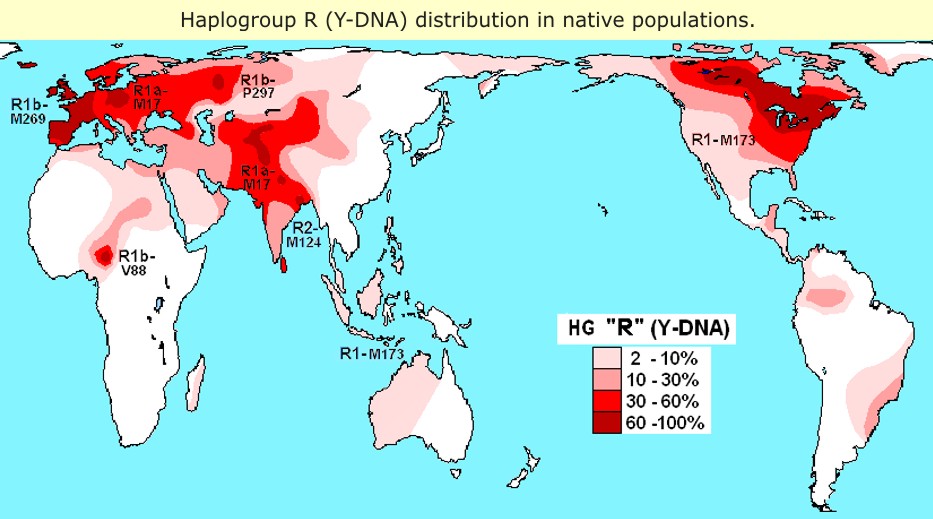 |
Which brings up a curious incongruity:
Consider this -
The average cost of an African slave in 1850 was $400.00 to $600.00 EACH!
Where would impoverished Indians get that kind of money from?
And just as importantly:
WHAT IN THE HELL COULD THEY POSSIBLY USE THE SLAVES FOR TO EARN THE MONEY BACK????
Indians didn't have good land - it was taken away from them. And they certainly didn't have plantations! Additionally - In the south, Albinos NEEDED Slaves because they couldn't work the land in the burning Sun themselves. Indians didn't have that problem, they could work their land themselves.
Thinking logically, the only thing that would make sense, is that those Black slaves were actually prisoners of war from wars with Black Indian tribes. Our rudimentary research on the matter led us to the following treaty:
INDIAN AFFAIRS: LAWS AND TREATIES
Vol. II, Treaties
Compiled and edited by Charles J. Kappler. Washington : Government Printing Office, 1904.
TREATY WITH THE CHEROKEE, 1866.
July 19, 1866. | 14 Stats., 799. | Ratified July 27, 1866. | Proclaimed Aug. 11, 1866
ARTICLE 4.
All the Cherokees and freed persons who were formerly slaves to any Cherokee, and all free negroes not having been such slaves, who resided in the Cherokee Nation prior to June first, eighteen hundred and sixty-one, who may within two years elect not to reside northeast of the Arkansas River and southeast of Grand River, shall have the right to settle in and occupy the Canadian district southwest of the Arkansas River, and also all that tract of country lying northwest of Grand River, and bounded on the southeast by Grand River and west by the Creek reservation to the northeast corner thereof; from thence west on the north line of the Creek reservation to the ninety-sixth degree of west longitude; and thence north on said line of longitude so far that a line due east to Grand River will include a quantity of land equal to one hundred and sixty acres for each person who may so elect to reside in the territory above-described in this article: Provided, That that part of said district north of the Arkansas River shall not be set apart until it shall be found that the Canadian district is not sufficiently large to allow one hundred and sixty acres to each person desiring to obtain settlement under the provisions of this article.
The salient point comes from this statement:
Repeating - ARTICLE 4.
All the Cherokees and freed persons who were formerly slaves to any Cherokee, and all free negroes not having been such slaves, who resided in the Cherokee Nation prior to June first.
This paragraph establishes that who was a slave (including Cherokees) was entirely FLUID, and was not dependent on RACE!
It also established that ALL/SOME "Free Negroes" had never been slaves.
All of which might cause some to ask why the Albinos would characterize the relationship as Mongol type Indians owning Black Slaves?
By now it should be clear that Albinos are particularly fond of ALWAYS depicting Blacks as Slaves. As a matter of fact, the Albinos have managed to make BLACK synonymous with slave, when in fact the Slavic peoples were originally synonymous with slavery (Slav = Slave)." The Albinos sick need to disparage Blacks keeps cropping up; it would take another sick mind to understand why.
Some may have noticed that almost "ALL" authentic "OLD" depictions of Native Americans - show Black people with Curly or Straight hair. There are very few "OLD" artifacts showing the Albino/Mongol Mulatto type people that we will be seeing from this point on, and who today are presented to us as Native Americans (American Indians). Clearly the evidence tells us that Black Native Americans were the majority population in North america - just as it was in Central and South America. The fact that the Black North American Tribes no longer exist - to any appreciable degree: seems to indicate that like in Central and South America, the Albino/Mongol Indians joined with European Albinos to eradicate the Black tribes. And just as in Central and South America, after the Genocide of the Black Tribes was complete, the European Albinos turned on the Albino/Mongol Indians.
Dr. Clyde Winters PhD, who is himself part Choctaw, and his wife Cherokee, says that the Black tribes were not completely wiped out, some still exist, he offers this explanation:
Mongoloid and Black native Americans have often had conflicts. In the beginning Black and Mongoloid Native Americans sold each other into slavery to provide the Europeans with labor. After the Jamasee war in 1715, most of the Native American slaves came from the Black Choctaw, Cree, Chicasaw, Yamasee nations etc.
What government officials did was to force all Black Native Americans to record themselves on official records and the Census, as free Colored people. In this way, they could steal their land and avoid living up to the Treaties they signed with the Black Native Americans. And in this way, they were also able to deny the fact that Black Native Americans ever existed. If not for the art, and official records dating back to this period, Black Native Americans would still be invisible. Some Black Indians, like the Lanape and Yamasee have regained some of their status. It is harder for the Black Native Americans forced into Oklahoma. In Oklahoma, the mongoloid Indians are trying to say that they were all African slaves, to keep them away from the Casino money.
Dr. Winters goes on to say: Let me tell you a story. I had an ISOP fellowship while I was earning my PhD. This Fellowship was suppose to be for minorities. All of the Michigan "Native Americans" who had the Fellowship were "white".
 |
Negroid Phenotype American Indian |
Mongoloid Phenotype American Indian |
|
 |
 |
 |
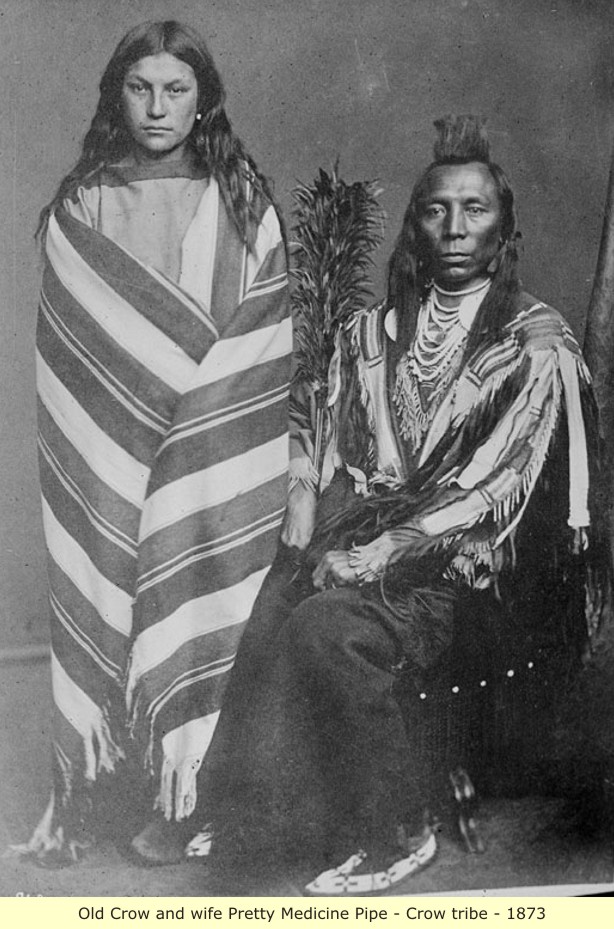
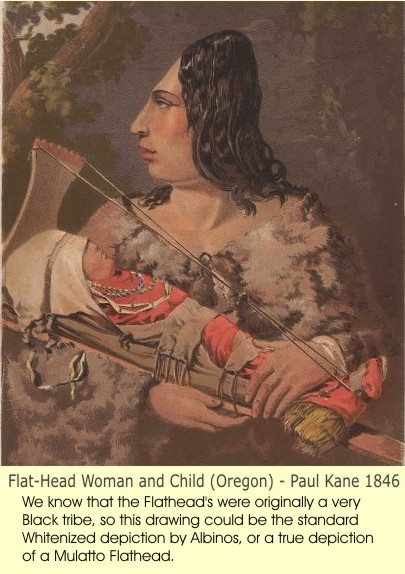
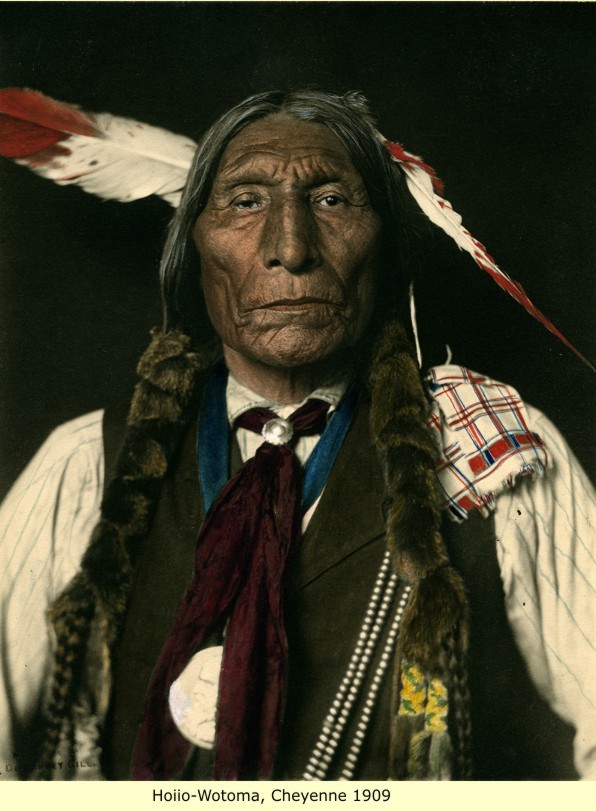
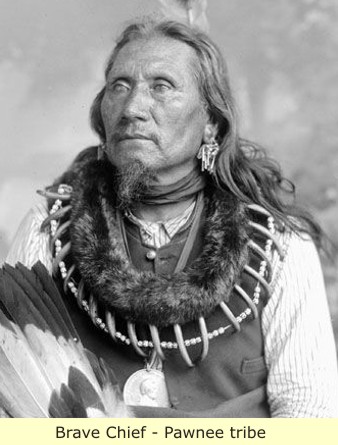
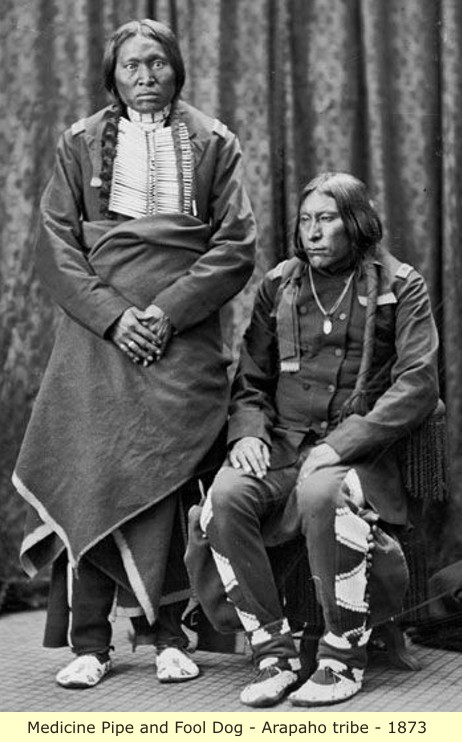
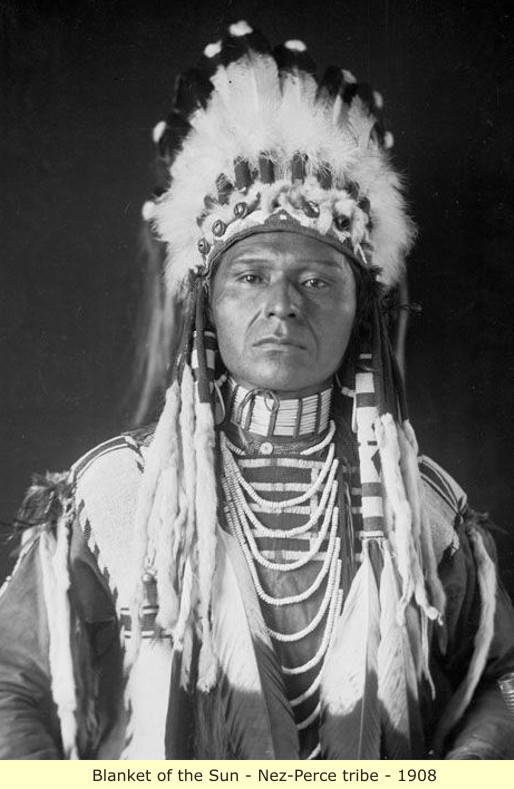
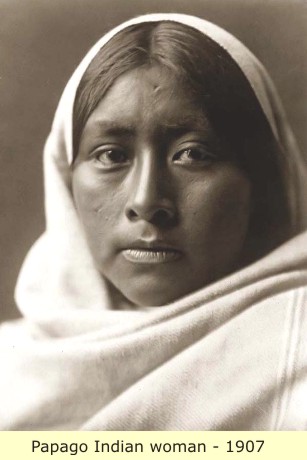
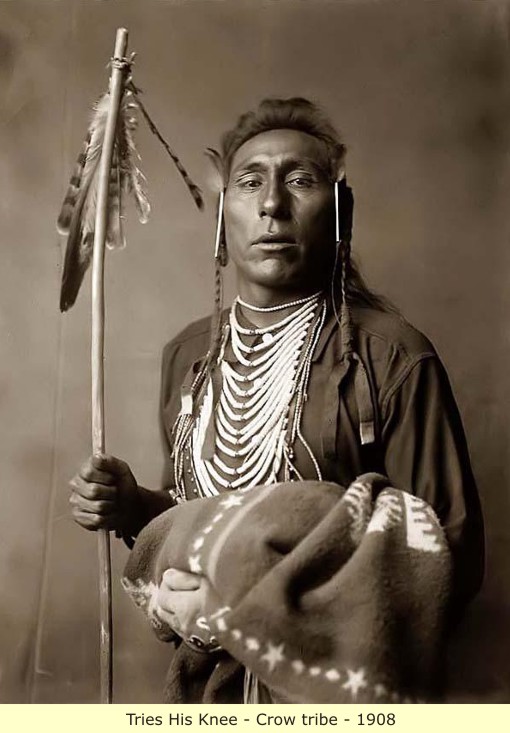
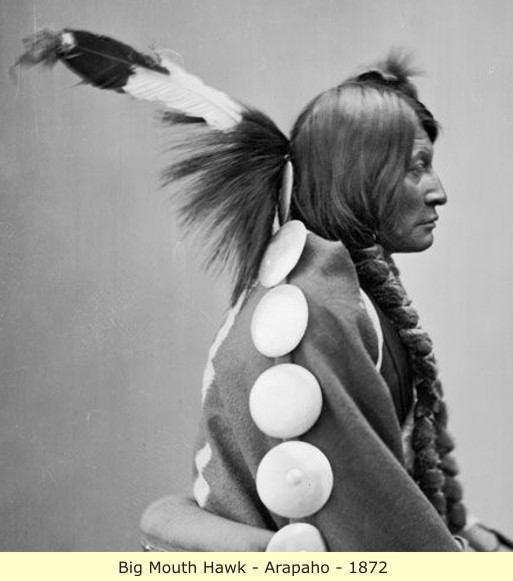
If you don't know the "ACTUAL" history of the American west, some of the following pictures will stump you. Often you will see Indians who obviously have the features of a Mongol/Caucasian mix (mulatto), but how?HERE IS HOW:
|
 |
 |
 |
 |
American frontier - Wikipedia:
In a short time he opened in the woods a patch, or clearing, on which he grew corn, wheat, flax, tobacco and other products, even fruit. In a few years the pioneer added hogs, sheep and cattle, and perhaps acquired a horse. Homespun clothing replaced the animal skins. The more restless pioneers grew dissatisfied with over civilized life, and uprooted themselves again to move 50 or hundred miles further west. |
 |
 |
 |
 |
 |
 |
 |
 |
 |
 |
 |
 |
 |
 |
 |
 |
 |
 |
 |
 |
 |
 |
 |
Photo shows nineteen Miniconjou men, women and children, posed between two tipis.
 |
 |
Click here for a Blow-up of the full photo >>>
The Miniconjou (Plants by the Water) are a Native American people constituting a subdivision of the Lakota people, who formerly inhabited an area in western present-day South Dakota from the Black Hills in to the Platte River. The contemporary population lives mostly in west-central South Dakota.
Spotted Elk (1826-1890), also known as 'Big Foot, was the name of a chief of the Miniconjou, Lakota Sioux. He was a son of Miniconjou chief Lone Horn and became a chief upon his father's death. He was a highly renowned chief with skills in war and negotiations. A United States Army soldier, at Fort Bennett, coined the derogatory nickname Big Foot – not to be confused with Oglala Big Foot. In 1890, he was killed by the US Army at Wounded Knee Creek, Pine Ridge Indian Reservation (Chankwe Opi Wakpala, Wazí Aháŋhaŋ Oyáŋke), South Dakota, USA with at least 150 members of his tribe, in what became known as the Wounded Knee Massacre.
 |
 |
 |
 |
 |
 |
 |
| Great Plains
Arapaho Indians |
Great Basin
Cahuilla Indians
|
Plateau Region
Cayuse Indians
|
New Southwest
Acoma Indians |
California
Kato Indians
|
Pacific Northwest Achomawi Indians
|
 |
 |
 |
 |
 |
 |
 |
 |
 |
 |
 |
 |
 |
 |
 |
 |
 |
 |
 |
 |
 |
 |
 |
 |
 |
|
 |
 |
 |
 |
 |
 |
 |
 |
 |
 |
 |
 |
 |
 |
 |
 |
 |
| < Back | Home |


