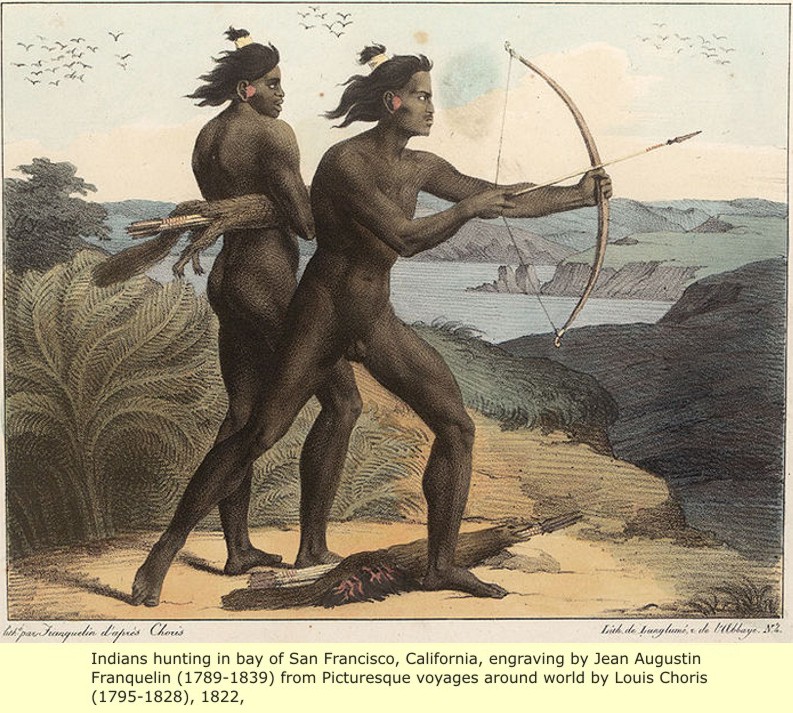
| < Back | Home |
Legend:
Mesoamerica = Mexico and Central America
Pre-Columbian = Before Christopher Columbus
Amerindian = Indigenous Indians of North and South America
Paleoindian/Paleoamerican = The original Black settlers of the Americas
The discovery of a bird-like dinosaur in South America has paleontologists rethinking when, where and how one group of raptors evolved. The rooster-sized dinosaur is called Buitreraptor (bwee-tree-rap-tor) gonzalezorum. It has a long head and long tail and wing-like forelimbs. Its serrated teeth, like steak knives, suggest it was a carnivore. Buitreraptor is related to Velociraptor, the presumed cunning killer made famous by Hollywood.
Both belong to a class of birdlike dinosaurs that ran swiftly on two legs and are called dromaeosaurs. The new find suggests such raptors go back much further in time than previously thought.
 |
 Until recently, dromaeosaurs had been found only in Asia and North America and only in the Cretaceous period, which ran from 145 million to 65 million years ago. Evidence that they existed in the Southern Hemisphere has been mounting. Today's announcement of a well-preserved fossil represents the first definitive evidence that dromaeosaurs roamed South America as well. Here's why that's important: About 200 million years ago, Earth had just one giant land mass called Pangea. Toward the end of the Jurassic period, it split in two. What we call Laurasia eventually became North America, Asia and Europe. The other chunk Gondwana, developed into the continents of the Southern Hemisphere and India. Since dromaeosaurs had only been found in places that used to be part of Laurasia, scientists figured that the beasts evolved into being after Pangea split.
But the Buitreraptor fossil in South America, which dates back 90 million years and closely resembles fossils from the North, means one of two things: Either dromaeosaurs existed when Pangea was intact; or the newfound Buitreraptor and its northern look-alikes evolved separately yet with remarkably similar results. Odds being against such striking parallel evolution, paleontologists speculate that dromaeosaurs more likely originated more than 180 million years ago, before Pangaea broke apart. The newly discovered fossil also shows that the creatures developed slightly different characteristics after they split up.
"Buitreraptor is one of those special fossils that tells a bigger story about the Earth's history and the timing of evolutionary events," said Peter Makovicky, curator of dinosaurs at The Field Museum. "It not only provides definitive evidence for a more global distribution and a longer history for dromaeosaurs than was previously known, but also suggests that dromaeosaurs on northern and southern continents took different evolutionary routes after the landmasses that they had occupied, drifted apart." The Buitreraptor fossil was found in northwestern Patagonia (the southern end of the South America continent) about 700 miles southwest of Buenos Aires.
Study - Humans were in America 100,000 years earlier than we thought.
The remains of a mastodon discovered during a routine excavation in California shows possible human activity in North America 130,000 years ago -- or about 115,000 years earlier than previously thought.
Advanced radiometric dating technology allowed scientists to determine the mastodon bones belong to the Late Pleistocene period, or 130,000 years old, with a margin of error of plus or minus 9,400 years."The bones and several teeth show clear signs of having been deliberately broken by humans with manual dexterity and experiential knowledge," Holen said in a press release.
_______________________________________________________________ Comment: 130,000 B.C. is long before the ancient African is known to have occupied EAST ASIA. Therefore the theory of ancient Humans entering the Americas by crossing the Bering Straits, and then "By-passing" the FROZEN North American Continent, by Boat travel along the Coast, is totally out of the question. The only other "Reasonable" possibility is an ATLANTIC crossing, similar to how ancient Africans reached Australia by "Island Hopping" more than 60,000 years ago.
After considering the possibilities,clearly THIS is the most logical route for the First Settlers of the Americas.
PLEASE NOTE: THIS SENARIO RELATES ONLY TO THE "FIRST" SETTLER’S OF THE AMERICAS. |
Albino lies - Of course, as is to be expected, the same degenerate Albino types who tried to write Blacks out of history, immediately came up with the bogus possibility that these ancient settlers were Neanderthals! The problem is that Neanderthals are NOT in the HUMAN chain. Therefore the modern Black humans who were found in the Americas, by invading European Albinos, could not have evolved from Neanderthals. |
As with dromaeosaurs, new discoveries are forcing scientist to re-consider their earlier theories of Human presence in the American hemisphere as well. The time of the first peopling of Mesoamerica remains a puzzle, as it does for that of the Americas in general. It has been widely accepted that groups of peoples entered the American hemisphere from northeastern Siberia, perhaps by a land bridge across the Bering straits of Alaska that might have existed then, (This at some time in the Late Pleistocene, or Ice Age).
There is already abundant evidence that by 11,000 B.C, hunting peoples had occupied most of North America, south of the glacial ice cap covering the northern part of North America. These men hunted such large grazing mammals as mammoth, mastodon, horse, and camel. They were armed with spears, which were tipped with finely made, bifacial chipped points of stone.
 Now however, new discoveries and new data from the old sites are changing our understanding of the peopling of the Americas. For decades the consensus thinking was that the first Americans were big-game hunters (the Clovis) who traveled from Asia across the Bering Land Bridge near the end of the Ice Age, about 12,000 years ago. (Named for an occupation site in Clovis, N.M.). These earliest people, called Paleo-Indians, are known for their fluted spear points.
The Clovis people were thought to have settled in the interior plains of North America between 11,500 and 11,000 years ago. From there, they colonized the Western Hemisphere, following the diminishing game through the upland plains of Central America and the Andes, avoiding the coasts and tropical forests and reaching the tip of South America by 10,000 years ago, (the end of the glacial period).
This Clovis migration theory however, developed early in the history of radiocarbon dating, and before much was known of regions outside the Clovis heartland of the U.S.A.
Now abundant new data from several of those areas cast doubt on the theory. According to these findings, Clovis was not settled early enough to be the ancestor of Central and South American Paleo-Indians. Several well-documented sites south of the U.S.A. border are much older than Clovis. In addition, few Ice Age cultures on either side of the land bridge had fluted spear points or hunted big game.
There are other problems with the old Clovis theory: The Ice Age Glaciers at this time covered ALL of Canada, except for a few small pockets and some offshore Pacific Islands. This would still have allowed for “Island Hopping” down to the United States – but that’s very iffy.
In North America, the oldest evidence of Human habitation is in a sink-hole at Warm Mineral Springs Florida. In the late 1950's and through to the 1970's a group led by Air Force Lt.Col. (Ret) William Royal explored Little Salt Spring as well as Warm Mineral Spring (3 miles distant) and discovered huge deposits of fossils. Remains of literally hundreds of species from saber toothed cats to Giant ground sloths were discovered along with the remains of over 200 paleoamericans. The Warm Mineral Springs site is uniquely African, and is discussed in the North America section. Link to Page
Report on the Osteological Assessment of the "Kennewick Man" Skeleton
Joseph F. Powell and Jerome C. Rose, March 1, 1999
Link to study
Summary

The Kennewick skeleton is a male who died between 45 and 50 years of age. He was approximately 175 cm (5' 9") tall, based on an average of all stature estimates. The geologically correlated age for the skeleton is 6700-9000 yr. B.P. Like other early American skeletons, the Kennewick remains exhibit a number of morphological features that are not found in modern populations. For all craniometric dimensions, the typicality probabilities of membership in modern populations were zero, indicating that Kennewick is unlike any of the reference samples used. Even when the least-conservative inter-individual distances are used to construct typicality probabilities, Kennewick has a low probability of membership in any of the late Holocene reference samples. Similar results were obtained by Ozolins et al. (1997) for Upper Paleolithic samples from Asia, Africa, and Europe and Paleoindian groups, and are not surprising considering that Kennewick is separated by roughly 8,000 years from most of the reference samples in Howells (1989) and Hanihara (1996). The most craniometrically similar samples appeared to be those from the south Pacific and Polynesia as well as the Ainu of Japan, a pattern observed in other studies of early American crania from North and South America (Steele and Powell 1992, 1994; Jantz and Owsley 1997). Thus Kennewick appears to have strongest morphological affinities with populations in Polynesia and southern Asia, and not with American Indians or Europeans in the reference samples.
At left: Clay mock-up of what Kennewick man may have looked like. (Done before genetic information was available). Therefore the mindset was of a different people.
Dravidian, India |
Mani, Thailand |
Fiji, Polynesia |
 |
 |
 |
The Ainu, are believed to be the first settlers of northern Japan - not southern Japan. They are thought to have migrated there by 13,000 B.C. They are an ethnic group indigenous to Hokkaido, the northern part of Honshu in Northern Japan, the Kuril Islands, much of Sakhalin, and the southernmost third of the Kamchatka peninsula. The word "Ainu" means "human" in the Ainu language; There are over 150,000 Ainu today, however the exact figure is not known as many Ainu hide their origins to protect against racism or in many cases are not even aware of them because of cross-breeding since ancient times. Official discrimination against the Ainu was outlawed in 1997.
The origins of the Ainu are uncertain, they are likely a branch of the proto-Japanese Jomon stock (the original inhabitants of Japan), that migrated from Africa some 70-60 thousand years ago, and occupied Japan and most of Asia before the Mongol expansion from China, (the current Japanese people are the "Yayoi" who immigrated to Japan from China circa 350 B.C.). Various other Asian aborigine populations, from Okinawa to Taiwan, and as far away as Australia, are also thought to be related to them.
{It should be remembered that these pictures reflect a people who have lived among the Japanese for over 2,000 years. Crossbreeding naturally did take place.}


Observations by Marshall Everett - stated that an Ainu chieftain had attended the Anthropology Exhibits at the 1904 World's Fair in St Louise, this allowed such close examinations as follow: "They [Ainu} are dark-skinned, and slow-witted, and their old men, with their long beards, look like patriarchs. They are almost the same height as the Japanese, but are heavier, and they haven't the almond eye... The Ainu have wavy hair, often curly. Black is the predominant color. The hair of the children is lighter, and often auburn. All Ainu hair is coarse and strong... They are light reddish-brown in color, and have none of the sallow yellowness of the Mongolian. They have expressive eyes, and almost every Ainu's eyes are light brown in color. Black eyes are rare among them... Their foreheads are narrow, and slope gently backward. Their noses are slightly hooked, flat and broad, with wide nostrils. They have large mouths and firm, thick lips. They have exceptionally long ear lobes.
These people of the Andaman Islands (off the east coast of Burma) have been determined to be of the same “genetic” lineage as the Ainu of Japan. Perhaps they will give you some indication of what the Ainu originally looked like before crossbreeding.
 |
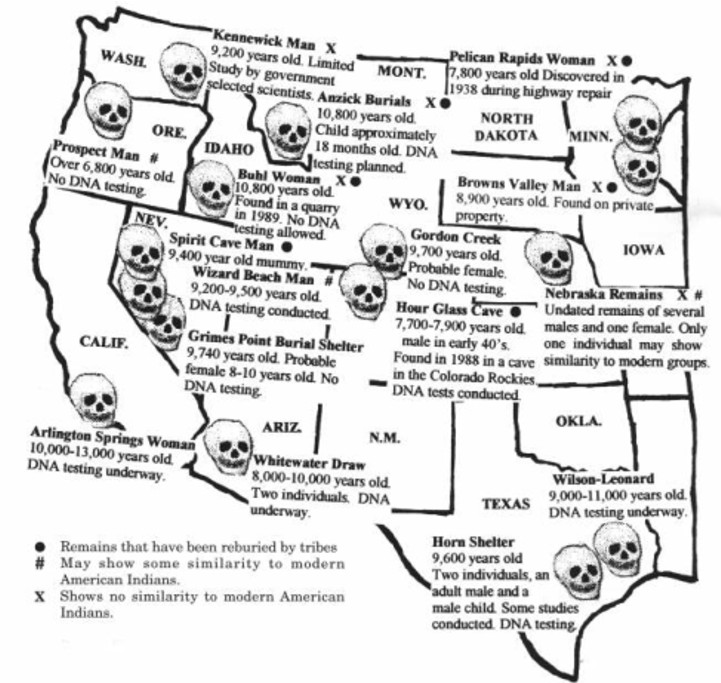 |
Arlington Springs Woman Browns Valley Man 8,900 years old |
Hourglass Cave Man Gordon Creek Woman Grimes Point Woman |
Pelican Rapids Woman Wizard's Beach Man |
Several sets of investigators are collaborating on bioarchaeological studies within the Pacific Northwest. Most of this work is known through personal communication and few details are available in advance of publication. At least three sets of researchers are engaged in DNA studies, and three sets of researchers are undertaking projects to develop more extensive, region-wide osteological studies.
Dr. David Smith and his graduate students at UC-Davis are continuing efforts to recover and analyze DNA samples from teeth and bone. These efforts include work on the early Braden and DeMoss remains with Yohe and Pavesic (2000), and work on Congdon remains with Chatters and Hackenberger (2000). Merriwether et al.(1995) have also attempted to extract DNA from teeth from archaeological sites in Washington State (Chatters et al. 2000). Bonnichsen and Weitzel (1998) continue to refine their approaches to archaeologically recovering animal and human hair for DNA analysis. A collaboration is also developing around re-evaluating the bioarchaeology and osteology of the Karlo Site in Northern California (Breschini, personal communication 2000).
Loring Brace (University of Michigan) and Richard Jantz (University of Tennessee, Knoxville) are attempting to incorporate cranio-facial measurements from Pacific Northwest crania into their respective worldwide comparative databases. Jantz and Owsley (1999a) are performing multivariate analyses to explore differences between ancient crania and modern populations. They have recently argued that Buhl skeletal remains show differences between the ancient and modern populations, and that Buhl's morphometric traits are not similar to modern Native American groups; in fact they are closer to groups from the Pacific. They suggest that a source of the early migrants to America might be found in Asian Circumpacific populations. These populations are quite naturally variable, but their craniofacial morphology consists of cranial vaults that are large, long and narrow, forward projection of the face, and low faces. Polynesians and some ancestors to early California Indian populations probably came out of these populations. More recently Jantz and Owsley (2000) analyzed a sample of 11 crania (Spirit Cave, Wizards Beach, Browns Valley, Pelican Rapids, Prospect, Wet Gravel male, Wet Gravel female, Medicine Crow, Turin, Lime Creek, and Swanson Lake). The sample includes the pre-Mazama Prospect burial, from Oregon.
| Note: Polynesian is a term that the Albino people have applied to Pacificans/Austronesians who have significant "White Mongol/European" admixture. They reserve the term Melanesian for the original "Pure Black" Pacificans/Austronesians who have resisted admixture. |
Each cranium was compared to 34 modern groups. Six crania (Prospect, Wet Gravel male, Wet Gravel female, Medicine Crow, Turin, and Wizards Beach) fall into the variation of modern groups; however, they do not show any particular affinity with nine modern Native American samples. When the crania are compared to each other they form three distinct groups. The first group is comprised of Browns Valley, Pelican Rapids, and Lime Creek. Turin and Medicine Crow make up the second group, and the third group consists of the Wet Gravel specimens, Swanson Lake, Prospect, Wizards Beach, and Spirit Cave. They conclude that their results are inconsistent with hypotheses of a single ancestral group and suggest that historic cranial variation is probably of recent origin.
As early as 1991 Brace and his collaborators (Brace et al. 1990) began to suggest that their multivariate analysis of the world-wide Michigan database showed that west coast Amerindian samples most closely aligned with the Jomon-Pacific samples. These ideas are cross-fertilizing with the Ossenberg (1994) scenario involving migrations of proto-mongoloid, Paleo Tlingit-Haida populations from Southeast Asia followed by later Paleo Aleut-NaDene populations. Brace and Nelson (personal communication 2000) are further developing the Circumpacific origins of early New World migrants. In this respect, Fenton and Nelson (personal communication 2000) are further exploring the affinity for the Buhl woman. Fenton is also addressing the related significance of the Buhl woman's Harris lines and Os Acromiale.
Neves and Blum (2000) are testing the recent claim that craniofacial observations of the Buhl Paleoindian remains are similar to other North American and East Asian populations. The measurements of the Buhl skull were compared to twenty-six modern populations (Howells), and to a Paleoindian skull from Lapa Vermelha, Brazil, which shows morphological similarities with Africans and Australians. Multivariate analysis shows that there is a great difference between the Paleoindian skulls, and when compared to the modern populations the skulls belong to different clusters. They suggest that at least two populations peopled the Americas; one with characteristic "Mongoloid morphology," and another with a generalized morphology.
Guy Tasa (University of Oregon) has recently expanded his efforts to construct an osteological database for Oregon. Tasa's work includes metric and non-metric data for crania, post-cranial remains and dentition. Equivalent data records compiled by the University of Idaho require similar computer database work in order to improve their value for comparative analysis. The TBMWSM and Central Washington University should conduct analysis of metric and non-metric records of human bone and teeth. Such analysis should be completed as part of their efforts to document cultural affiliations for NAGPRA consultations. Results from these studies should be incorporated into databases from the University of Idaho and University of Oregon.
All of the above works in progress have relevance for investigating the biological affinity and cultural affiliation of early human remains such as those of "Kennewick Man." Two works in progress have particular significance. One project involves the analysis of an early unprovenienced cranium (Chatters et al. 2000), the other involves initial comparative analysis of crania from across the Pacific Northwest (C.L. Brace, personal communication 2000) and the Columbia River Basin (Shumate and Hackenberger 2000).
CWU BOX- DO1: During the Central Washington University NAGPRA inventory, an unprovenienced neurocranium (CWU BOX- DO1) was identified to be remarkably similar to "Kennewick Man." Although the skull lacks provenience information, it may derive from eastern Washington. The corrected and uncorrected age estimates place the remains in a time range between 8000 and 9000 years ago (Chatters et al. 2000). Nuchal development, very large mastoid processes, a moderate supraorbital ridge and rounded supraorbital margin, mark this individual as male. The cranium is high, long, and narrow (cranial index 70.9, dolicocranic), with an unusually narrow cranial base and narrow, forwardly-placed face. Like the Kennewick skull (Chatters 2000) temporal lines occur high on the parietals and extend posteriorly to the lambdoidal suture. Superior and inferior nuchal lines are well developed and there is an inion hook. Morphometric analysis comparing CWU BOX -DO1 with the Howells worldwide database, shows that like most Paleoamerican skulls (e.g. Chatters et al. 1999, Jantz and Owsley 1999c), CWU-DO1 differs significantly from all modern peoples, but is most similar to Polynesians. Pending the results of additional forensic science work to determine the origin of the remains, CWU will explore possible cultural affiliation of CWU-DO1 in discussions with representatives of the region's Native American communities.
Comparative Analysis: Current studies of cranio-facial morphology are investigating patterns in measurements that may express biological affinity within and between Pacific Northwest populations. The majority of the sample of crania represent middle and late period populations, but the comparative analysis can be expanded to include earlier crania from the region and elsewhere. Different preferences for choice of measurements and statistical methods among researchers, fragmentary crania, and small sample sizes hamper definitive conclusions at this time. The conceptual ties between hypothesized biological affinities and possible cultural affiliation are also at issue.
Loring Brace (personal communication, 2000) has recently added a significant sample of cranio-facial measurements for the Pacific West and Northwest into his Michigan database. Many of these measurements are derived from crania in the Central Washington University osteological collection. His preliminary results show that a sample of undeformed crania fall near Haida and Jomon-Ainu-Polynesian samples opposite Athapascans and other Amerindian samples. D-square values are being calculated and plotted in order to determine possible levels of mixing that might be present among the Northwest samples. Such mixing is already well represented in a Patagonian sample that shows combinations of Jomon-derived and Amerindian-derived features. Most of the sample of unmodified crania lack documented archaeological contexts.
Shumate and Hackenberger (2000) have compiled data for a sample of some 70 male crania from across the Columbia Basin (see Appendix 41). The study is exploratory in nature; however, results are of potential interest to investigators studying Paleoindian crania. One interest is whether or not any middle or late period crania fall in the range of variation of the earliest sample. Another interest is if middle and later period samples from the Pacific Northwest separate into distinct subgroups.
The majority of the sample of Pacific Northwest crania in the Shumate and Hackenberger study comes from data records completed by Heglar (1957) and Mulinski and others (University of Idaho). The set of approximately 70 crania has measures for between 9 and 20 cranio-facial dimensions. A preliminary analysis using nine standard measures discriminates between a group of Polynesian-like Paleoindians and several groups of historic Amerindians (Richard Jantz, personal communication, 2000). Two Columbia Basin male crania fall near the Paleoindian cluster in the analysis (these fall on the upper right of the discriminate plots). One is from 45FR101 and one is from 45OK159. Both skulls like the Paleoindian crania are relatively long, narrow, and high vaulted. An outlier with some similar characteristics (long and narrow) is identified from the Wildcat Canyon Site (35GM9). This cranium also falls on the right side of plots and may represent a cranium with some degree of post-depositional modification. Most of the Columbia River Basin crania fall in the center of the discriminate plots; however, crania from 45FE44, 45GA110, and 45GA18 represent outliers on the opposite (left) side of the plots.
The implications of these results await detailed consideration of osteological data records, photographic records, and fuller evaluation of the archaeological contexts of the sample crania. Expanded analysis should include a larger battery of cranio-facial dimensions and enlarged samples of male and female crania. Attention should also be focused on cranial non-metric observations and dental measurements and observations. Clearly placing the "Kennewick Man" within this type of fuller regional investigation of cranial morphology and other osteological and dental traits holds promise for additional study of his possible phenotypic affinity and, based on other types of considerations, his possible cultural affiliation as interpreted under NAGPRA.
The old standard account:
About 12,600 years ago, when ice sheets still covered parts of North America, a baby boy lived, died and was buried in a rocky grave in a field in western Montana. A new whole genome sequencing of this infant — the oldest genome sequence of an American individual — identifies his community as ancestors of Native Americans who live on the continent today. (As always, this type of statement is contradicted elsewhere).
In addition, analysis of the child’s mitochondrial DNA indicated Anzick-1 belonged to what’s known as the D4h3a haplogroup, or lineage. The finding is important — and surprising, according to researchers — because the D4h3a line is considered to be a “founder” lineage, belonging to the first people to arrive in the Americas. Although rare in most Native Americans in the U.S. and Canada today, D4h3a genes are found more commonly in native people of South America, far from the Montana cliff beneath which Anzick-1 was laid to rest.
One of the tricks of the Albino deceivers is to use trick terms. In this case, they use Mal'ta Siberia to imply Mongols like the current people who live there. But in the ancient past, the people of Mal'ta were a Khoisan-like people, as demonstrated by their artifacts and genetics.
Consider these examples:
From Wiki:
In 2014, the autosomal DNA of a male infant from a 12,500-year-old deposit in Montana was sequenced. The DNA was taken from a skeleton referred to as Anzick-1. The skeleton was found in close association with several Clovis artifacts. Comparisons showed strong affinities with DNA from Siberian sites, and virtually ruled out any close affinity of Anzick-1 with European sources (see the "Solutrean hypothesis"). The DNA of the Anzick-1 sample showed strong affinities with sampled Native American populations, which indicated that the samples derive from an ancient population that lived in or near Siberia, the Upper Palaeolithic Mal'ta.
The Study:
Click here for complete pdf file >>
Results: Y-chromosome haplogroup Q-L54*(xM3), Mtdna haplogroup D4h3.
Methods, Results and Conclusions (excerpted):
We analysed 19 different published Siberian populations and found that allele-frequency-based D-statistics in all cases, with the exclusion of Naukan, were compatible with a diversification pattern of (Siberian, (NA, SA)), with no evidence for gene flow into theNAgroup (Supplementar Information section 15), a pattern that agrees with previously published results22. This suggests that model (1) is more likely, and that the structure between NativeAmerican lineages predates the Anzick-1 individual and thus appears to go back to pre-Clovis times. We used outgroup f3-statistics to evaluate the shared genetic history between all Native American populations and the Anzick-1 genome,
the 24,000-year-old human sample from Mal’ta, Siberia5 and the 4,000 year-old Saqqaq Palaeo-Eskimo sample from Greenland19. We again found a closer relationship between Anzick-1 and all NativeAmericans (Supplementary Information section 15 and Extended Data Fig. 5). Together with the fact that Anzick-1 shows the same relative affinity to western and eastern Eurasians, this suggests that the gene flow from the Mal’ta lineage into Native Americans happened before the NA and SA groups diverged.
Next,we addressed the relationship of theAnzick-1 genome towholegenome sequences from contemporary humans, including two novel genomes from Karitiana and Mayan individuals, and from the ancient Saqqaq sample19.
We assessed the genome-wide genetic affinity of the Anzick-1 individual to 143 contemporary non-African human populations by computing outgroup f3-statistics21, which are informative on the amount of shared genetic drift between an individual and other populations. The data set included 52 Native American populations, for which genomic
segments derived from recent European and African admixture have been excluded22.We found that theAnzick-1 individual showed a statistically significant closer affinity to all 52 Native American groups than to any extant Eurasian population. Our results are also consistent with previous models derived from mtDNA, which imply that Native American populations primarily derive from a single-source population, but that there was a secondary movement into northern North America29. However, several different
scenarios are compatible with an early divergence of the NA and SA groups and analyses of more ancient human remains are needed to further test the findings and interpretations from this single individual and to elucidate the complex colonization history of the Arctic and North American populations.
Source: Harvard Medical School July 21, 2015
Summary:
Native Americans living in the Amazon bear an unexpected genetic connection to indigenous people in Australasia, suggesting a previously unknown wave of migration to the Americas thousands of years ago, a new study has found.
The new study, published July 21 in Nature, indicates that there's more to the story. Pontus Skoglund, first author of the paper and a postdoctoral researcher in the Reich lab, was studying genetic data gathered as part of the 2012 study when he noticed a strange similarity between one or two Native American groups in Brazil and indigenous groups in Australia, New Guinea and the Andaman Islands.
The Tupí-speaking Suruí and Karitiana and the Ge-speaking Xavante of the Amazon had a genetic ancestor more closely related to indigenous Australasians than to any other present-day population. This ancestor doesn't appear to have left measurable traces in other Native American groups in South, Central or North America. The genetic markers from this ancestor don't match any population known to have contributed ancestry to Native Americans, and the geographic pattern can't be explained by post-Columbian European, African or Polynesian mixture with Native Americans, the authors said. They believe the ancestry is much older--perhaps as old as the First Americans. In the ensuing millennia, the ancestral group has disappeared. "We've done a lot of sampling in East Asia and nobody looks like this," said Skoglund. "It's an unknown group that doesn't exist anymore." The team named the mysterious ancestor Population Y, after the Tupí word for ancestor, "Ypykuéra."
Findings of Human remains in Mesoamerica and South America: The oldest of these are of the Australoid racial type, the next oldest are of South-Asian Polynesian racial type, these are much older than anything in North America. This indicates that the migration pattern of the first settlers of the Americas was NOT from North America going south – but rather, from South America TO North America.
Then of course there are the Olmec – the people who brought civilization to the Americas with their Technology, Art and culture. When all the new information is compiled it is clear that there was not ONE peopling of the Americas, but rather, there was at least FIVE.
For more than 100 years, researchers have claimed that there were very early human sites in the tropical forests of eastern South America. By the end of 1998, ten excavated sites had produced remains with beginning dates of 11,000 years ago or slightly earlier. Serra da Capivara National Park is a national park in the Northeastern region of Brazil. It has many prehistoric paintings. The park was created to protect the prehistoric artifacts and paintings found there. It became a World Heritage Site in 1991. Its head archaeologist is Niède Guidon. Its best known archaeological site is Pedra Furada, this large sandstone rock-shelter located in the thorn forest of northeastern Brazil has been at the center of a controversy for many years.
Pedra Furada includes a collection of rock shelters used for thousands of years by human populations. Site investigators found stone tools and charcoal hearths at the earliest levels. The first excavations yielded artifacts with Carbon-14 dates of 48,000 to 32,000 years BP. Repeated analysis has confirmed this dating, carrying the range of dates up to 60,000 BP. Archaeological levels that are well excavated yield dates between 32,160 ± 1,000 years BP and 17,000 ± 400 BP. The collection of stone age artifacts includes darts and atlatls but no arrows or bows.
Unlike Clovis sites, those in Brazil include painted caves and rock shelters. Food remains include nuts, legumes, fish, shellfish, and small game animals. Among the artifacts are triangular, sometimes stemmed points but no fluted points, (points referrers to spear and arrow tips). The newly dated sites include Caverna da Pedra Pintada, Santana de Riacho, and Boquete in Brazil.
A new exhibit in Brazil showcases artifacts dating as far back as 30,000 years ago -- throwing a wrench in the commonly held theory humans first crossed to the Americas from Asia a mere 12,000 years ago. The 100 items on display in Brasilia, including cave paintings and ceramic art, depict animals, ceremonies, hunting expeditions -- and even scenes from the sex lives of this ancient group of early Americans. The artifacts come from the Serra da Capivara national park in Brazil's northeastern Piaui state, on the border of the Amazon and Atlantic Forests, which attracted the hunter-gatherer civilization that left behind this hoard of local art.
Since the 1970s, Franco-Brazilian archaeologist Niede Guidon has headed a mission to carry out large-scale excavation of Piaui's interior. "It's difficult to think there exists a site anywhere with a higher concentration of cave art," the 80-year-old Guidon told AFP.
Many paths led to Americas
Other traces of the civilization include charcoal remains of structured fires, explained Guidon, who hails from Sao Paulo. "To date, these are the oldest traces" of human existence in the Americas, she emphasized. The widely held theory has suggested human beings only reached the Americas some 12,000 years ago from Asia, crossing the Bering Strait to reach Alaska. Some archeologists contend flaked pebbles at the Brazilian sites are not evidence of a crude, human-made fire hearth made some 40 millennia ago, but are rather geofacts -- a natural stone formation, not a man-made one.
But Guidon said she believes the Serra dwellers may have come originally from Africa, and she said the cave art provides compelling evidence of early human activity. The paintings are estimated to date back some 29,000 years, she said, noting: "When it began in Europe and Africa, it did here too." Other sites, including Valsequillo in Mexico and Monte Verde in Chile, also indicate the presence of communities tens of thousands of years ago. These sites have led archeologists to speculate that peoples traveled various routes to reach the Americas and at different stages, archeologist Gisele Daltrini Felice told AFP.
 |
 |
 |
 |
 |
 |
 |
 |
 |
 |
 |
 |
 |
 |
At Taima Taima, an oil field site in northern Venezuela, fragmentary tools were found with cut mastodon bones in a spring where cultural and natural materials had become mixed. One tool is a bi-pointed style point. The ancient habitat was swampy, wooded, and subtropical. The radiocarbon dates range too widely for comfort - from about 41,000 to 12,000 B.P. Late Pleistocene people may have killed mastodon there, but exactly when is not certain.
In nearby Colombia, early pre-pottery sites have also been found, notably at El Jobo in Falcón, that date to about 14,920 B.C. There carved stone was used for such objects as small pendants: shell and bone are also known to have been used. Some of these sites contain triangular points, while others have ground-stone tools. Food remains are tropical forest fruits and nuts.
In the Andes highlands of Peru, early work had uncovered possible big-game kill sites dating to as early as 20,000 years ago, but these had no clear association with humans. Sites with triangular and sometimes stemmed points and diverse modern fauna and flora, date to between 11,500 and 8,500 years ago.
The first secure evidence of early Paleo-indians on the Pacific coast was from two south Peruvian sites with beginning dates between 11,100 and 10,700 years ago. At the sites Quebrada and Jaguay, the ancient hearths contained carbonized fragments of stone tools and remains of shellfish, small fish, and birds, but no large game.
Tests on skulls found in Mexico suggest they are almost 13,000 years old - and shed fresh light on how humans colonised the Americas. The human skulls are the oldest tested so far from the continent, and their shape is set to inflame further a controversy over native American burial rights. Mexico appears to have been a crossroads for people spreading across the Americas. The skulls were analysed by a scientist from John Moores University in Liverpool, UK, with help from teams in Oxford and Mexico itself. They came from a collection of 27 skeletons of early humans kept at the National Museum of Anthropology in Mexico City. These were originally discovered more than 100 years ago in the area surrounding the city.
The latest radiocarbon dating techniques allow dating to be carried out on tiny quantities of bone, although the process is expensive. Dr Silvia Gonzalez, who dated the skulls, said: "The museum knew that the remains were of significant historical value but they hadn't been scientifically dated. "I decided to analyse small bone samples from five skeletons using the latest carbon-dating techniques," she told BBC News Online. "I think everybody was amazed at how old they were." The earliest human remains tested prior to this had been dated at approximately 12,000 years ago. Domestic tools dated at 14,500 years have been found in Chile - but with no associated human remains. The latest dating is not only confirmation that humans were present in the Americas much earlier than 12,000 years ago, but also that they were not related to early native Americans.
The two oldest skulls were "dolichocephalic" - that is, long and narrow-headed. Other, more recent skulls were a different shape - short and broad, like those from native American remains. This suggests that humans dispersed within Mexico in two distinct waves, and that a race of long and narrow-headed humans may have lived in North America prior to the American Indians. Traditionally, American Indians were thought to have been the first to arrive on the continent, crossing from Asia on a land bridge. Dr Gonzalez told BBC News Online: "We believe that the older race may have come from what is now Japan, via the Pacific islands and perhaps the California coast.
"Our next project is to examine remains found in the Baha peninsula of California, and look at their DNA to see if they are related.
Legal challenge
Scientific analysis of early skull finds in the US has often been halted by native American custom which assumes that any ancient remains involve their ancestors and must be handed over. However, this evidence that another race may have pre-dated native Americans could strengthen legal challenges from researchers to force access to such remains. Dr Gonzalez said: "My research could have implications for the ancient burial rights of North American Indians." Dr Gonzalez has now been awarded a grant from the Mexican government and the UK's Natural Environment Research Council to continue her work for three years.

Dr. Silvia Gonzales, based in Biological and Earth Sciences, analysed skeletons from the Baja California Peninsula, Mexico. She found that they had long and narrow heads that are quite different from the short, broad skulls of today's Native Amercians. The bones, stored at the National Museum of Anthropology, Mexico City, have been carbon-dated. One well-preserved skull, dubbed Penon Woman, was found to be 12,700 years old, placing it several thousand years before the arrival of people from the North. "They appear more similar to southern Asians, Australians and populations of the South Pacific Rim than they do to northern Asians," Dr Gonzalez, of Liverpool John Moores University, told the British Association's annual meeting in Exeter. On the Baja California Peninsula, a population of the long-headed individuals - known as the Pericues - appears to have survived until the 18th century, when they died out because of disease.
ABSTRACT

Several studies concerning the extra-continental morphological affinities of Paleo-Indian skeletons, carried out independently in South and North America, have indicated that the Americas were first occupied by non-Mongoloids that made their way to the New World through the Bering Strait in ancient times. The first South Americans show a clear resemblance to modern South Pacific and African populations.
In none of these analyses the first Americans show any resemblance to either northeast Asians or modern native Americans. So far, these studies have included affirmed and putative early skeletons thought to date between 8,000 and 10,000 years B.P. In this work the extra-continental morphological affinities of a Paleo-Indian skeleton well dated between 11,000 and 11,500 years B.P. (Lapa Vermelha IV Hominid 1, or "Luzia") is investigated, using as comparative samples Howells' (1989) world-wide modern series and Habgood's (1985) Old World Late. The results obtained clearly confirm the idea that the Americas were first colonized by a generalized Homo sapiens population which inhabited East Asia in the Late Pleistocene, before the definition of the classic Mongoloid morphology.
Above: A skull belonging to a roughly 20 year old Australoid woman that was unearthed in Brazil by the French archaeologist Annette Amperaire in 1971, nicknamed “Luzia”. Since Luzia's discovery, at least 50 similarly un-mongoloid Palaeoamerican remains have been found in the Lagoa Santa area near where "Luzia" herself was found. They all seem to have been buried within a small area that may have been a cemetery. This raises the intriguing question of whether the Lagoa Santa population at this early time, was perhaps already settled in a specific area and perhaps were even no longer just hunter-gatherers.
Deep inside an underwater cave in Mexico, archaeologists may have discovered the oldest human skeleton ever found in the Americas. Dubbed Eva de Naharon, or Eve of Naharon, the female skeleton has been dated at 13,600 years old. If that age is accurate, the skeleton—along with three others found in underwater caves along the Caribbean coast of the Yucatán Peninsula.
The remains have been excavated over the past four years near the town of Tulum, about 80 miles southwest of Cancún, by a team of scientists led by Arturo González, director of the Desert Museum in Saltillo, Mexico. Clues from the skeletons' skulls hint that the people may not be of northern Asian descent, which would contradict the dominant theory of New World settlement. That theory holds that ancient humans first came to North America from northern Asia via a now submerged land bridge across the Bering Sea. "The shape of the skulls has led us to believe that Eva and the others have more of an affinity with people from South Asia than North Asia," González explained. The three other skeletons excavated in the caves have been given a date range of 11,000 to 14,000 years ago, based on radiocarbon dating.
The remains were found some 50 feet (15 meters) below sea level in the caves off Tulum. But at the time Eve of Naharon is believed to have lived there, sea levels were 200 feet (60 meters) lower, and the Yucatán Peninsula was a wide, dry prairie. The polar ice caps melted dramatically 8,000 to 9,000 years ago, causing sea levels to rise hundreds of feet and submerging the burial grounds of the skeletons. Stalactites and stalagmites then grew around the remains, preventing them from being washed out to sea. González has also found remains of elephants, giant sloths, and other ancient fauna in the caves.
Fell's Cave is a rock shelter in the valley of the Chico River, not far from the Strait of Magellan in the Chilean part of the Tierra del Fuego Archipelago. It was initially occupied by hunters around 10,000 B.C. who left behind an impressive layer of refuse which was sealed by hundreds of pounds of debris from the fall of the shelter overhang. The hunter's refuse included firepots with the broken bones of native horse, sloth, and guanaco, as well as stone and bone tools. Among the stone tools were fishtail spearpoints, a form of stone point found in many places in South America. Fishtail points are flaked bifacially (that is, worked on both sides) and have pronounced shoulders above a clearly shaped stem. Some are fluted with small channels removed from the bottom. In 1936-37, the discoveries in Fell's Cave represented the first evidence of early humans in South America. Since then, older sites such as Monte Verde have been identified.
 |
 |
 |
 |
 |

Monte Verde, Chile: is a boggy stream-bed in which mastodon bones and wet preserved plant remains were found with a few stone tools, including three bi-pointed points and a crude bi-face. Monte Verde which was occupied some 14,500 years ago, provides a slightly different view of life for the early inhabitants of South America. Due to the quality of preservation at Monte Verde, natural materials such as wood, fiber, and cordage remain. Even a human footprint has been found there. This range of artifacts crafted from perishable materials is typically lost to archaeologists. Their preservation due to the extremely wet conditions at Monte Verde indicate that baskets, fishing nets, and tents made from hides were among the range of belongings used by the thirty or so people who lived there. These campers were likely able fishermen and gatherers of wild plants, which would have supplemented their diet of hunted animals. They also crafted exquisite leaf-shaped spearpoints. These weapons and hunting tools are not dissimilar from the examples from Fell's Cave, which suggests that the two sites, while separated in time by more than 4,000 years, were part of a long-standing and connected tradition of thriving in the new world.
 |
Analysis of available data suggests that the chronology of migration to the Americas goes something like this:
 |
 |
An area of debate revolves on just how far south Polynesians actually managed to get. There is some material evidence of Polynesian visits to some of the subantarctic islands to the south of New Zealand, which are outside Polynesia proper. Shards of pottery has been found in the Antipodes Islands, and is now in the Te Papa museum in Wellington, and there are also remains of a Polynesian settlement dating back to the 13th century on Enderby Island in the Auckland Islands.
There is legend that Ui-te-Rangiora, believed to have been a 7th-century Māori navigator from the island of Rarotonga. In the year 650, led a fleet of Waka Tīwai (War Canoes) south until they reached, "a place of bitter cold where rock-like structures rose from a solid sea", The brief description appears to match the Ross Ice Shelf or possibly the Antarctic mainland, but may just be a description of icebergs and Pack Ice found in the Southern Ocean
 |
Below: The Clovis migration route.
 |
The distance between China and Brazil is about 13,000 walking miles. |
In the Clovis theory, it is said that man was able to cross over into this hemisphere from Asia, because the “Ice Age” glaciers had “sucked up” so much of the Worlds water, thus exposing a Land Bridge across the Bering Straits. Well, if that were true in the Arctic, shouldn’t it ALSO be true around the Antarctic! If so, then perhaps ancient man might have taken the path indicated in RED below.
 |
From Australia to Tierra Del Fuego Argentina, is about 6,000 miles. |
By Christopher Klein - August 10, 2016
A&E Television Networks, LLC.
Scholars have long theorized that the first humans to populate the North American continent likely traversed a long-vanished land bridge that once linked Siberia and Alaska over the Bering Strait. A new study published today in the journal Nature, however, challenges the conventional view by finding that the entry route was not “biologically viable” until hundreds of years after the first Ice-Age humans arrived on the continent. Archaeological studies have found that human colonization of North America by the so-called Clovis culture dates back more than 13,000 years ago, and recent archaeological evidence suggests that people could have been on the continent 14,700 years ago—and possibly even several millennia before that. The conventional thought has been that the first migrants who populated the North American continent arrived across an ancient land bridge from Asia once the enormous Cordilleran and Laurentide ice sheets receded to produce a passable corridor nearly 1,000 miles long that emerged east of the Rocky Mountains in present-day Canada.
Evolutionary geneticist Eske Willerslev, however, believed there was one aspect of the conventional theory that required further investigation. “What nobody has looked at is when the corridor became biologically viable,” says Willerslev, director of the Center for GeoGenetics at the University of Copenhagen. “When could they actually have survived the long and difficult journey through it?” A pioneer in the study of ancient DNA who led the first successful sequencing of an ancient human genome, Willerslev specializes in extracting ancient plant and mammal DNA from sediments to reconstruct ancient history. According to a recent profile in the New York Times, “Willerslev and his colleagues have published a series of studies that have fundamentally changed how we think about human history,” and a new study published in the journal Nature co-authored by Willerslev may lead to a rethinking of how Ice-Age humans first arrived in North America.
The study’s international team of researchers travelled in the dead of winter to the Peace River basin in western Canada, a spot that based on geological evidence was among the last segments along the 1,000-mile corridor to become free of ice and passable. At this crucial chokepoint along the migration path the research team took nine sediment cores from the bottoms of British Columbia’s Charlie Lake and Alberta’s Spring Lake, remnants of a glacial lake that formed as the Laurentide Ice Sheet began to retreat between 15,000 and 13,500 years ago. After examining radiocarbon dates, pollen, macro-fossils and DNA from the lake sediment cores, the researchers found that the corridor’s chokepoint was not “biologically viable” to have sustained humans on the arduous journey until 12,600 years ago—centuries after people were known to have been in North America. Willerslev’s team found that until that time the bottleneck area lacked the basic necessities for survival, such as wood for fuel and tools and game animals to be killed for sustenance by hunter-gatherers.
From the core samples, the researchers discovered that steppe vegetation first began to appear in the region 12,600 years ago followed quickly by the arrival of animals such as bison, wooly mammoths, jackrabbits and voles. Around 11,500 years ago there was a transition to a more densely populated landscape with trees, fish such as pike and perch and animals including moose and elk. The research team used a technique called “shotgun sequencing” to test the samples. “Instead of looking for specific pieces of DNA from individual species, we basically sequenced everything in there, from bacteria to animals,” Willerslev says. “It’s amazing what you can get out of this. We found evidence of fish, eagles, mammals and plants. It shows how effective this approach can be to reconstruct past environments.
“The bottom line is that even though the physical corridor was open by 13,000 years ago, it was several hundred years before it was possible to use it,” Willerslev says. “That means that the first people entering what is now the U.S., Central and South America must have taken a different route. Whether you believe these people were Clovis, or someone else, they simply could not have come through the corridor, as long claimed.” “There is compelling evidence that Clovis was preceded by an earlier and possibly separate population, but either way, the first people to reach the Americas in Ice-Age times would have found the corridor itself impassable,” adds study co-author David Meltzer, an archaeologist at Southern Methodist University.
While later groups may have used the passageway across the land bridge between Siberia and Alaska, the study’s authors say the first humans in North America likely migrated along the Pacific coast, although it is still not known exactly how.
“The route taken by first humans coming to America is still unknown, but much evidence points to the Pacific coast,” says study co-author Mikkel Winther Pedersen, a Ph.D. student at the Centre for GeoGenetics at the University of Copenhagen. “If this is the case, we could be looking at humans who adapted to survive by exploiting the marine resources, whether by boat or from sea-ice. They could have had a subsistence resembling what Inuits have had.”
Wiki: The Solutrean hypothesis about the settlement of the Americas claims that people from Europe may have been among the earliest settlers of the Americas. Its notable recent proponents include Dennis Stanford of the Smithsonian Institution and Bruce Bradley of the University of Exeter. This hypothesis contrasts with the mainstream archaeological orthodoxy that the North American continent was first populated by people from Asia, either by the Bering land bridge (i.e. Beringia) at least 13,500 years ago, or by maritime travel along the Pacific coast, or by both.
According to the Solutrean hypothesis, people of the Solutrean culture, 21,000 to 17,000 years ago, in Ice Age Europe migrated to North America by boat along the pack ice of the north Atlantic Ocean. They brought their methods of making stone tools with them and provided the basis for the later (c. 13,000 years ago) Clovis technology that spread throughout North America. The hypothesis is based on similarities between European Solutrean and Clovis lithic technologies.
Supporters of the Solutrean hypothesis refer to recent archaeological finds such as those at Cactus Hill in Virginia, Meadowcroft Rockshelter in Pennsylvania, and Miles Point in Maryland as evidence of a transitional phase between Solutrean lithic technology and what later became Clovis technology.
In 2009, anthropologist David J. Meltzer criticized the hypothesis, stating, "Few if any archaeologists—or, for that matter, geneticists, linguists, or physical anthropologists—take seriously the idea of a Solutrean colonization of America."
 |
Quote from the study above: Here we analyse genome-wide data to show that some Amazonian Native Americans descend partly from a Native American founding population that carried ancestry more closely related to indigenous Australians, New Guineans and Andaman Islanders than to any present-day Eurasians or Native Americans.
BELOW IS WHAT THE FIRST AMERICANS LOOKED LIKE! |
 |
 |
 |
"Genetic evidence for two founding populations of the Americas".
http://www.nature.com/nature/journal/vnfv/ncurrent/full/nature14895.html
| < Back | Home |