

Modern Pakistan (Which was a part of India until 1947)
When last we left the Indus Valley, Arians from the Central Asian Plains had invaded the Valley and then expanded out into the rest of India. They had also melded their religious belief's with local belief's to form the Hindu religion.
Later, the Arian's learned to write, however some Brahmins considered it a sacrilege to change from communicating their beliefs orally, to putting them in written form. But a sufficient number of Brahmins supported this innovation, and they began to put traditional Arian stories into writing. These writings became known as the Vedas - Veda meaning wisdom. These Vedas became wisdom literature, a literature that would be considered as an infallible source of timeless, revealed truth. The most important of the Vedas was the Rig Veda, which consisted of hymns or devotional incantations written in ten books.
In the far northeast, Brahmins performed as teachers and gave instruction to local original inhabitant elites, who had not been completely Hindunized. These elites were accustomed to deference from local people, and they were offended by the posturing, pride and arrogance of the Brahmins. They resisted the claims of the Brahmins to higher rank and superior knowledge. Some among them opposed the bloodletting of Hinduism's animal sacrifices. Some of them also thought the Brahmins to be too involved in ceremonial formalities and ritual, and saw the Brahmin's view of gods and salvation as strange.
With this dissent against orthodox Hinduism, a variety of men with vision appeared, they tried to fill the void left unfulfilled by Hinduism. These new sect leaders denied the authority of the Vedas, and each developed a code of conduct and a way of living and thinking, that would hopefully lead to enlightenment and fulfillment.
|
|
|
This movement was supported by original inhabitants of wealth and influence, who gave their support to one or another of these religious visionary's in their area. These new Sect leaders wandered across the northeast, sometimes with large bands of followers. They entered communities to engage in disputations with rival sects and orthodox Brahmins, these disputations were welcomed entertainment for local people, unused to thoughts and concepts from the outside world.
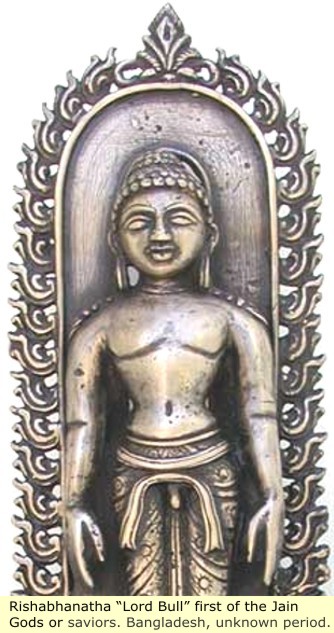
The most successful of the new sects were those that attempted to provide relief from orthodox Hinduism's failure to alleviate human suffering. One such sect was the Jains - from the Sanskrit verb ji, meaning to conquer. The Jains sought relief from suffering, by conquest over one's own passions and senses. This conquest they believed, gave one purity of soul.
According to legend, the Jains were led by Nataputta Vardhamana, the son of a royal governor from the Magadha region, "Nataputta Vardhamana" gave up his princely status for a life of asceticism, and he became known as Mahavira (Great Souled One). Legend describes Mahavira's beginnings as a reformer - as not seeking to overthrow the Hindu caste system or the worship of Hindu gods, but wishing to do something about the misery that he saw all around him. Legend describes him as having sympathy, not only for people, but also for the animals that the Brahmins sacrificed.
Jain lay persons took the following vows: never to intentionally destroy a living thing, never to speak falsehoods, never to steal, to always be faithful in marriage, to always be chaste outside of marriage, to possess no more money or other things than one had set for oneself as sufficient, (a practical restriction that varied with how wealthy one was), to travel no farther than the limits that one had set for oneself, to think no evil thoughts about others, to sit in meditation as often as one had planned, to spend time as a temporary monk or nun, and to support the nuns and monks with contributions.
 |
 |
 |
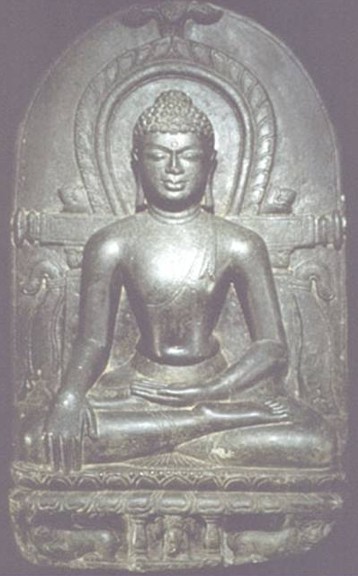
Another, who led a religious movement to relieve suffering, was a prince named "Siddhartha Gautama", later to be known as the "Buddha" (Great Teacher). Siddhartha was born into the Sakya tribe at the foot of the Himalayan Mountains, just north of the Ganges Valley. Siddhartha lived in a small city named "Kapilavastu" (in what is now southern Nepal). He is reported to have seen his native city over-run and its people butchered by the Arians. The Sakya tribe was under Arian suzerainty, but had retained it's independence in exchange for a tribute paid to Arian overlords. The Sakya tribe had aristocrats and commoners, and according to legend, Siddhartha was a prince.
According to legend, in his youth, Siddhartha had been sheltered from the ugliness and poverty all around him. But when he was twenty nine - around 534 B.C. - he decided to become a wanderer. Apparently Siddhartha withdrew from a world, that he saw as inhospitable to conquered royalty such as he. Though he was disturbed by the Arian's, he was also fascinated by the Arian people who had destroyed his state and its traditions. The legend created by his followers, describes Siddhartha as having become a wanderer, in order to learn about human existence. He became an ascetic and abused his body by hardly eating. After accepting failure, in his quest to gain understanding of human existence, Siddhartha began eating better, and he began devising what he believed were better solutions to human misery.
 |
 |
 |
Siddhartha agreed with the view expressed in the Upanishads, that the cause of human misery was humanity itself. But he was determined not to fall into what he saw as the error of those who sought salvation in philosophical speculations. He refused to question or discuss whether the cosmos is finite or infinite, or whether there is life after death or other such metaphysical questions. He refused to consider these questions, on the grounds that these questions, sidetrack people from doing something practical about the misery of their existence.
 |
 |
 |
According to legend, Siddhartha became a master of the tenets and practices of other sects, and that many of his disciples were recruited after hearing him debate with religious rivals in town gatherings. Siddhartha preached no warnings of torments for evil deeds, instead he preached the attaining of serenity or nirvana, through self-discipline.
 |
 |
 |
Politically, India followed man's normal course of kingdoms rising and falling, with almost constant warfare. However, there was one kingdom of particular note, it is the kingdom founded by Mahapadma Nanda. The Nandas are universally described as being of low origin, {code for Sudras}, they are of particular note because:
The northwestern part of India, suffered a campaign by Alexander the Great in 327 B.C, he was pursuing his campaign to conquer the extremities of the defeated Achaemenian Empire. Having entered Gandhara, he campaigned successfully across the Punjab as far as the Beas River. Here his troops refused to continue fighting, because they had encountered the army of the Nandas. Some historians suggest that Alexander's Greek soldiers, may have mutinied out of fear of this army.
|
|
The Kshatriya (Warrior Class)In Hindu India, the second-highest of the four varnas, or social classes, traditionally the military or ruling class. In ancient times before the caste system was completely defined, they were considered first in rank, placed higher than the Brahmans, or priestly class. The legend that they were degraded by an incarnation of Vishnu as a punishment for their tyranny may reflect a historical struggle for supremacy between priests and rulers. In modern times the Kshatriya varna includes members from a variety of castes, united by their status in government or the military or their land ownership. |
When society became organized and a warrior caste (Kshatriya) came into being, it was felt that the members of this caste should be governed by certain humane laws, the observance of which, it was believed, would take them to heaven, while their non-observance would lead them into hell. In the post Vedic epoch, and especially before the epics were reduced to writing, lawless war had been supplanted, and a code had begun to govern the waging of wars. The ancient law-givers, the reputed authors of the Dharmasutras and the Dharmasastras, codified the then existing customs and usages for the betterment of mankind. Thus the law books and the epics contain special sections on royal duties and the duties of common warriors.
It is a general rule that kings were chosen from among the Kshatriya caste. In other words, a non-Ksatriya was not qualified to be a king. And this is probably due to the fact that the kshatriya caste was considered superior to others in virtue of its material prowess. Though the warrior's code enjoins that all the Ksatriyas should die on the field of battle, still in practice many died a peaceful death. There is a definite ordinance of the ancient law books prohibiting the warrior caste from taking to asceticism.
Action and renunciation is the watch-word of the Ksatriya. The warrior was not generally allowed to don the robes of an ascetic. But Mahavira and Gautama protested against these injunctions and inaugurated an order of monks or sannyasins. When these dissenting sects gathered in strength and numbers, the decline of Ksatriya valor set in. Once they were initiated into a life of peace and prayer, they preferred it to the horrors of war. this was a disservice that dissenting sects did to the cause of ancient India.
When a conqueror felt that he was in a position to invade the foreigner's country, he sent an ambassador with the message: 'Fight or submit.'
More than 5000 years ago India recognized that the person of the ambassador was inviolable. This was a great service that ancient Hinduism rendered to the cause of international law. It was the religious force that invested the person of the herald or ambassador with an inviolable sanctity in the ancient world. The Mahabharata rules that the king who killed an envoy would sink into hell with all his ministers.
Megasthenes was a Greek ethnographer in the Hellenistic period, author of the work Indica. He was born in Anatolia (modern Turkey) and became an ambassador of Seleucus I of Syria to the court of Sandrocottus, who possibly is Chandragupta Maurya in Pataliputra, India. However the exact date of his embassy is uncertain. Scholars place it before 288 B.C.
Megasthenes noticed a peculiar trait of Indian warfare.
"Whereas among other nations it is usual, in the contests of war, to ravage the soil and thus to reduce it to an uncultivated waste, among the Indians, on the contrary, by whom husbandmen are regarded as a class that is sacred and inviolable, the tillers of the soil, even when battle is raging in their neighborhood, are undisturbed by any sense of danger, for the combatants on either side in waging the conflict make carnage of each other, but allow those engaged in husbandry to remain quite unmolested. Besides, they never ravage an enemy's land with fire, nor cut down its trees."
The modern "scorched earth" policy was then unknown. "
Professor H. H. Wilson says:
"The Hindu laws of war are very chivalrous and humane, and prohibit the slaying of the unarmed, of women, of the old, and of the conquered."
At the very time when a battle was going on, be says, the neighboring cultivators might be seen quietly pursuing their work, - " perhaps ploughing, gathering for crops, pruning the trees, or reaping the harvest." Chinese pilgrim to Nalanda University, Hiuen Tsiang affirms that although the there were enough of rivalries and wars in the 7th century A.D. the country at large was little injured by them.
Maurya Empire |
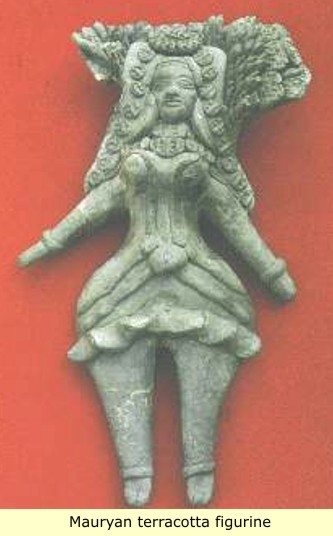
The Nanda Dynasty was overthrown in 322 B.C. by Chandragupta Mauryaby who founded The Maurya Empire, and rapidly expanded his power westwards across central and western India taking advantage of the disruptions of local powers in the wake of the withdrawal westward by Alexander the Great's Greek and Persian armies. By 320 B.C. the empire had fully occupied Northwestern India, defeating and conquering the satraps left by Alexander.


It was the world's largest empire in its time. At its greatest extent, the empire stretched to the north along the natural boundaries of the Himalayas, and to the east stretching into what is now Assam. To the west, it reached beyond modern Pakistan, annexing Balochistan and much of what is now Afghanistan, including the modern Herat and Kandahar provinces. The Empire was expanded into India's central and southern regions by the emperors Chandragupta and Bindusara, but it excluded a small portion of unexplored tribal and forested regions near Kalinga (modern Orissa).
 |
 |
 |
Under Chandragupta, the Mauryan Empire conquered the trans-Indus region, which was under Macedonian rule. Chandragupta then defeated the invasion led by Seleucus I, a Greek general from Alexander's army. Under Chandragupta and his successors, both internal and external trade, and agriculture and economic activities, all thrived and expanded across India thanks to the creation of a single and efficient system of finance, administration and security. After the Kalinga War, the Empire experienced half a century of peace and security under Ashoka: India was a prosperous and stable empire of great economic power whose trade extended across Western and Central Asia and Europe. Mauryan India also enjoyed an era of social harmony, religious transformation, and expansion of the sciences and of knowledge. Chandragupta Maurya's embrace of Jainism increased social and religious renewal and reform across his society, while Ashoka's embrace of Buddhism was the foundation of the reign of social and political peace and non-violence across all of India. Ashoka sponsored the spreading of Buddhist ideals into Sri Lanka, Southeast Asia, West Asia and Mediterranean Europe. The Maurya Empire dissolved in 185 B.C. with the foundation of the Sunga Dynasty in Magadha.
 |
 |
Ancient Indian Cave Architecture: Click here >>> |
Gupta Empire |
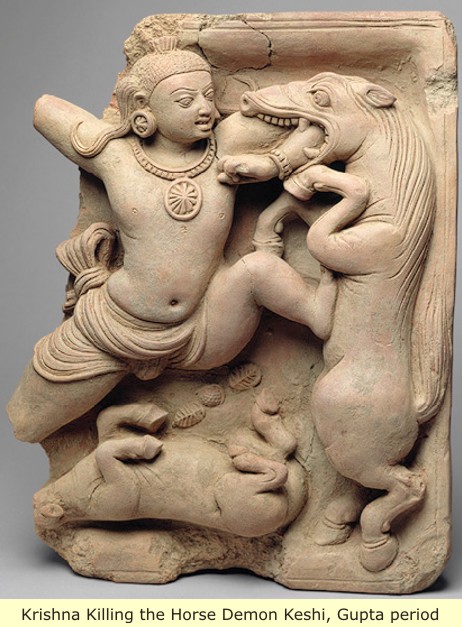
The Gupta Empire existed from approximately from 320 to 550 A.D. and covered much of the Indian Subcontinent. It was founded by Maharaja Sri-Gupta, the dynasty was the model of a classical Indian civilization. The peace and prosperity created under leadership of Guptas enabled the pursuit of scientific and artistic endeavors. This period is called the Golden Age of India and was marked by extensive inventions and discoveries in science, technology, engineering, art, dialectic, literature, logic, mathematics, astronomy, religion and philosophy that crystallized the elements of what is generally known as Hindu culture. Chandragupta I, Samudragupta, and Chandragupta II were the most notable rulers of the Gupta dynastys.
|
 |
The high points of this cultural creativity are magnificent architecture, sculptures and paintings. The Gupta period produced scholars such as Kalidasa, Aryabhata, Varahamihira, Vishnu Sharma and Vatsyayana who made great advancements in many academic fields. Science and political administration reached new heights during the Gupta era. Strong trade ties also made the region an important cultural center and set the region up as a base that would influence nearby kingdoms and regions in Burma, Sri Lanka, Malay Archipelago and Indochina.
 |
 |
The earliest available Puranas are also thought to have been written around this period. The empire gradually declined because of many factors like the substantial loss of territory and imperial authority caused by their own erstwhile feudatories and the invasion by the Hunas (White Huns - Turks), from Central Asia. After the collapse of the Gupta Empire in the 6th century, India was again ruled by numerous regional kingdoms. A minor line of the Gupta clan continued to rule Magadha after the disintegration of the empire. These Guptas were ultimately ousted by the Vardhana ruler Harsha, who established an empire in the first half of the 7th century.
 |
The Mughals were a number of culturally related clans of Indo-Turkic people in North India, Pakistan and Bangladesh. It is claimed they are descended from the various Central Asian Mongolic and Turkic tribes and Persians that settled in the region. The term Mughal (or Moghul in Persian) literally means Mongol. Wikipedia.
 |
 |
 |
This is the type of pictures the Albinos show us to claim that this is what Mughals looked like.
 |
The "classic period" of the empire started in 1556 with the accession of Akbar the Great. Under his rule, India enjoyed much cultural and economic progress as well as religious harmony. Akbar was a successful warrior; he also forged martial alliances with several Hindu Rajput kingdoms. Some Rajput kingdoms continued to pose a significant threat to Mughal dominance of northwestern India, but they were subdued by Akbar.
The reign of Shah Jahan, the fifth emperor, was the golden
age of Mughal architecture and the arts. He erected many splendid
monuments, the most famous of which is the legendary Taj Mahal at Agra,
as well as the Pearl Mosque, the Red Fort, the Jama Masjid of Delhi,
and the Lahore Fort.
 |
| Taj Mahal |
 |
 |
 |
Nawab Sayyid Hussain Ali Khan Barha
(1666 – 8 October 1720), officially Ihtisham-ul-Mulk, was a kingmaker
of the later Mughal Period. Best known for ordering the death of the
Emperor Farrukhsiyar largely in attempt to halt the numerous
assaination attempts that the latter had ordered against him and his
brother Abdullah Khan Barha. Hussain Ali Khan rose as a kingmaker in
early 18th century India, when he was also the ruler of Aurangabad,
ruler of Ajmer by proxy and Subahdar of the Deccan. Both
Hussain Ali Khan and his brother, Abdullah Khan II, had a hand in the
installation or deposition (or both installation and deposition) of
several emperors to the throne at Delhi, including: Bahadur Shah I,
Jahandar Shah, Furrukhsiyar, Rafi ud Darajat, Shah Jahan II, Ibrahim
and Muhammad Shah. and eventually became de facto rulers of the
sub-continent by the early 18th century, at a time when India's economy
was the largest in the world
 |
| A seated portrait of Sayyid Abdullah Khan (right) holding court - Early 18th century - The British Museum |
By the mid-18th century, the Marathas (a Negroid Indian warrior caste) had ravaged the Mughal provinces from the Deccan to Bengal, and internal dissatisfaction (as well as separatist agendas from the Rajputs, Sikhs, and Jats) arose due to the weakness of the Mughal Empire's administrative and economic systems. In 1739, a weakened Mughal Empire was defeated in the Battle of Karnal by the forces of Nader Shah, making Mughal power severely limited. The last emperor, Bahadur Shah II had authority over only the city of Shahjahanabad. He supported the Indian Rebellion of 1857 and was overthrown by the British, and the last remnants of the empire were taken over by the British Raj.
 |
| Encyclopedia Britannica says that THIS is a picture of Bahādur Shāh II |
 |
 |
 |
 |
 |
 |
| Obviously Bahādur Shāh II and likely ALL of the Mughal Emperors were Native BLACK DRAVIDIANS. |
 |
| MUSSULMANS - a follower of the religion of Islam; a Muslim. |
The British Raj, meaning "rule" in Hindi, was the British rule in the Indian subcontinent between 1858 and 1947. The term can also refer to the period of dominion. The region under British control, included areas directly administered by the United Kingdom, as well as the princely states ruled by individual rulers under the paramountcy of the British Crown. The system of governance was instituted in 1858, when the rule of the British East India Company was transferred to the Crown in the person of Queen Victoria (and who, in 1876, was proclaimed Empress of India), and lasted until 1947, when the British Indian Empire was partitioned into two sovereign dominion states, the Union of India (later the Republic of India) and the Dominion of Pakistan (later the Islamic Republic of Pakistan, the eastern half of which, still later, became the People's Republic of Bangladesh). At the inception of the Raj in 1858, Lower Burma was already a part of British India; Upper Burma was added in 1886, and the resulting union, Burma, was administered as a province until 1937, when it became a separate British colony, gaining its own independence in 1948.
 |
Click here for a larger picture
| As the British killed more Indians, their own life expectancy kept increasing. |
 |
Perhaps the most important aspect of British Albino rule of India, was that it afforded European Albinos opportunity to further expand their World wide War against Blacks into new Venues. Note this account of India, circa 1350: |
This manuscript from about 1350 is one
of the oldest extant copies of Les voyages de Marco Polo (The travels
of Marco Polo), the account by the Venetian merchant Marco Polo (circa
1254−1324) of his adventures in Central Asia and the Far East during
the latter part of the 13th century. It is possibly one of five
manuscripts relating to Marco Polo’s journey that belonged to King
Charles V of France (reigned 1364−80). Later it was part of the library
of the French book collector Alexandre Petau. It was sold to Queen
Christina of Sweden (1626−89) in 1650. Accompanied by his father
Niccolò and his uncle Maffeo, Marco Polo travelled overland to China in
1271–75. He then spent 17 years serving Kublai Khan (1215–94), grandson
of Genghis Khan and conqueror of China, for whom he undertook
assignments in China as well as in South and Southeast Asia. The three
Venetians returned to their native city by sea in 1292–95. Marco Polo
soon was caught up in the war between Venice and Genoa, for which he
equipped and commanded a galley in the Venetian navy. He was taken
prisoner by the Genoese in 1296. According to tradition, while in
prison he dictated the stories of his travels to a cellmate,
Rustichello da Pisa, who wrote them down in Old French. Marco Polo’s
account was not just a simple record of the journey, but a description
of the world—a mixture of a travel report, legend, hearsay, and
practical information. For these reasons, Les voyages de Marco Polo is
sometimes called Divisament du monde (Description of the world) or
Livre des merveilles du monde (Book of the marvels of the world). The
work was an important introduction for Europeans to the history and
geography of Central Asia and China. At the end of the Stockholm
manuscript is a mappa mundi, a medieval schematic zonal map of the
world, which, however, may be a later addition.
 |
 |
 |
 |
 |
One of the Albinos main reasons to pursue dominance over all of the worlds other peoples, in spite of their meager numbers, was their desire for their defect - Albinism - to be seen as something positive, not the defect and impediment that it actually was. To this end, once they had secured control over societies and means of communication, they set about turning everything around in their teachings to the Worlds, Now subject, non-Albino populations. As we have seen, and shall see more of: what was up, became down, what was left, became right, and what was once Black, (as historical People, and otherwise), became White.
 |
 |
One might wonder how a tiny little country like Britain could have ruled a huge country like "Original India" with it's 1.5 billion people, from thousands of miles away. Logic and common sense tells us that India should have squashed Britain like a Cockroach. It is only by looking at India after Independence that we see why India couldn't squash Britain. Immediately after Independence, a huge chunk of India broke away and became Muslim Pakistan, later another huge chunk broke away and became Muslim Bangladesh. What's left of original India is wracked by religious Bombings by Muslims and Hindu's. Clearly religious and ethnic divisions are what made India weak, and what the Albinos used to exploit those populations. But let us not overlook the part played by India's Albino population - remnants of the Aryan invasion. India's Mulattoes are the majority of the population, and like everywhere else, India's Mulattoes are often "Race Confused".
 |
Click here for link to article
 |
Click here for link to article
Click here for link to article
 |
 |
| 2023 World Population Review by Country |
 |
|
| The fourteenth amendment to the United States Constitution declared all persons born within the United States to be U.S. citizens and worked to bestow citizenship on freedmen. Congress went further by amending naturalization requirements in 1870 and extending naturalization eligibility to "aliens being free white persons, and to aliens of African nativity and to persons of African descent."3 The 1870 revision of §2169, U.S. Revised Statutes, laid the foundation for future confusion over racial eligibility to citizenship. The rule did not state that white persons and black persons may naturalize, nor did it limit naturalization to those of European or African nativity or descent. Rather, the 1870 rule appeared to apply a color test— white persons and those with African origins (i.e., black)— but did so by reference to geography. After extending naturalization to blacks (as Africans) in 1870, Congress banned the naturalization of Chinese in 1882. The Chinese Exclusion Act of that year, which is primarily an immigration law, included a section directing that "hereafter no State court or court of the United States shall admit Chinese to citizenship; and all laws in conflict with this act are hereby repealed."4 The 1882 law clearly directed the courts not to naturalize any Chinese, but it did not explain whether "Chinese" indicated race or nationality. |
In 1920 he applied for citizenship and was approved by the U.S. District Court. The Bureau of Naturalization appealed the case, which made its way to the Supreme Court. Thind's attorneys expected a favorable decision since the year before in the Ozawa ruling the same Court had declared Caucasians eligible for citizenship and Thind, as most North Indians, was clearly Caucasian.
 |
 |
After his petition was granted, Government attorneys initiated a proceeding to cancel Thind’s naturalization and a trial followed in which the Government presented evidence of Thind’s political activities as a founding member of the Ghadar Party, a violent Indian independence movement headquartered in San Francisco. Thind did not challenge the constitutionality of the racial restrictions. Instead, he attempted to have "high-caste" classified as "free white persons" within the meaning of the naturalization act based on the fact that both northern Indians and most Europeans are Indo-European peoples.
The court rejected this argument, holding that while
Hindi-speaking high-caste Indians were indeed akin to white European
peoples, they had intermarried too freely with the non-white
pre-Indo-European populace of India, hence their present skin color.
Because of the uncertainty this caused for scientific classification,
the court decided to use a "common sense" definition of Caucasian that
did not allow for the scientific arguments Thind made and did not
classify Indians as white. Thind argued that though he was Black, he belonged to the "Aryan race".
Thind argued using "a number of anthropological texts" that people in
Punjab and other Northwestern Indian states belonged to the "Aryan
race", and Thind cited scientific authorities such as Johann Friedrich
Blumenbach as classifying Aryans as belonging to the Caucasian race.
Thind argued that, although some racial mixing did indeed occur between
the Indian castes, the caste system had largely succeeded in India at
preventing race-mixing. Thind argued that by being a "high-caste, of
full Indian blood" he was a "Caucasian" according to the
anthropological definitions of his day.
Thind's lawyers argued that Thind had a revulsion to marrying an Indian
woman of the "lower races" when they said, "The high-caste Hindu
regards the aboriginal Indian Mongoloid in the same manner as the
American regards the Negro, speaking from a matrimonial standpoint."
Thind's lawyers argued that Thind had a revulsion to marrying a woman
of the Mongoloid race, because they felt that expressing "disdain for
inferiors" would characterize Thind as being white. Also,
this would characterize Thind as being someone who would be sympathetic
to the existing anti-miscegenation laws in the United States.
Now
the Supreme Court found it necessary to qualify "Caucasian" as being
synonymous with "white," according to the understanding of the common
man of the time. Justice Sutherland expressed their unanimous decision,
denying Thind citizenship:
It
is a matter of familiar observation and knowledge that the physical
group characteristics of the Hindus render them readily distinguishable
from the various groups of persons in this country commonly recognized
as white. The children of English, French, German, Italian,
Scandinavian, and other European parentage, quickly merge into the mass
of our population and lose the distinctive hallmarks of their European
origin. On the other hand, it cannot be doubted that the children born
in this country of Hindu parents would retain indefinitely the clear
evidence of their ancestry. It is very far from our thought to suggest
the slightest question of racial superiority or inferiority. What we
suggest is merely racial difference, and it is of such character and
extent that the great body of our people instinctively recognize it and
reject the thought of assimilation.
The eligibility of this applicant for citizenship is based on the sole
fact that he is of high caste Hindu stock, born in village Taragarh
Talawa, Amritsar district, Punjab, one of the extreme north western
districts of India, and classified by certain scientific authorities as
of the Caucasian or Aryan race... In the Punjab and Rajputana, while
the invaders seem to have met with more success in the effort to
preserve their racial purity, intermarriages did occur producing an
intermingling of the two and destroying to a greater or less degree the
purity of the "Aryan" blood. The rules of caste, while calculated to
prevent this intermixture, seem not to have been entirely successful...
the given group cannot be properly assigned to any of the enumerated
grand racial divisions. The type may have been so changed by
intermixture of blood as to justify an intermediate classification.
Something very like this has actually taken place in India. Thus, in
Hindustan and Berar there was such an intermixture of the "Aryan"
invader with the dark-skinned Dravidian.
Thind petitioned for naturalization a third time in 1935 after Congress
passed the Nye-Lea Act, which made World War I veterans eligible for
naturalization regardless of race, and based on his status as a veteran
of the United States military during World War I he was finally granted
United States citizenship.
The
Luce–Celler Act of 1946 (H. R. 3517; Public Law 483) was proposed by
Republican Clare Boothe Luce and Democrat Emanuel Celler in 1943 and
signed into law by President Harry Truman on July 2, 1946.
It provided a quota of 100 Filipinos and 100 Indians to immigrate into
the United States per year. As the Philippines became independent from
the United States in 1946, Filipinos would have been barred from
immigrating without the Act.
The act also allowed Filipino Americans and Indian Americans to
naturalize and become US citizens. Indian Americans had not been
allowed to naturalize since United States v. Bhagat Singh Thind in
1923, which the law effectively reversed. Upon becoming citizens, the
new Americans could own homes and farmland and petition for family from
their nation of birth.
Male Sikhs have "Singh" (Lion), and female Sikhs have "Kaur" (princess)
as their middle or last name. Sikhs who have undergone (the Sikh
initiation ceremony) may also be recognised by the five Ks: Kesh, uncut
hair which is kept covered, usually by a turban; an iron or steel
bracelet (kara); a kirpan (a sword tucked into a gatra strap or a kamal
kasar belt); kachehra, a cotton undergarment, and kanga, a small wooden
comb. Initiated male and female Sikhs must cover their hair with a
turban. The greater Punjab region is the historic homeland of the
Sikhs, although significant communities exist around the world.
Guru Nanak (1469–1539), founder of Sikhism, was born to Mehta Kalu and
Mata Tripta, in the village of Talwandi, now called Nankana Sahib, near
Lahore. Guru Nanak was a religious leader and social reformer. However,
Sikh political history may be said to begin with the death of the fifth
Sikh guru, Guru Arjan Dev, in 1606. Religious practices were formalised
by Guru Gobind Singh on 30 March 1699. Gobind Singh initiated five
people from a variety of social backgrounds, known as the Panj Piare
(the five beloved ones) to form the Khalsa, or collective body of
initiated Sikhs. During the period of Mughal rule in India (1556–1707)
several Sikh gurus were killed by the Mughals for opposing their
persecution of minority religious communities including Sikhs. Sikhs
subsequently militarized to oppose Mughal rule.
After
defeating the Afghan, Mughal and Maratha invaders, the Misls were
formed, under Sultan-ul-Quam Jassa Singh Ahluwalia. The confederacy was
unified and transformed into the Sikh Empire under Maharaja Ranjit
Singh Bahadur, which was characterised by religious tolerance and
pluralism, with Christians, Muslims and Hindus in positions of power.
The empire is considered the zenith of political Sikhism, encompassing
Kashmir, Ladakh and Peshawar. Hari Singh Nalwa, the commander-in-chief
of the Sikh Khalsa Army in the North West Frontier, expanded the
confederacy to the Khyber Pass. Its secular administration implemented
military, economic and governmental reforms.
After the annexation of the Sikh kingdom by the British, the latter
recognized the martial qualities of the Sikhs and Punjabis in general,
and started recruiting from that area. During the 1857 Indian mutiny, the Sikhs stayed loyal to the British.
This resulted in heavy recruiting from Punjab to the colonial army for
the next 90 years of the British Raj. The distinct turban that
differentiates a Sikh from other turban wearers is a relic of the rules
of the British Indian Army. According to Mahmud, the British did not
discover the Martial race of the Sikh, it was rather created by the
British.
Websters defines the Mughals as: an Indian Muslim of or descended from one of several conquering groups of Mongol, Turkish, and Persian origin. That is correct, there was no particular "Type" of Mughal - but Arab should also be added, as they all came into India as a result of the victory of the Muslim Babar.
The great grandson of Tamerlane (Full or Mulatto Mongol ruler of Persia - and wholesale murder of Persia's original Blacks), Babar, who on his mother's side was descended from the famous Genghiz Khan, came to India in 1526 at the request of an Indian governor who sought Babar's help in his fight against Ibrahim Lodi, the last head of the Delhi Sultanate. Babar defeated Lodi at Panipat, not far from Delhi, and so came to establish the Mughal Empire in India.
 |
Wiki:
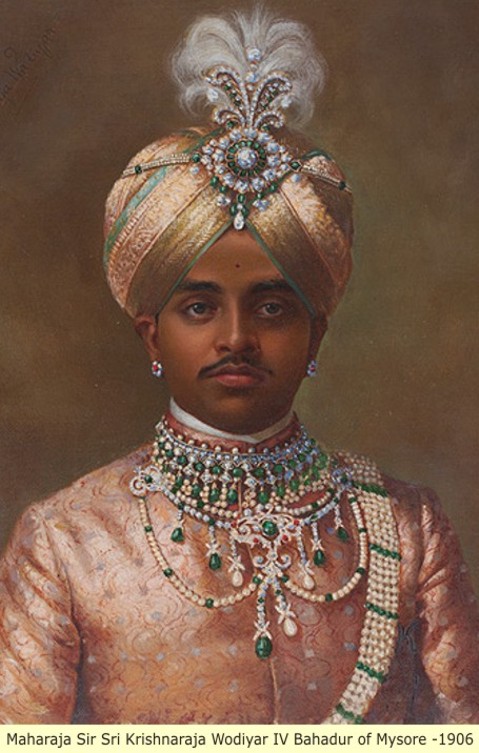
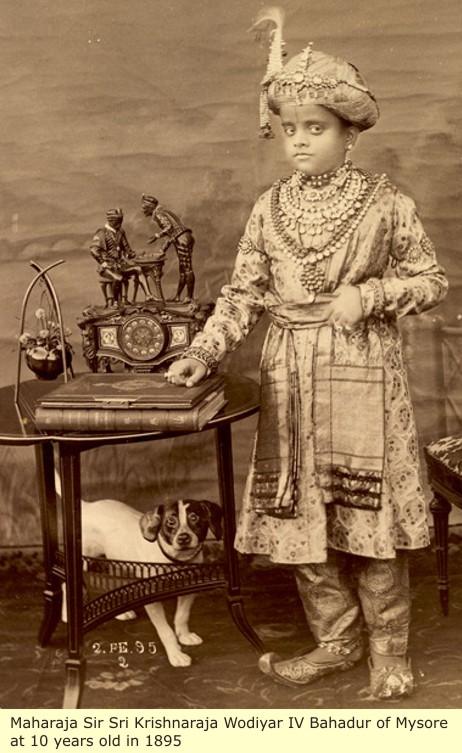
Tipu Sultan, (1750 – 1799), also known as the Tiger of Mysore and Tipu Sahib, was a ruler of the Kingdom of Mysore and a scholar, soldier, and poet. Tipu was the eldest son of Sultan Haidar Ali of Mysore and his wife Fatima Fakhr-un-Nisa. Tipu introduced a number of administrative innovations during his rule, including his coinage, a new Mauludi lunisolar calendar, and a new land revenue system which initiated the growth of Mysore silk industry. Tipu expanded the iron-cased Mysorean rockets and wrote the military manual Fathul Mujahidin, considered a pioneer in the use of rocket artillery. He deployed the rockets against advances of British forces and their allies in their 1792 and 1799 Siege of Srirangapatna.
Napoleon, while still not Emperor of the French, sought an alliance with Tipu. In alliance with the French in their struggle with the British, and in Mysore's struggles with other surrounding powers, both Tipu and his father used their French trained army against the Marathas, Sira, and rulers of Malabar, Kodagu, Bednore, Carnatic, and Travancore. Upon his father's death in 1782, Tipu succeeded to a large kingdom bordered by the Krishna River in the north, the Eastern Ghats in the east, and the Arabian Sea in the west. He won important victories against the British in the Second Anglo-Mysore War, and negotiated the 1784 Treaty of Mangalore with them after his father Hyder Ali suddenly died from cancer in December 1782 during the Second Anglo-Mysore War.
Tipu engaged in expansionist attacks against his neighbours. He remained an implacable enemy of the British East India Company, bringing them into renewed conflict with his attack on British-allied Travancore in 1789. In the Third Anglo-Mysore War, Tipu was forced into a humiliating treaty, losing a number of previously conquered territories, including Malabar and Mangalore. He sent embassies to foreign states, including the Ottoman Turkey, Afghanistan, and France, in an attempt to rally opposition to the British. In the Fourth Anglo-Mysore War, the combined forces of the British East India Company and the Nizam of Hyderabad defeated Tipu, and he was killed on 4 May 1799 while defending his fort of Srirangapatna.
Tipu's ambitions apparently greatly exceeded those of his father, and he strove actively to escape the all-pervasive shadow of Mughal suzerainty. However, as in the Sikh kingdom of Ranjit Singh, the problem with the Mysore of Haidar and Tipu was their inability to build an internal consensus. Their dependence on migrants and mercenaries, for both military and fiscal expertise, was considerable, and they were always resisted by local chiefs, the so-called Poligars. More crucial was the fact that by the 1770s Mysore faced a formidable military adversary in the form of the English East India Company, which did not allow it any breathing room. It was the English who denied Mysore access to the relatively rich agricultural lands and ports of the Coromandel coastal plain in eastern India, and, equally as significant, it was at the hands of an English attacking force that Tipu finally was killed in 1799.
 |
 |
 |
 |
 |
 |
 |
Foreign invasions continued however, and at one time or another, India was invaded by almost all of the known powers. These included - Scythians, Parthians, Greeks, Romans, Persians, Mongols, Turks and Arabs. It was with the Arabs that Islam was brought to India. Each invader in their turn, left their mark. In the 1700s A.D, reasonable stability and unification, was achieved with British rule.
 |
 |
 |
 |
 |
 |
 |
As we have shown, Europeans are the Albinos of India's Dravidians. The White/Albino Race started out as Dravidian Albinos seeking refuge in Central Asia. Upon their return/invasion of India, the Albinos/Aryans pushed deep into india, but could not penetrate into Southern India. Over the course of the next 3,500 years, Dravidians and Albinos/Aryans cross-bred, developing skin color regions in India: In the North we have mainly White and light skinned people, in the South we have mainly Black people, and scattered through the region, we have the majority Brown skin Mulattoes of the two.
The 2013 genetic study: "The Light Skin Allele of SLC24A5 in South Asians and Europeans Shares Identity by Descent" Proves that Europeans and Indians are the SAME people. It also shows that the mixing of Albinos and Blacks, which typifies India, is also responsible for the populations in the Middle East (and elsewhere), where it involved the native Blacks (Berbers, Libyans, Egyptians, Hebrews, Phoenicians, Anatolians, Arabs: and the Turk Albinos/invaders.
 |
Click here for a link to the full Study >>>
Now let's head East to see if there are any Ancients left there!
Please visit the "Additional Material Area" for many more photographs of each civilization, and related material <Click> |
| < Back | Home | Next > |


